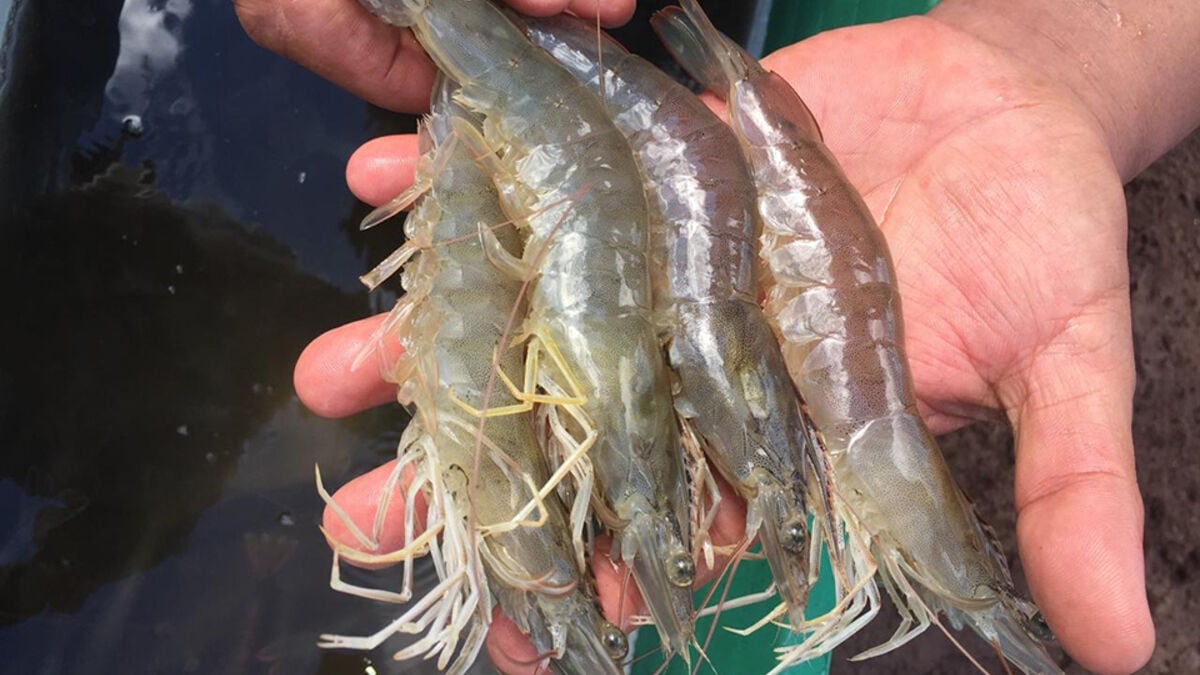
The pools in Umeå's new fish and shrimp farm will be powered by waste heat from a combined heat and power plant. Olivier Keech, a researcher at Umeå University, describes the system as a cycle.
Fish feces can ultimately become food for the shrimp, like in an ecosystem, says Keech.
The goal is to minimize both waste and emissions by utilizing resources that would otherwise be lost.
For the chairman of the municipal board, Hans Lindberg, the initiative is about more than just climate benefits. He sees the project as a way for Sweden to become less dependent on other countries.
In an uncertain world, it is important to increase self-sufficiency, he says.
The project is being carried out in collaboration with the state research institute Rise, which believes that the need for national self-sufficiency became relevant after the COVID-19 pandemic and Russia's large-scale invasion of Ukraine.
Mikaela Johnsson, vice president of the Swedish Farmers' Association (LRF), believes that the focus on Sweden's self-sufficiency has shifted in step with the global crises.
Now we are not only looking at military defense but also at civil defense, and food production is important there, she says.
Mikaela Johnsson says the work must start today in order for us to survive in the long term.
The project in Umeå is a step in that direction.
We want to find new methods of producing fish and seafood that can be a model for other regions and cities, says Hans Lindberg.
According to LRF, Sweden has a relatively low self-sufficiency rate of 50 percent. This means that every second bite is imported. This can be compared to, for example, Finland, which is at 80 percent. In 1988, the figure for Sweden was around 75 percent.
As recently as October last year, the Riksdag supported a motion to review Sweden's opportunities to increase its self-sufficiency. This means that it wants to increase domestic agriculture and trade.
Sources: Swedish Farmers' Association and the Swedish Parliament