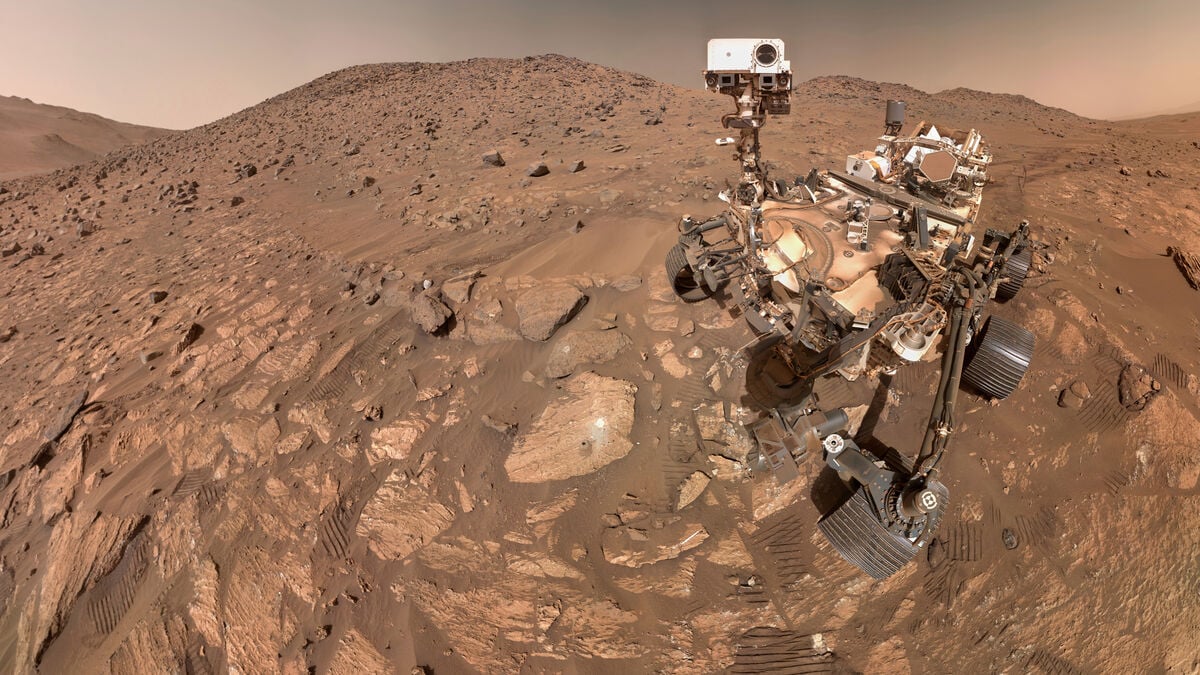
Since February 2021, NASA's Mars rover Perseverance has been exploring the Red Planet in search of signs of ancient life. The vehicle is equipped with a ground-penetrating radar, which sends electromagnetic waves into the ground to help scientists understand the geological structure beneath the surface.
Now, through analysis of the results, an international research team has found traces of a 4.2 billion-year-old river system in the Jezero Crater.
The researchers do not determine exactly what the river looked like. For example, it could have been a single winding channel or a braided system. There was probably a lake inside the crater that the river flowed into.
Important step on the way
Fredrik Andersson is an associate professor at ETH Zurich in Switzerland and one of the researchers on the project. He believes that discoveries like this are crucial for mapping the planet's history and climate. Although the discovery does not prove that there was life on Mars, he says it is an important step on the way.
"By being able to look down into the ground, we can understand historical events in a completely new way. It provides unique opportunities for new discoveries that otherwise remain hidden. The presence of water is fundamental in the search for traces of past life," he writes in an email to TT.
Record-breaking measurements
Notable in the study was Perseverance's record-breaking depth measurement. How far the radar can penetrate depends on the material it is looking through, and this time it reached 35 meters into the ground. That's 1.75 times deeper than anything previously reported in the area.
The progress will help scientists interpret data from other measurement sites on the planet, and the results could influence future space missions.
"These results also provide strong arguments for using similar instruments in future expeditions, for example to the Moon," writes Fredrik Andersson.
Perseverance was launched into space on July 30, 2020, and landed on the surface of Mars on February 18, 2021.
The purpose is to search for signs of ancient life on the planet. It will also collect samples, such as rocks and regolith (the layer of loose soil that lies on top of bedrock). The idea is that the samples will later be returned to Earth.
The craft has made several discoveries. For example, it found a unique rock in the summer of 2024. The rock had traces of water, organic material and signs that chemical reactions caused by microorganisms had occurred.
Source: NASA