Earlier this week, economists at both SBAB and SEB warned that inflation could rise again - leading to interest-rate hikes from the Swedish Central Bank.
That would risk draining households' wallets and countering the parties' election promises to strengthen them.
One reason economists point to is that the continued crisis in the Strait of Hormuz could lead to higher energy and transport prices.
SEB senior economist Robert Bergqvist also sees a more domestic risk, namely that the parties' various costly election promises themselves could drive up inflation.
“Of course not”
"We could be moving towards a situation where the Riksdag gives households with one hand and the Swedish Central Bank takes back with the other," he writes in a report.
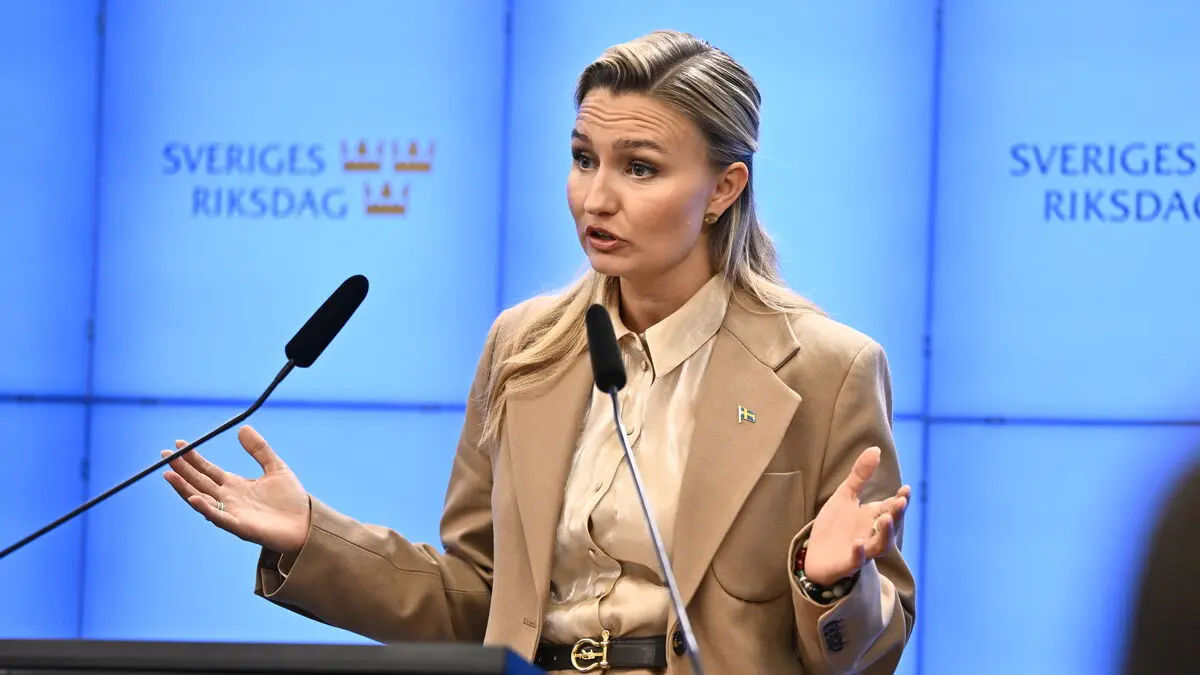
However, Elisabeth Svantesson downplays the risk.
"In the budgets that I will be responsible for putting forward, it is obvious that we should not in any way contribute to driving up inflation," she says.
The Moderates have promised 5,000 kronor more in the wallets of ordinary households. If Elisabeth Svantesson is allowed to continue as Finance Minister after the election, she will also need to reach an agreement with the other Tidö parties.
Is there resilience?
The cards include a dental care reform from the SD worth 10 billion kronor per year, a halving of state income tax from the Liberals, which is estimated to cost up to 30 billion kronor, and the Christian Democrats' proposal to increase child benefit by 16.5 billion kronor during the mandate period.
I don't see inflation increasing because our side is in control, no, says Svantesson and continues:
But it is quite obvious that there will be a negotiation. But don't forget that over the past four years, in a difficult situation, we have reached an agreement. The budgets that I have submitted to the Riksdag have always been passed.
According to Svantesson, the crisis surrounding the Strait of Hormuz has not affected energy prices as much as many analysts feared when it broke out.
"It's clear that what happens in the Strait of Hormuz going forward will be important. But having said that, we are already seeing that many economies and countries are doing better than we could have imagined at the beginning. There is resilience," she says.