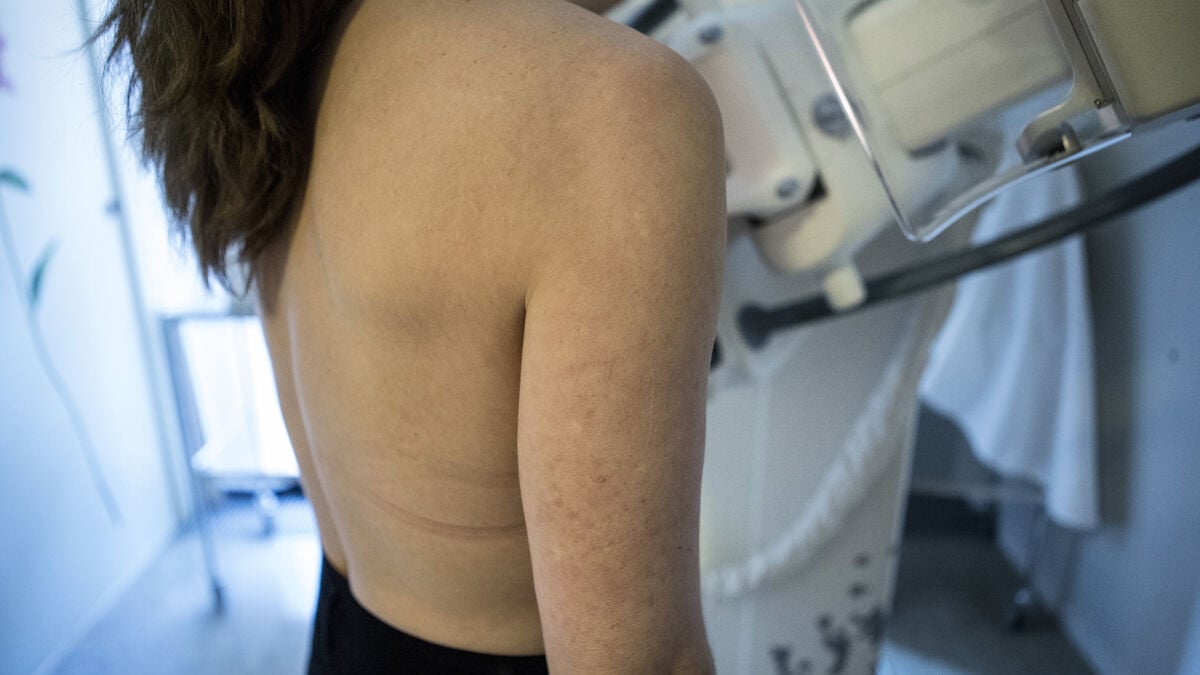
Previous studies have shown that AI can help detect more cases of cancer. But an important question has been whether AI also leads to fewer cases of so-called interval cancers. These are cases that are detected between two screening sessions. Interval cancers are often more aggressive and harder to treat than those detected during routine screening with mammography and are therefore considered an important measure of whether a screening method is effective.
In a new study, over 100,000 women were randomly assigned to have their mammograms reviewed with AI support or with the standard method in which two specialists read each image. The results show interval cancers decreased by 12 percent with AI support, from 1.76 cases per 1,000 women to 1.55 cases per 1,000 women.
"We want to reduce cases of interval cancers because they often have a worse prognosis than cases detected during routine screening," says Kristina Lång, breast radiologist and associate professor at Lund University.
With AI support, low-risk mammograms were assigned to one doctor and high-risk mammograms to two doctors. AI also highlighted suspicious findings on the images.
Saves labor
Kristina Lång is one of the researchers behind the study, which is published in The Lancet. It is the first study to show that interval cancers are reduced with AI.
In addition to patient benefit, AI tools also save time for radiologists, the specialist doctors who review the images, a group that is in short supply.
One challenge with screening is that more sensitive methods increase the risk of finding cases that turn out not to be cancer. These are called false positives. However, even though the AI tool used in the study was effective, it did not result in more such false positives.
"That's very good. False positives lead to great concern and discomfort for the women who are called for follow-up," says Kristina Lång.
Hoping for recommendations
One question is whether AI tools are cost-effective; more data is needed to determine that, according to the researchers.
There are no national recommendations on using AI tools in breast cancer screening, but many of the country's regions use them anyway.
"I hope there will be a general recommendation after our results," says Kristina Lång.
The screenings were conducted between April 2021 and December 2022.
Facts: Breast cancer and mammography
Anyone born female is offered mammography screening between the ages of 40-74.
Screening with mammography is offered every 1.5 to 2 years. The variation depends on where you live and how old you are. 6 percent of all cancer cases in women are breast cancer.
In 2023, 9,591 women and 60 men were diagnosed with breast cancer.
88 percent of those diagnosed with breast cancer live ten years after diagnosis.
One in ten women is at risk of developing breast cancer before the age of 75.
65 percent of all breast cancer cases in the age group of 40-74 have been detected by mammography screening since 2012.
5-10 percent of all breast cancer cases are due to heredity.
Source: Swedish Breast Cancer Association, 1177