Ukrainian drone attacks, tighter controls and rumours of a new mobilisation are once again prompting more Russians to leave their country.
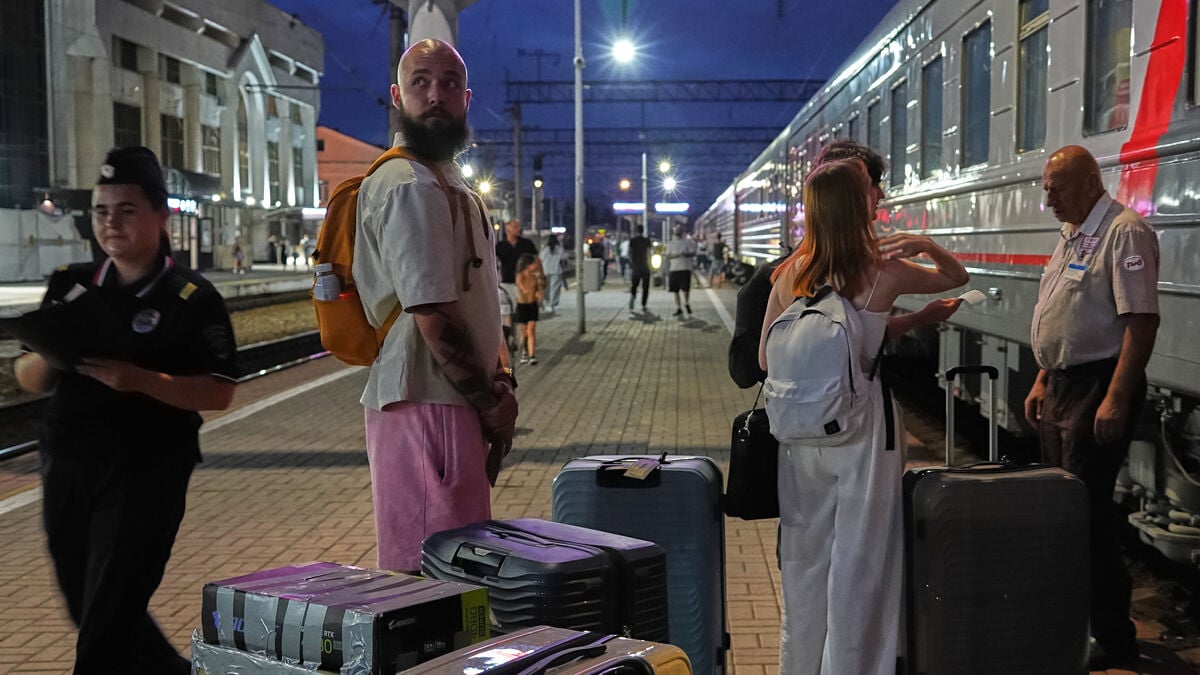
"It feels very sad to leave Russia," says the 28-year-old digital marketer on the platform in Krasnodar.
He does not want to give his name for security reasons, but says he is leaving his home country because of the political situation and the authorities' restrictions on the internet.
During the first year of Russia’s full-scale invasion of Ukraine, hundreds of thousands of people fled the country. Now the number of emigrants appears to be rising again. According to the group Kovcheg, which helps Russians who want to move abroad, there were almost eight times as many requests in August as in May this year.
"We see people preparing to emigrate, we see people exploring what options are available," says Anastasia Burakova, who founded the group.
Jan Slovitsky at Kovcheg speaks of a “panic wave” of emigration since mid-July. It is mainly due to the fuel crisis, internet restrictions and fear of mobilisation, he says.
Increased concern
In videos on social media, people say they have decided to leave the country because of the war. Others express concern about the weak economy, an uncertain future and diminishing freedom.
A diplomat based in Moscow tells the AP of “a noticeable increase in public anxiety this summer” and points to “anecdotal reports that more Russians than usual are showing up in neighboring Georgia and Armenia, possibly out of fear of another mobilization.”
In August, Alen Simonyan, secretary of Armenia's Security Council, said that his country would not interfere, but would instead help, if necessary, Russians who move there to avoid being drafted.
His statement has been met with sharp criticism from the Russian Foreign Ministry, and Russian MP Viktor Sobolev has told the RTVI television channel that Russia does not need people who do not love their country enough and who leave "because of rumors."
"Extremist" rainbow print
LGBT activist Daniil Neonov left Russia this summer. At the time, he had been arrested several times and served a ten-day prison sentence for a photo on social media of him wearing a rainbow-print T-shirt, which Russian authorities labelled an extremist symbol.
In Russia, the “international LGBTQ movement” has been classified as extremist.
Neonov says he feared criminal charges would be brought against him. He also says he knows of others who have left Russia after being arrested for showing support for the opposition Yabloko party after it was banned from participating in recent parliamentary elections.
The party was the only one that previously openly opposed the war in Ukraine.
The police came to them and filed charges. I know several people who also left the country after being detained. I mean, I'm not the only one," Neonov said at a meeting for Russians in Yerevan.
Worked remotely
A 35-year-old man preparing to move describes life in Russia as a “digital prison” without freedom of expression, where schoolchildren are fed war propaganda.
The 28-year-old marketer standing with his luggage on the platform in Krasnodar is leaving Russia for the second time. The first time was in 2022, to avoid the mobilisation of 300,000 soldiers that was carried out at that time.
In 2025, he returned to his Russian hometown of Ulyanovsk and has been working remotely for clients in other countries. But Russia's crackdown on thousands of internet platforms, sites and services has made his work more difficult.
Another reason for his decision to leave Russia again has been the rumours of a new mobilisation, he says, now from the Georgian capital Tbilisi.
You never know what will happen tomorrow.