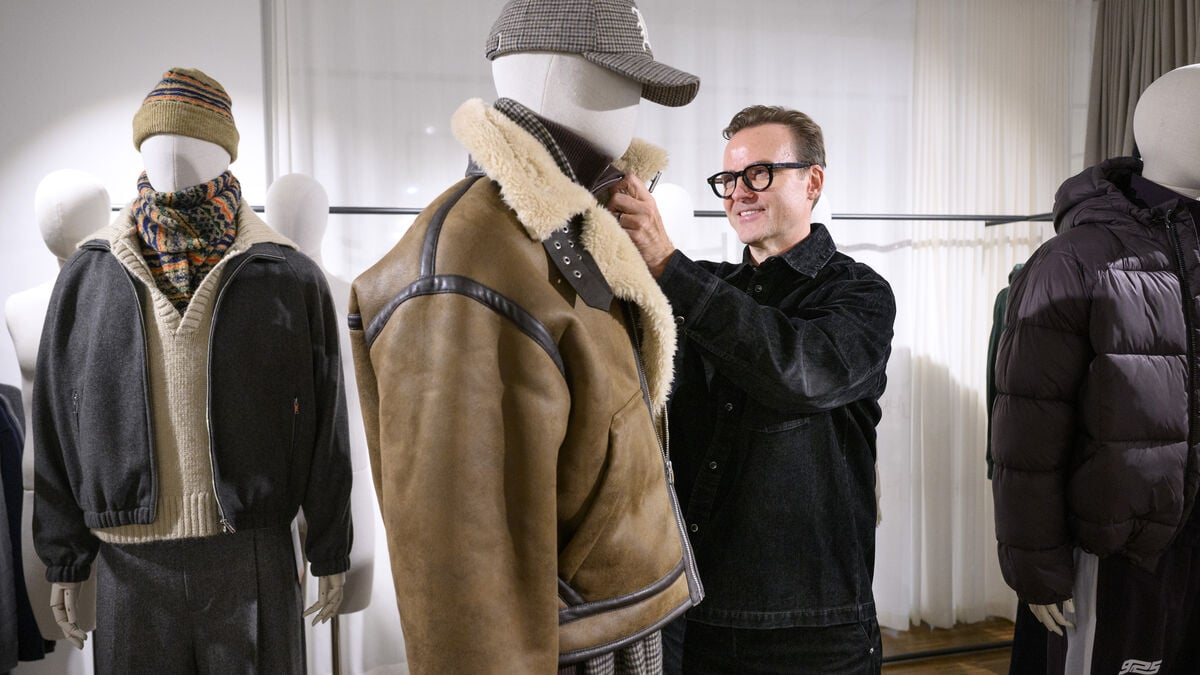
In mid-August, Andreas Löwenstam was on a business trip to Barcelona. As design lead for H&M's men's department, he was in Spain to meet with the company's suppliers.
We got down there and it was like 40 degrees. This is probably the biggest challenge, and I don't even know if we were thinking along these lines five years ago - now we have to do it, he says.
Having previously been stationed in Asia for H&M, he has extensive experience with high temperatures and challenging climates. In recent years, severe and recurring heat waves have also become a reality in Southern and Central Europe.
“Need to rethink”
The World Meteorological Organization (WMO) recently reported that the El Niño climate phenomenon this season is expected to be the most powerful ever. Climate change affects the entire clothing industry, and the needs and differences between regions may become increasingly pronounced, Andreas Löwenstam points out:
It's a mindset. You understand that India, Miami or Indonesia have different needs, but we absolutely see that we need to rethink what we do for southern and northern Europe.
The H&M group is one of the world's largest players in the clothing industry, with more than 4,000 stores around the world. Outside the headquarters in central Stockholm, classic autumn weather prevails, with a light breeze and rain. Inside, Andreas Löwenstam and his colleagues are working on what customers might want to wear on a summer day in 2027.
Behavior changes
In purely business terms, it's about being able to decide when to remove different collections and launch new ones. H&M has weather data and analyses going back several decades to help, says CEO Daniel Ervér:
When will the shift happen in the fall? When will we start showing knitwear? If that time changes, then customer behavior will also change, and we have to change our timing, he says, giving an example:
In the middle of the summer, we sold a lot of summer goods, but towards the end, the start of autumn came later than usual, and we continued to sell “light” qualities (read summer clothes). We react much faster today than we did a few years ago.
Cool clothes
But it's not just about when, but also about what to launch for customers. New conditions create new needs:
I was in Taiwan last summer. When it's 40–45 degrees Celsius, you need clothes that protect you from the sun. Then we're looking at a supplement to the range that isn't about keeping you warm, but rather keeping you cool and protected from the sun, Daniel Ervér tells TT.
That's where Andreas Löwenstam and his colleagues come in. He gives a practical example of a material that many might not associate with hot summer days in July.
“Natural materials like wool don't really need to be warm. You like to wear those materials in the summer because they breathe, so it's really a lot about simplifying, and about the weight of the material. You work with much thinner qualities,” he says.
The challenge is to remain relevant as a fashion company while also taking customers' changing needs into account.
I have to be honest, we and our customers get tired of a summer range. As a designer, you often find it more fun to work with a fall collection than a spring collection.
Facts: The fashion industry's impact on the climate
The United Nations Environment Programme (UNEP) has shown that the clothing industry accounts for between 4 and 10 percent of global greenhouse gas emissions.
An audit by the organization has also shown that cotton used by both H&M and Zara has been linked to illegal deforestation and environmental degradation in Brazil.
In H&M's case, the company has already set a goal of halving its emissions by 2030 while doubling its turnover.
Earlier this year, the Apparel Impact Institute reported that the global fashion industry faces a 34 percent decline in profits by 2030 unless companies act quickly enough to address the impacts of climate change, including higher prices for raw materials like cotton, rising energy costs and higher carbon emissions.
The organization is a collaboration between environmental organizations and is funded by several fashion brands and foundations, such as the H&M Foundation.