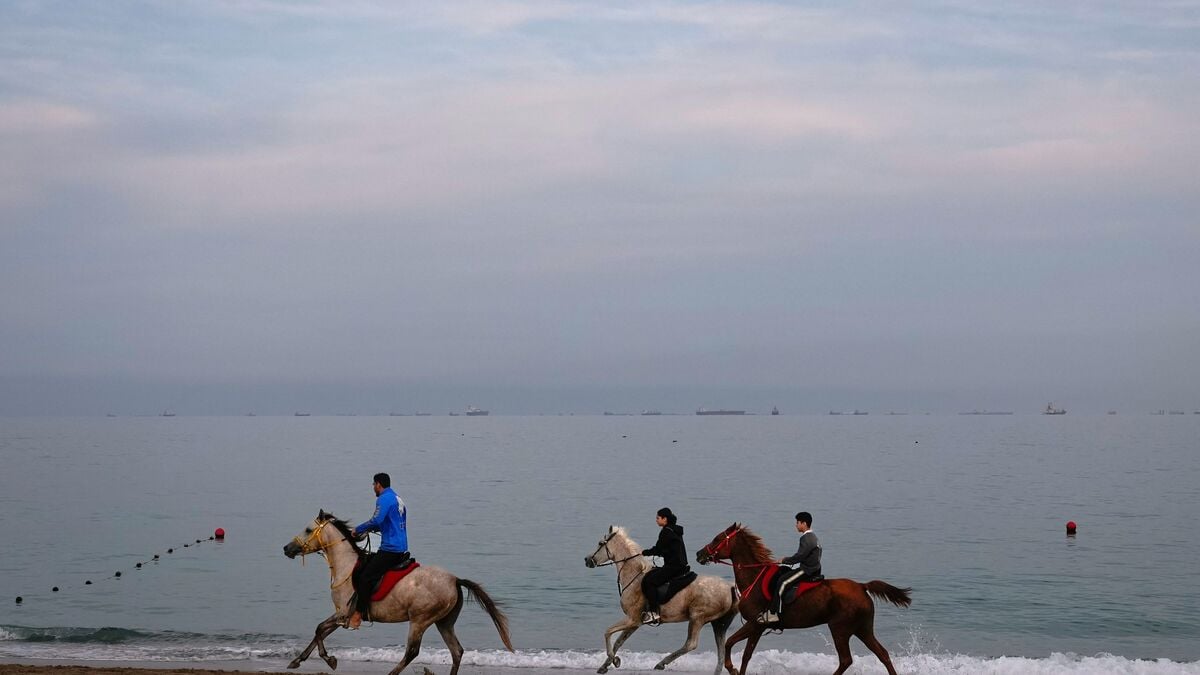
About 170 container ships are unable to pass through the strait - shipping companies have suspended their routes due to the uncertain situation. In total, they can carry about 450,000 containers, which corresponds to just under 1.5 percent of the global fleet. Iran's attacks are also deterring ships from entering the Persian Gulf via the strait.
"It's sensitive for the region. The United Arab Emirates get a lot of their consumer goods that way," says Johan Woxenius, who is a professor of maritime transport economics at the School of Economics at the University of Gothenburg.
Global disruptions
Before the war, just under 140 ships passed through the Strait of Hormuz daily. So far in March, a total of 99 ships have sailed through the strait - about five a day. A third of the ships have links to Iran, according to a BBC review.
Several European countries said in a joint statement with Japan on Thursday that they were ready to contribute to efforts to open the Strait of Hormuz. On the same day, Iran announced that it wanted to impose tariffs and taxes on ships passing through the strait in the future.
Oil prices have skyrocketed since the conflict broke out as oil shipments have been disrupted. And even if there were to be a ceasefire today, the halt would have knock-on effects.
"It will take months to repair the damage. There are no policy measures that can stop the rise in oil prices," Jeffrey Currie, chief strategist at Carlyle Energy Pathways, told Bloomberg.
Currie says the shutdown has disrupted supply chains in countries around the world.
It's about gas, fertilizers, metals and chemicals. The list could go on. The ships are in the wrong places, he says.
Around the Cape of Good Hope
The conflict with Iran has also created ripples in the waters of the Red Sea and the Suez Canal. At the beginning of the year, several major shipping companies had once again dared to use the shortcut between Europe and East Asia after taking the detour around Africa for about two years.
"Few ships are passing through the Red Sea now, as the Houthi rebels are allied with Iran," says Woxenius.
Now the ships are forced to continue rounding the Cape of Good Hope in South Africa. Shipping giant Maersk suspended its traffic the day after Israel and the US attacked Iran on February 28.
"I don't think you'll actually be able to use the Suez route for a long time."