At the next EU summit on December 18, the European Commission hopes that the member states will have decided on the way forward.
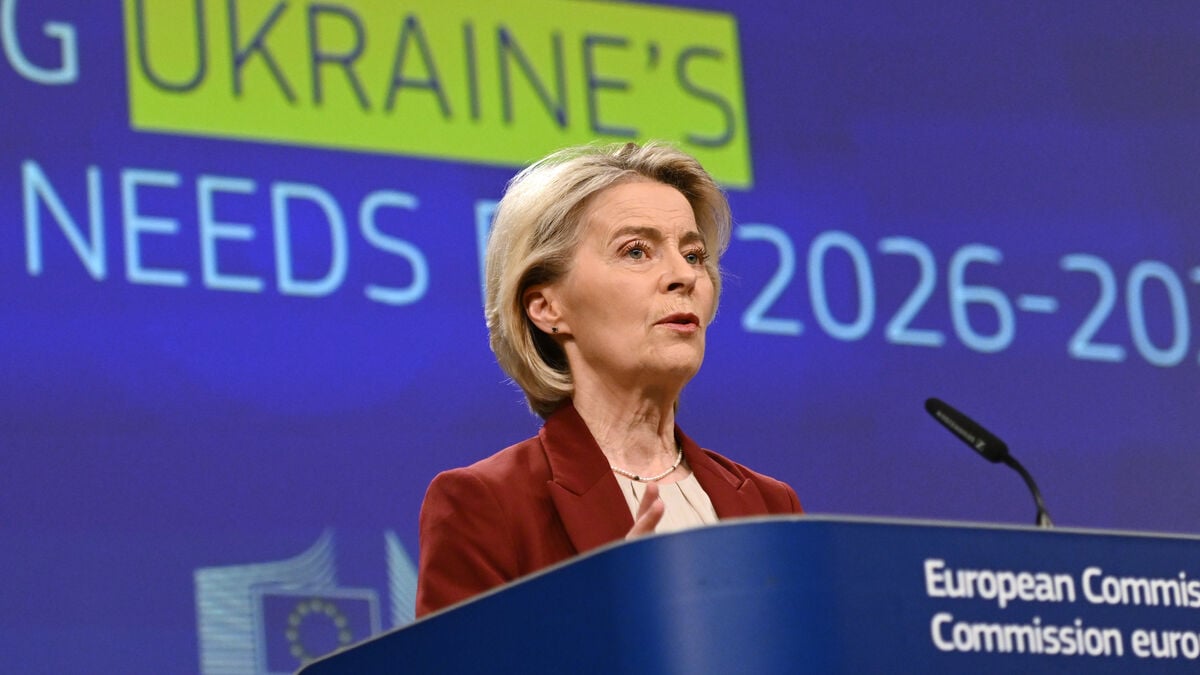
"Ukraine is at a crucial crossroads. We can equip them with the means to defend themselves and conduct peace negotiations from a position of strength," said Commission President Ursula von der Leyen at a press conference in Brussels.
The proposals are surprisingly twofold.
Instead of, as expected, simply proposing a loan based on the Russian state assets frozen in Europe due to the war, the Commission is also proposing as an alternative a loan where the EU budget is used as collateral instead.
The disadvantage of this is that in that case the decision must be taken unanimously. For the Russian assets, a so-called qualified majority is sufficient.
Must move on
The main track is therefore to use the frozen assets.
The idea is to help Ukraine with a total of 90 billion euros (equivalent to 985 billion Swedish kronor). This will cover two-thirds of Ukraine's needs and will be divided into 45 billion in 2026 and the same amount the following year.
The money is borrowed from assets that have expired and turned into cash. Russia will certainly retain its claim on the money – even if the stated goal is that the money will ultimately be seen as war reparations to Ukraine.
Sweden is in favor.
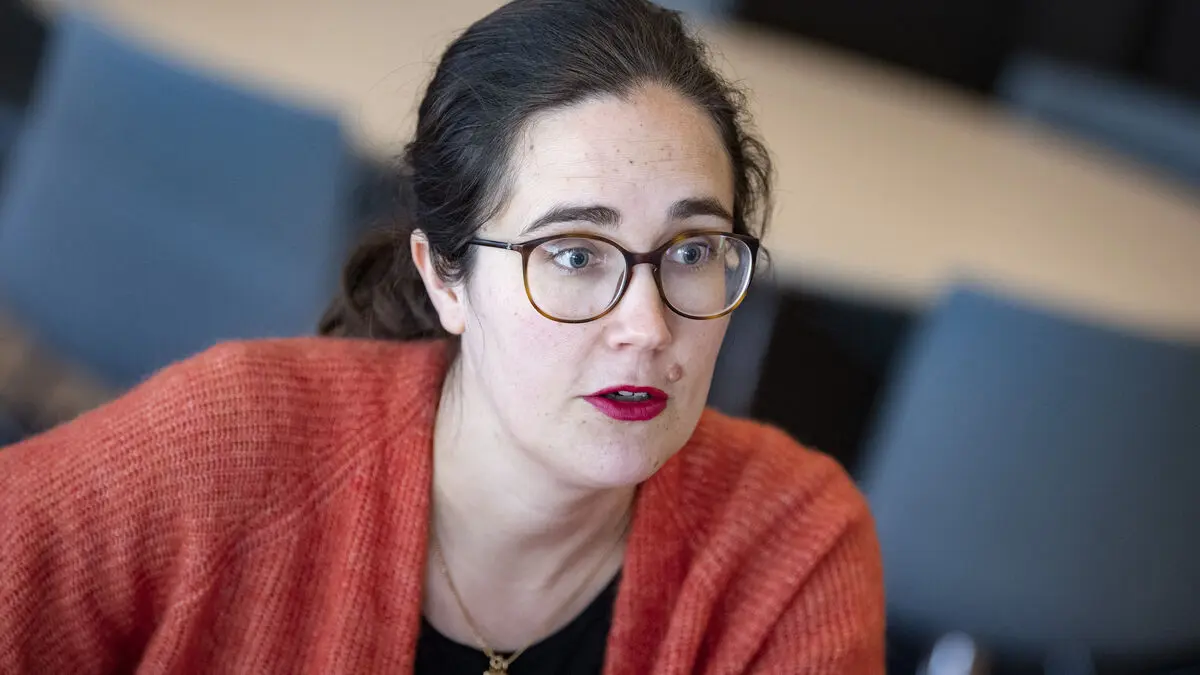
"We welcome the proposal. Sweden's line has been and continues to be that the most fair and reasonable thing is to take the frozen Russian assets," said Foreign Minister Maria Malmer Stenergard (M) after a NATO meeting in Brussels on Wednesday.
Anger in Belgium
Belgium, where most of the Russian money is located, has strongly opposed the plans out of concern that it could face tough compensation claims from Russia. The country has demanded written guarantees that the risk must be shared – and has been heard by many.
"I hope we can give Belgium the guarantees they need to release this money. I think they have legitimate objections," says Malmer Stenergard.
However, she does not believe in completely overturning Belgium in a vote – even if it were legally possible.
Politically, I would say that it would be an impossibility, the Foreign Minister believes.
To reassure Belgium, a series of additional measures are also proposed regarding the prohibition of sending back frozen money and extensions of freezes and sanctions.
Facts: Frozen Russian state assets in the EU
According to the European Commission's calculations, there are a total of 210 billion euros in frozen Russian state assets in the EU.
The majority – 185 billion – is held by the securities institution Euroclear in Belgium. The other 25 billion is held by other institutions in the country, but also in France, among others. There is also a smaller amount in Sweden – but only around 120,000 kronor.
Of the assets, the European Commission now wants to earmark €45 billion for repayment of previous loans that Ukraine received through a G7 deal last year. €90 billion is proposed to be lent to Ukraine in 2026 and 2027, leaving €75 billion available for possible future needs for the country.
Source: European Commission, Minister for Foreign Affairs Maria Malmer Stenergard.