This is a more business-friendly and smart approach, says EU Climate Commissioner Wopke Hoekstra at a press conference.
Pressure has been heavy on the EU Commission from countries that think emissions trading is a heavy burden on their companies and want to see substantial relaxations. Sweden and several other countries, on the contrary, believe that the ETS should not be changed. Swedish companies, which have invested heavily in the transition, are also taking this line, as are climate organizations.
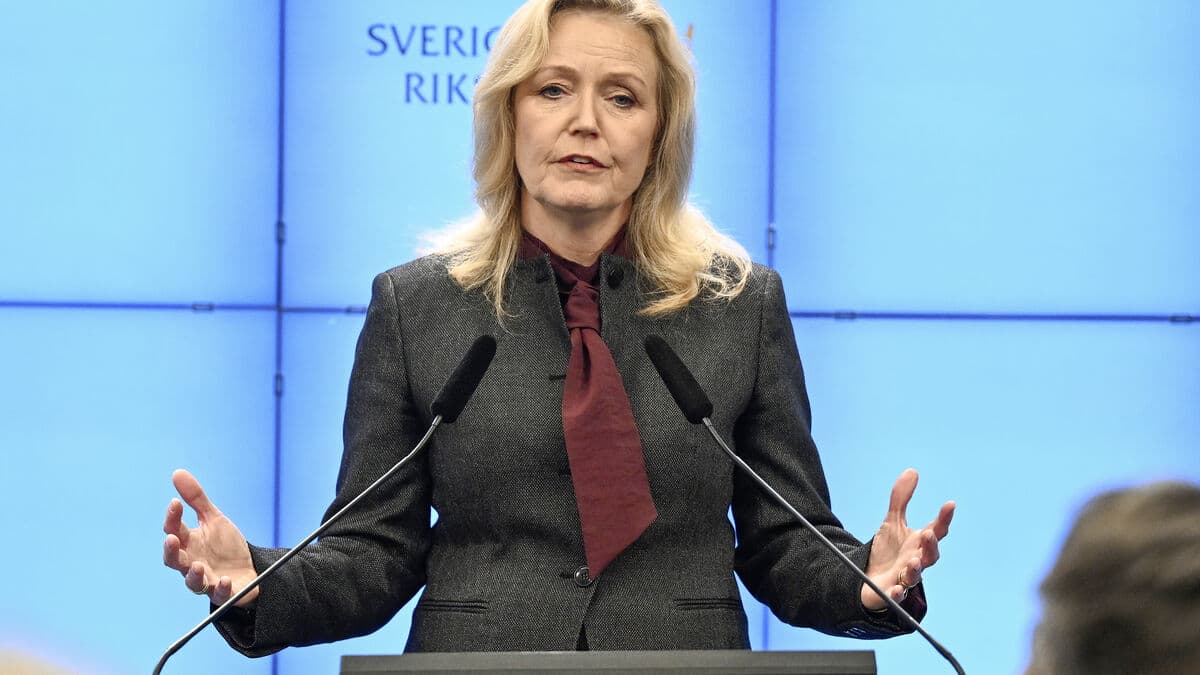
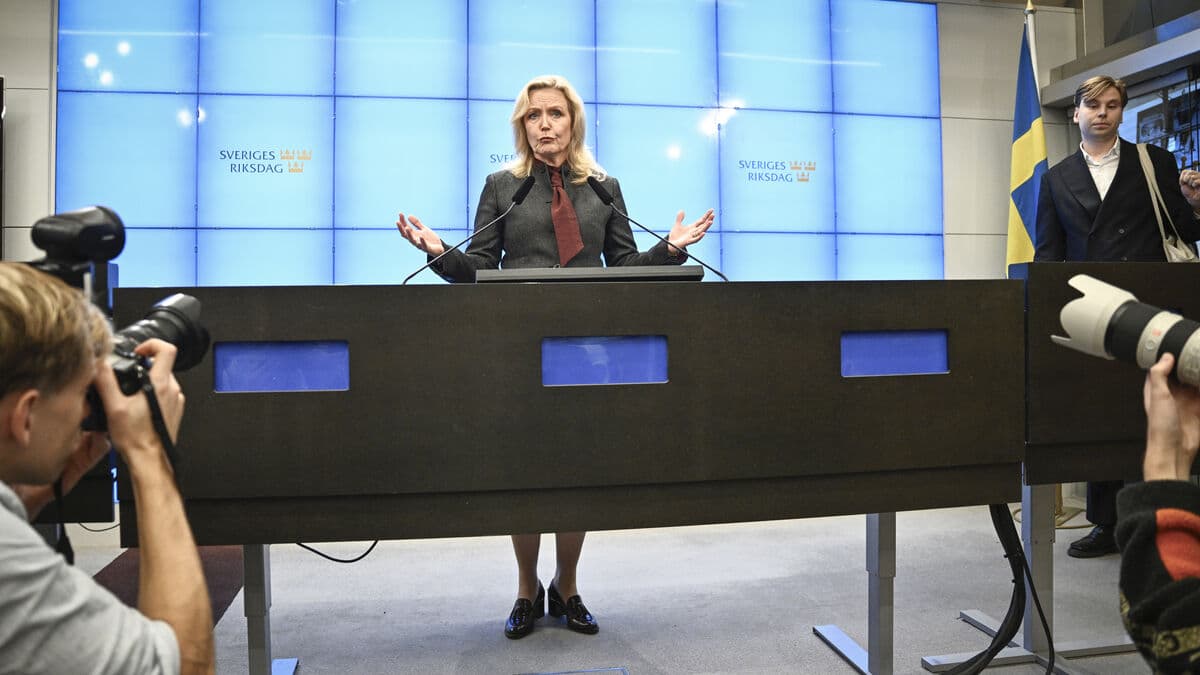
Romina Pourmokhtari believes that the proposals are going in the completely wrong direction.
"In the midst of a scorching hot Europe, the Commission chooses to cowardly remove and weaken the Union's most powerful tool for reducing emissions. The proposal upsets the rules of the game for all companies that are at the forefront and have invested in their climate work. The government will fight tooth and nail, with Swedish business and industry at its back, against this loosening," she writes in a comment.
“Phenomenal tool”
Hoekstra stresses that the ETS is “a phenomenal tool” that has led to emissions being halved across the sectors covered. He argues that the EU’s 2040 target of a 90 percent reduction in emissions can also be achieved with the new proposals.
The ETS is based on companies paying for each tonne of carbon dioxide they emit by buying emission allowances. To reduce emissions, the number of emission allowances is also reduced each year, but now the Commission is pulling the trigger and proposing a lower reduction rate from 2031.
Today, emission rights are distributed free of charge to certain heavy industries and the idea has been that they will be phased out by 2034. Now free allocation is maintained, but it is conditional on the companies using them for climate investments.
100 percent must be invested to reduce emissions in Europe, says Hoekstra.
Concerns about Swedish forests
The revision of the ETS rules is being done because the current ones only apply until 2030, but countries in eastern and southern Europe have pushed hard to relax the rules. This autumn, the fight over the ETS will continue in negotiations in the EU Parliament and the EU Council of Ministers.
From the Swedish perspective, there is now concern that the forest will have to pay the price, with higher requirements for being a carbon sink.
"The proposal risks placing an unreasonable amount of responsibility on the Swedish forest. Swedish forestry should not be used to compensate for other countries' lack of emission reductions," writes Prime Minister Ulf Kristersson in a comment.
The European Commission proposes, among other things:
The number of emission rights will be reduced more slowly. From the current 4.4 percent per year to 3.7 percent in the years 2031–2035 and 1.7 percent after 2036.
Emissions rights will remain in place into the 2040s. Previous targets have been for the industry covered by the ETS to reach zero emissions by 2039.
Free emission allowances will remain, but will be conditional on investments being made to reduce emissions.
Member states must invest half of their ETS revenues in projects that reduce emissions.
Investments will be promoted by establishing an Industrial Decarbonisation Bank (IDB).
International aviation and shipping are being more included and waste incineration will gradually be included.
Source: European Commission
The ETS (Emissions Trading System) was introduced in 2005. The aim is to reduce emissions of carbon dioxide and other greenhouse gases, so that the EU's climate goals can be achieved.
The principle is based on companies paying for each tonne of carbon dioxide they emit, which provides an incentive to reduce emissions.
There is a cap on the number of emission rights and this cap is reduced every year.
Companies that need more emission rights can buy from companies that have surpluses, which benefits companies that are converting.
Certain particularly competitive sectors receive free emission allowances.
Approximately 750 Swedish industrial and energy production facilities, 36 shipping operators and around 10 aircraft operators are covered. In total, industrial and energy companies are included that account for just over 40 percent of total greenhouse gas emissions in the EU.
Source: Swedish Energy Agency, Swedish Environmental Protection Agency