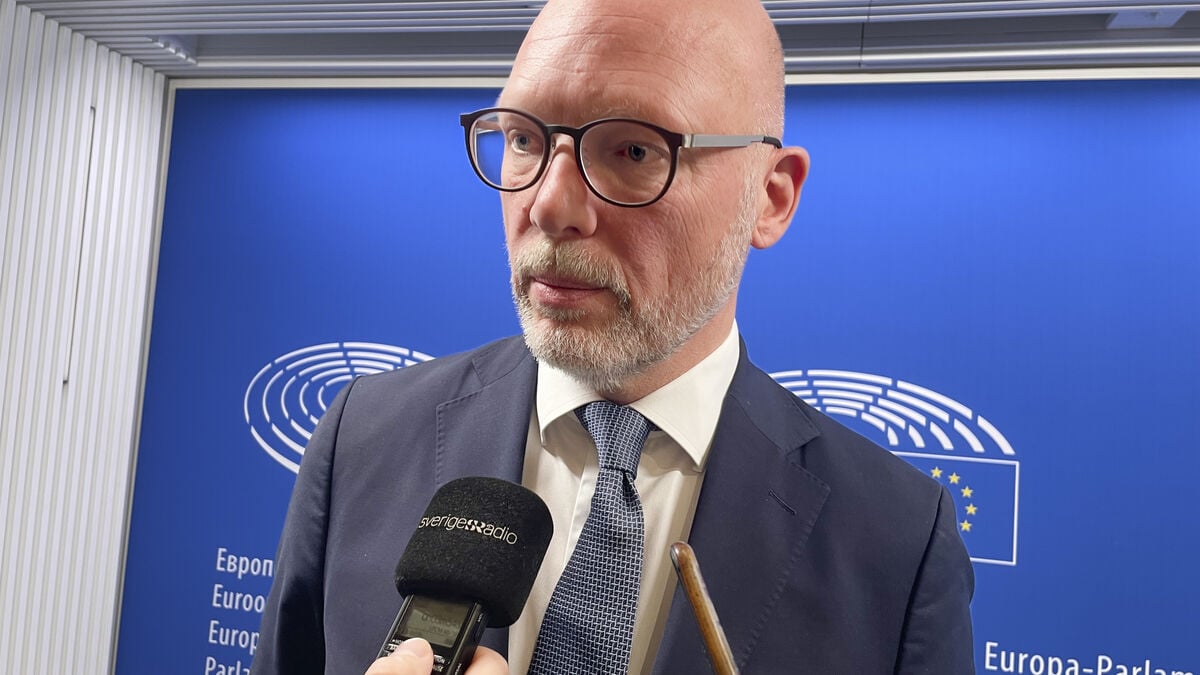
Warborn has been at the center of an infected debate recently as the lead negotiator for the EU Parliament's view on how the sustainability directives CSR and CSDD can be simplified.
In the end, he emerged victorious when parliament voted yes on Thursday with 382 votes to 249 against and 13 abstentions.
This means, among other things, that significantly more companies will be exempt from requirements to, for example, ensure that subcontractors outside the EU behave in terms of climate and labor law.
Lowers costs
Economically important, Warborn thinks.
"I think this is the single piece of legislation in the history of the EU that has reduced costs the most for companies, and that's important. Because that's what we need to get back to competitiveness," he tells TT and SR Ekot in Brussels.
But not everyone is happy. Warborn has been heavily criticized for his tough negotiating style, where he and the EPP party group have said they are open to taking support from the far right to get their line through.
That is what happened in the end. In addition to the EPP, the yes votes came mainly from party groups including the French National Rally, Hungarian Fidesz and German AFD.
Usually, the EPP tries to cooperate with social democrats and liberals.
But it didn't work, in that particular file. Then I made my own proposals and got a majority for it. I don't think it's more complicated than that, says Warborn.
Tidö collaboration?
My colleague Heléne Fritzon (S) is even more critical.
The decision here is a total disaster. This is their real first step towards a new majority in the European Parliament. There is no doubt that the Moderates have sought Tidö cooperation also at the EU level, says Fritzon in Brussels.
The fact that more people are exempted from the sustainability rules is also receiving criticism from various environmental organizations.
"Laws that provided hope, security and the promise of a more just and sustainable future have been reduced to exercises with no effect on real needs," writes Mariana Ferreira from the World Wildlife Fund (WWF) in a statement.
On Thursday, the European Parliament approved its view on proposed climate targets for 2040, when it wants to reduce emissions by 90 percent, compared to the 1990 level. It also wants to postpone the new emissions trading system ETS2, which affects housing and transport, until 2028.
Parliament also adopted its view on regulatory simplifications in the sustainability directives CSR and CSDD, which, among other things, set requirements on how companies act against child labour and pollution among their subsidiaries and suppliers. For example, Parliament wants CSR to only apply to companies with more than 1,750 employees and CSDD to companies with more than 5,000 employees.
Final compromise negotiations with the EU member states in the Council of Ministers are now beginning on both issues.