The compromise offer was finalized on Thursday afternoon and will now be considered by ambassadors, EU ministers and the heads of state and government of EU countries.
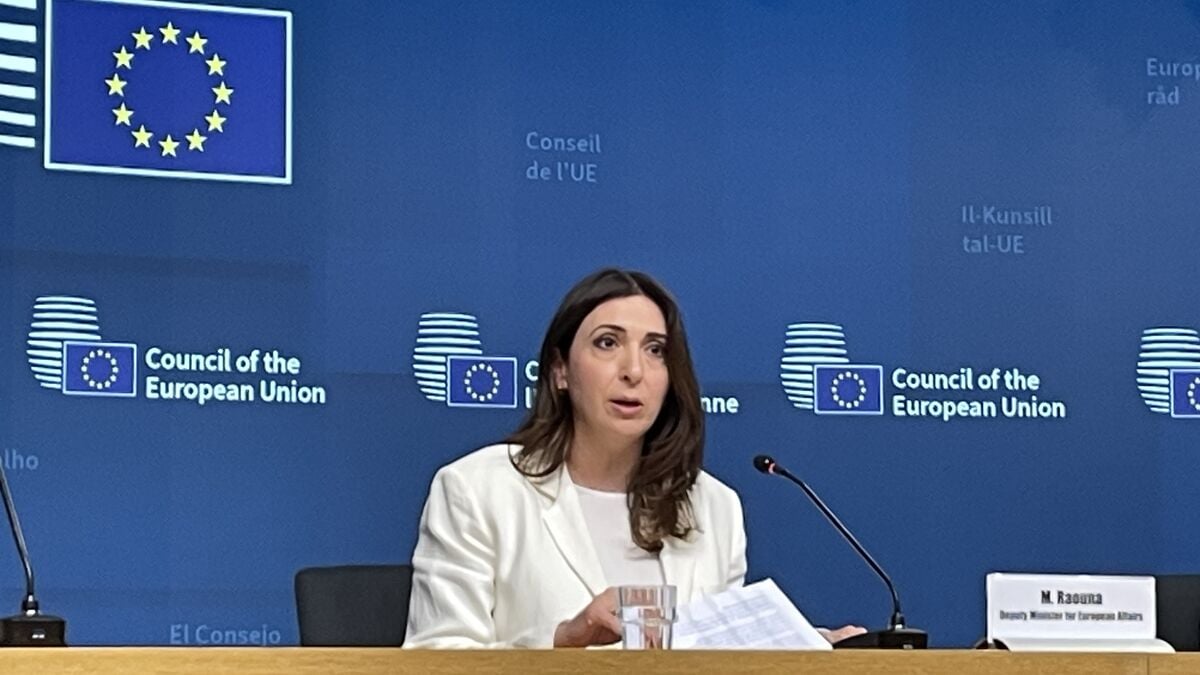
"We are presenting a mature negotiating box with concrete figures. Not everyone is happy. It is a compromise – but a balanced one," says Deputy EU Minister Marilena Raouna at a press conference in Brussels.
The bid means that the budget for the years 2028-34 now corresponds to 1.23 percent of the EU's total gross national income, GNI, rather than 1.26 percent in the European Commission's initial bid.
Criticism is expected
The negotiating offer will, as usual, be met with criticism from other EU countries who either want to increase the budget or reduce it significantly more.
"We are well aware of that. Some countries have made it clear that they want to see significant cuts," notes Raouna.
Sweden is one of the countries that wants to see a significantly smaller budget.
"Sweden has always been clear that the volume must be reduced significantly. I would have expected the box to be more in line with reality," comments Jessica Rosencrantz, calling the negotiating box "completely unacceptable."
The cuts are made primarily in areas such as defense, research, and competitiveness, although it is explained more as a "reduced increase" rather than a cut.
Decisions about taxes?
However, the traditionally large investments in agriculture and regional policy are relatively unchanged. Cyprus has also chosen to keep repayments on the EU's large coronavirus loan as part of the budget, instead of putting them completely separately, as the EU Parliament wanted.
A final settlement is not expected until the turn of the year at the earliest.
In parallel, EU Council President António Costa is pushing countries to agree to new direct funding for the long-term budget.
In his invitation for next week's EU summit, Costa emphasizes the importance of "facilitating" an agreement on the budget this year.
“That includes making progress on new own resources, which will be crucial,” Costa writes.
Among the proposals are EU taxes on online gambling and crypto revenues.
As the presidency of the EU Council of Ministers, Cyprus has proposed a long-term budget of 1,730.2 billion euros (compared to 1,763.1 billion in the European Commission's original proposal from last summer).
The money is distributed across four main areas:
941.1 billion (946.4 in the original proposal) for "economic, social and territorial cohesion", which covers everything from agricultural and regional support to migration management and repayment of the joint coronavirus loan.
501.7 billion (522.2 in the original proposal) for "competitiveness, prosperity and security" - which also includes defense, research and student exchanges, among others.
182.5 billion (190 in the original proposal) for “global Europe”, with assistance and support for neighboring regions and countries on their way to joining the EU.
103.8 billion (104.4 in the original proposal) for "administration and other", such as salaries.
Source: European Commission/EU Council of Ministers.