When the Strait of Hormuz was blocked, it meant that oil and gas supplies were cut off. Normally, about a fifth of the world's crude oil and natural gas flow through it.
When prices at the pump rise, several countries have reacted as they usually do - with reduced taxes and subsidies.
But we are also seeing now - for the first time during a crisis - that one tool that governments are using is to accelerate the transition to renewables, says Mike Enskat.
Countries such as Vietnam, Laos and Kenya have introduced tax breaks for electric vehicles. Iceland and Australia are scaling up charging infrastructure. Spain has introduced tax breaks for solar installations, while the UK is accelerating the rollout of balcony solar panels.
Investing in the sun
Some parallels can be drawn to Russia's war of aggression against Ukraine, which led EU countries to turn to the Persian Gulf. This led to a crisis in Pakistan, which was left without the gas it had been counting on buying from Qatar. Instead, people turned to solar power.
"Most of it was not driven by political decisions, but by people starting to look for their own solutions as a reaction to rising costs and recurring power outages as a result of the shortage shock. We are seeing that trend again," says Enskat.
A difference is that the trend is being driven by private individuals and smaller companies. Normally, it is large state-owned energy companies that make decisions that affect the energy sector.
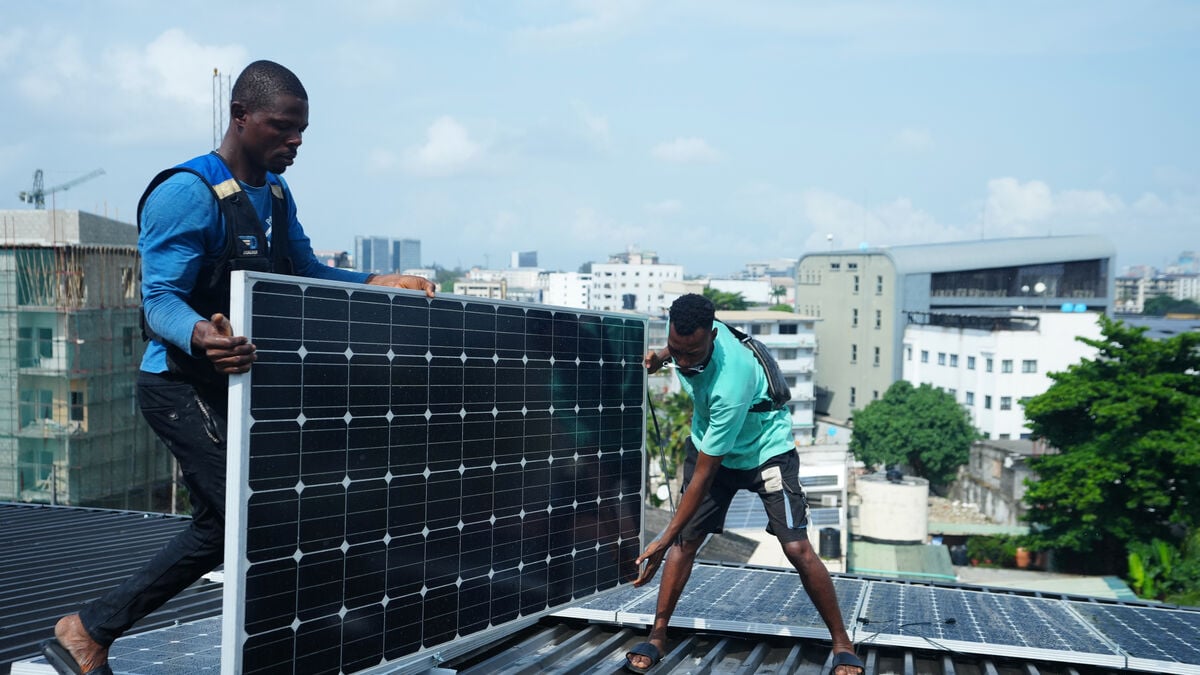
Solar panels combined with batteries are often the most competitive option, and buyers are not looking to do a green deed.
"The power grids have been affected by major outages, and if you want to keep the store open, you have to look for alternatives, and the climate is not the main thing you think about," says Enskat.
Shipped from China
Official figures have not yet confirmed those numbers, but China shipped 1.3 billion solar cells in April (up 60 percent from last year) and 1.7 billion in March, according to Reuters. This is partly due to well-stocked inventories in China.
There seem to be many solar panels on ships bound for Kenya, Tanzania and Nigeria, but also India, Bangladesh and Pakistan, all of which are exposed to the gas outage.
There are also some who are turning to coal, an energy source that has been in decline in recent years.
There is a trend where a lot of investment is going into making coal-fired power plants more flexible so that they can be started or shut down much faster than traditionally has been possible.
Facts: Irena
IRENA, the International Renewable Energy Agency, is an intergovernmental organization with 170 countries and the EU.
IRENA is independent but works closely with the UN. Its aim is to promote the expansion of all forms of renewable energy.
The organization was founded in 2009 and releases reports and statistics on developments, among other things.
Source: IRENA