Wasn't it close just now too?
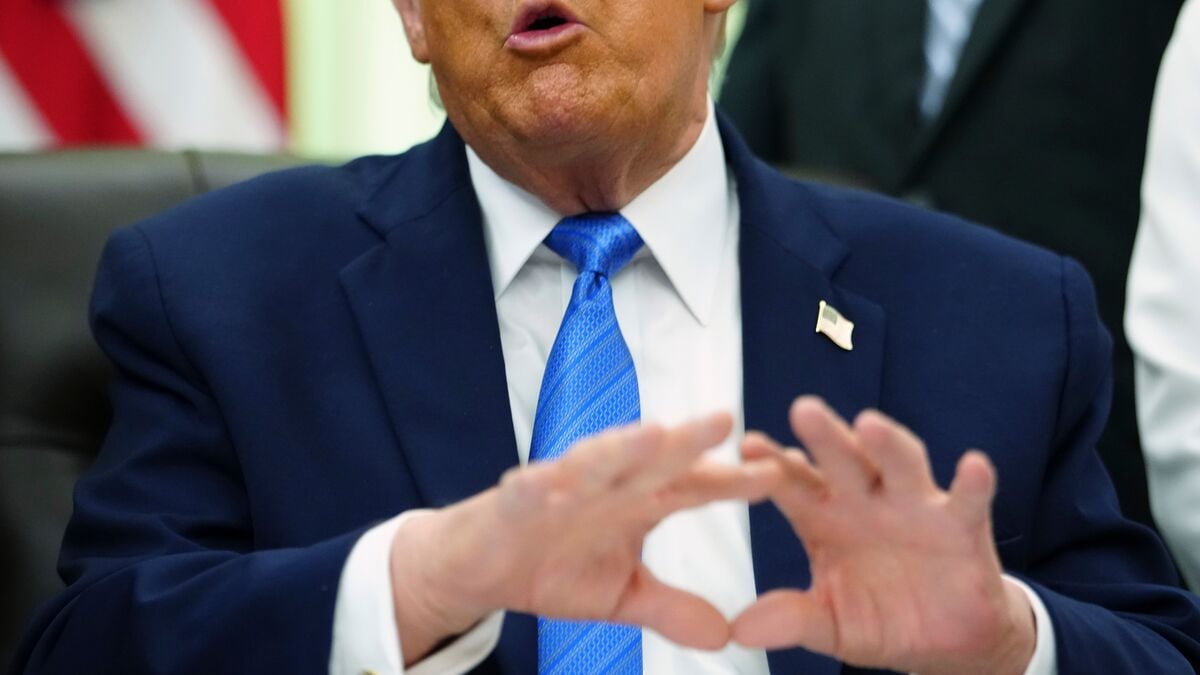
On Tuesday, Donald Trump claimed - as he has several times before - that a deal with Iran was very close. On Wednesday, he accused the Iranians of stalling and announced that they would “pay” for it.
The United States launched new strikes against multiple locations in Iran, citing the shooting down of a US helicopter in the region on Monday. Iran responded with strikes against US military targets in the Middle East.
"We were very close to a deal, but they continue to try to mislead us. They take us for fools," President Trump said.
Pete Hegseth called it "negotiation with bombs." Iran said it would not heed threats and was ready to fight back, which it has done.
Wasn't there a ceasefire?
Even when the countries agreed on a ceasefire on April 8, it was clear that they did not agree on the terms. Iran believed that Lebanon was also included, but the United States and especially Israel did not.
The Israeli government, pushing for continued confrontation with Iran and its ally Hezbollah, escalated its ground invasion of Lebanon step by step.
Donald Trump is reported to have scolded Prime Minister Benjamin Netanyahu in a phone call because of this.
Last weekend, Israel attacked the Lebanese capital Beirut again. Iran intervened and attacked Israel; Israel attacked Iran, and a 24-hour spiral of violence was stopped after diplomatic pressure.
When the US then resumed attacks on Iran, the US reportedly tried to assure mediating countries that it did not intend a return to full-scale war.
What are they supposed to agree on?
The US's stated war goals have been adjusted continuously. Where there was initially talk of regime change, zero tolerance for its nuclear program and the destruction of Iran's military capability, Donald Trump has begun to formulate the goal that "Iran should never be allowed to have a nuclear weapon."
The negotiations have focused on restrictions on the nuclear program and the dilution of highly enriched uranium. In return, Iran would be exempt from extensive sanctions, but it has also demanded an end to Israeli military operations in Lebanon.
The question is how the terms differ from the major nuclear deal from 2015 that Trump was sharply critical of and pulled out of.
Media in the US are reporting that the war is starting to have a clear impact on the president's public standing ahead of this fall's midterm elections.
In Iran, the power apparatus largely remains intact, with a documented ability to suppress popular uprisings with deadly force and to block a large part of the world's oil traffic in the Strait of Hormuz.
Facts: The JCPOA Agreement
In 2015, the nuclear agreement, the JCPOA, was signed between Iran and the “P5+1” - the five permanent members of the UN Security Council (France, China, the UK, Russia and the US) plus Germany.
Iran would only be allowed to enrich a certain amount of uranium to a relatively low purity, far from that required for nuclear weapons, but sufficient for civilian purposes. The outside world would also be given greater transparency. In exchange, sanctions would be lifted, with the goal of all being lifted after ten years, by October 2025.
In 2018, US President Donald Trump decided to withdraw from the agreement and impose stricter sanctions. Iran responded by stepping up its enrichment and stockpiles of uranium.
In recent years of escalation and war, the US has previously demanded that Iran stop enriching uranium altogether. Iran has objected that all countries that have signed the Nuclear Non‑Proliferation Treaty have the right to enrich uranium for civilian purposes.