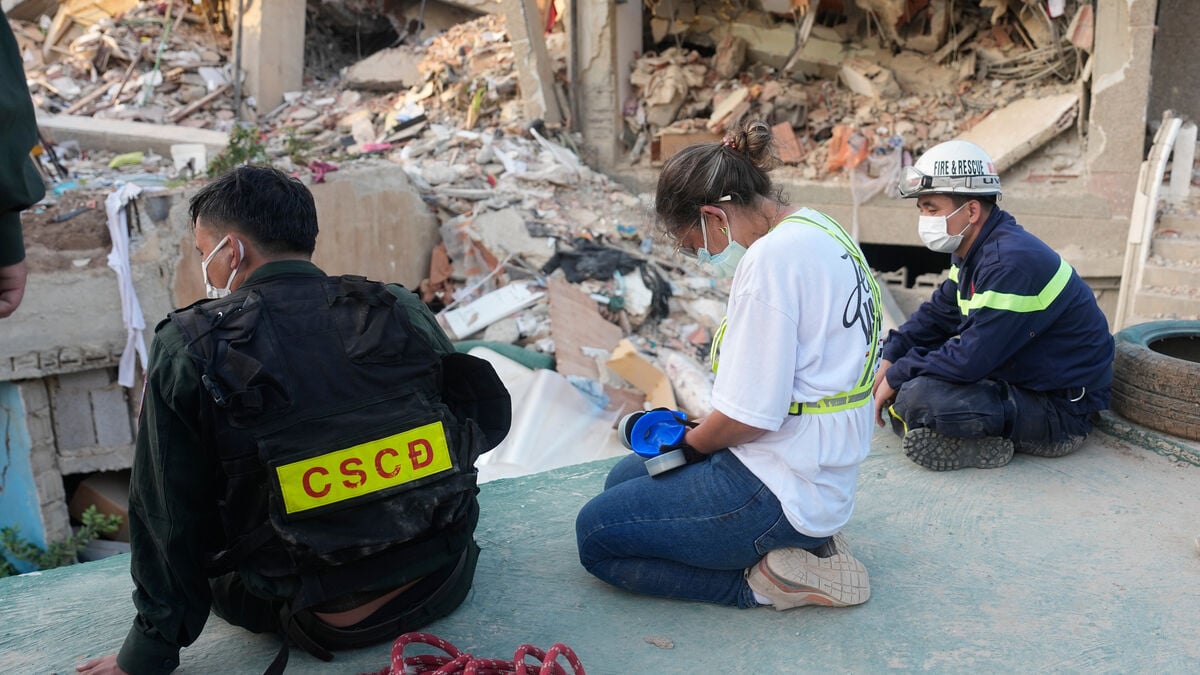
Security guard Hernán Gil was buried under seven collapsed floors of Catia La Mar, inside the cubicle where he was working when the first earthquake shook Venezuela last Wednesday.
Signs of life from him were discovered this weekend.
And thanks to rescue workers managing to provide him with food and water while slowly working their way closer to him, he was able to be kept alive significantly longer than the maximum three days often expected for disaster survivors.
Cheers erupted among the international rescue team, led by Chilean firefighters, when father-of-two Hernán Gil was finally able to be carried out on a stretcher to a waiting Red Cross ambulance.
It's a miracle, his wife Gusbimar González previously told AFP about the fact that her husband is alive - and that so many people helped in the fight to save him.
Two-year-old rescued
On Tuesday - six days after the quake - a two-year-old boy was rescued in La Guaira. When he arrived at hospital he was in a state of shock - “just screaming and screaming,” his aunt Andreína Sarmiento told the BBC. Now she is hoping for another miracle: that her sister and her husband will be found alive.
"I pray to God to give me strength. He is only two years old and I am not a mother," says the 23-year-old.
Nearly 2,300 people were confirmed dead in the quake, which was the strongest to hit Venezuela in over a century, as of Wednesday evening. Tens of thousands are still missing.
Marked with "D" for dead
The window for finding survivors is getting smaller. Over the past six days, the approximately 3,000 international rescue workers who have arrived have only managed to save twelve people alive, the UN's disaster coordination team, UNDAC, said, according to the Spanish news agency EFE.
In hard-hit La Guaira north of Caracas, a majority of the demolished buildings are now marked with the letter D, AFP reports. D for deceased, meaning that the houses have been searched without rescue workers finding any signs of life.
On Wednesday, the Dutch team announced that it is ending its mission in Venezuela, as the chances of finding survivors have decreased.