The idea came at the beginning of last year and was already available this summer, but has only now gained traction.
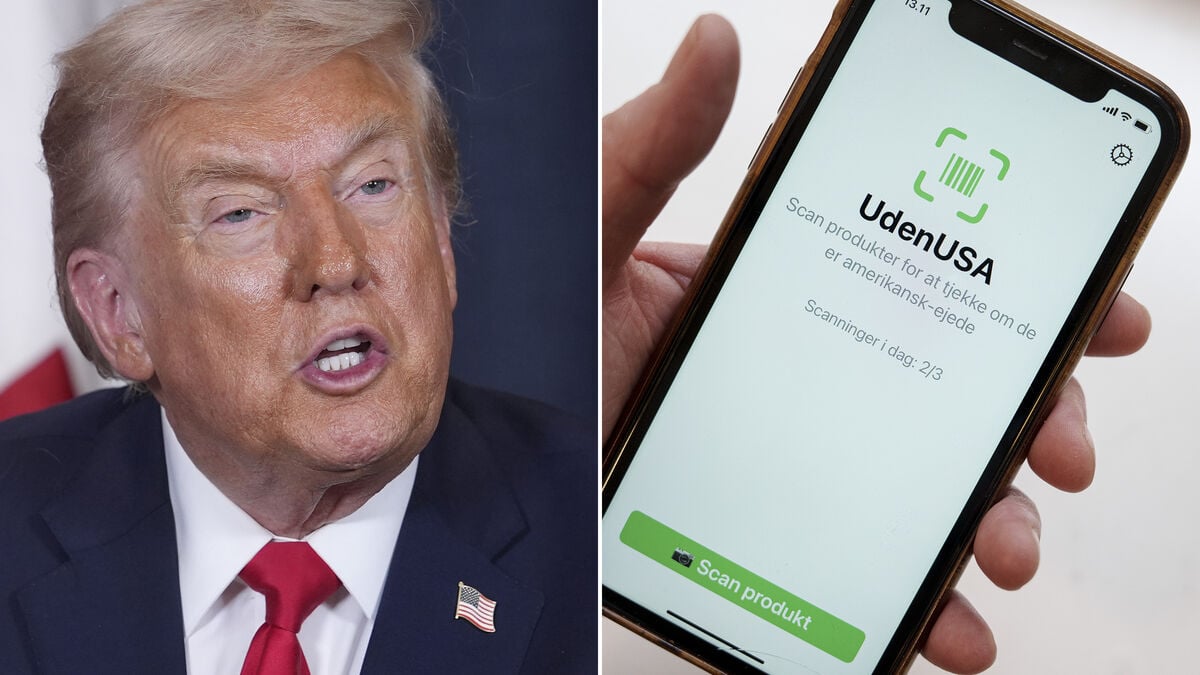
When we launched it, Trump was busy with other things. But in the last two days it has been downloaded 45,000 times. It's pretty crazy. It's mostly from Denmark, but also from Germany, Norway and Finland.
Complex production chains
With the app, you can scan items in grocery stores and get alternatives to American products.
We noticed a problem. Many people want to boycott goods from the US, but it's difficult when you're standing in a store and don't know where they come from. We thought it might be fun to see if it was possible to build a database with product facts, said Pipper, giving an example:
Production chains can be very complex. For example, Coca-Cola is produced by Carlsberg in Denmark, but if you scan it in the app, it says it's American. We've been criticized for that, but we do it because Carlsberg pays Coca-Cola for the license.
Messages to "boycott the US" spread widely on social media after Donald Trump's first wave of threats in early 2025. Groups sharing the message grew rapidly, but fell into hibernation as Trump focused on other parts of the world.
Drop in the ocean
Now they have come back to life, but if you ask Dannie Kjeldgaard, who researches consumer culture theory, boycotts of American goods have so far not caused any major economic damage to American companies.
Has it been possible to see it in Coca-Cola's results? No. The Danish market is a drop in the ocean, he says.
But that doesn't mean it hasn't had any significance.
"It has had a certain effect. We can see that travel to the US has decreased drastically. We also saw that Tesla sales plummeted. Then there is also a symbolic effect that can affect companies that are associated with the US," says Kjeldgaard, professor at the University of Southern Denmark.
Brands have experienced a negative symbolic effect by representing American culture. But it needs to happen over time and on a broader scale.
Jonas Pipper believes it's about establishing a behavior and making it easier for customers.
That's where we hope the app can help, he says.