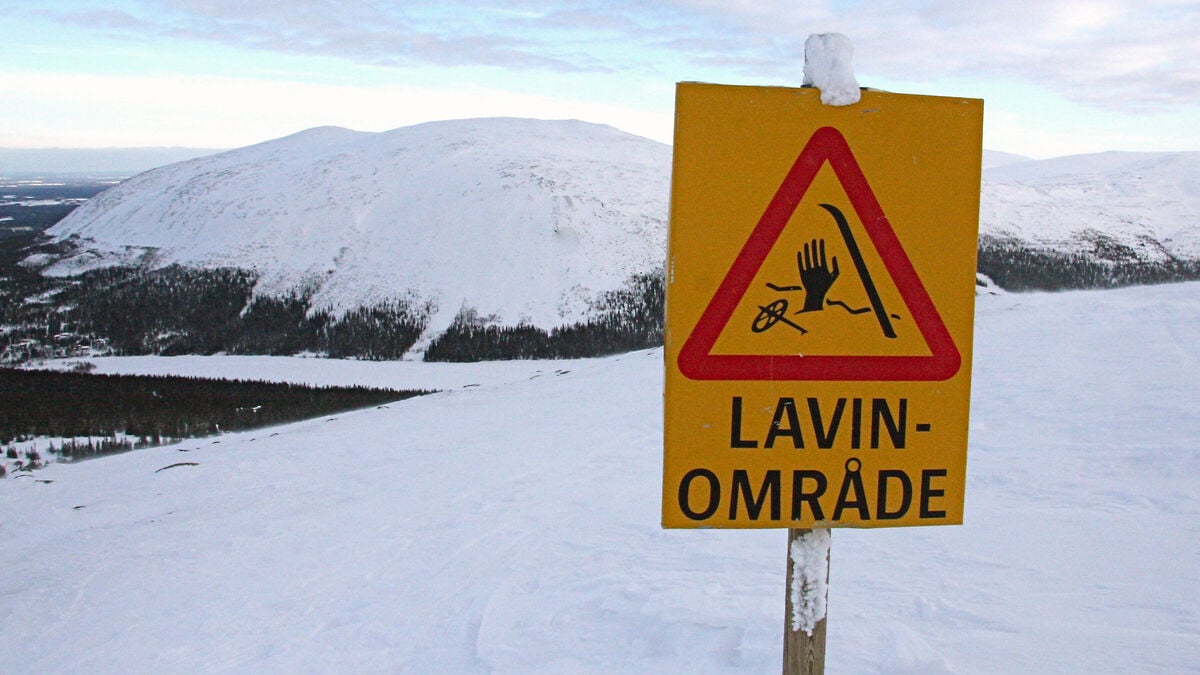
Floes of drift snow that have formed on the lee sides of the mountains in both areas – where several winter sports resorts are located – can cause avalanches when loaded by a skier, a snowmobile or a falling snowdrift.
The advice is to avoid slopes steeper than 30 degrees with smooth drift snow and the terrain below such slopes until the snow has stabilized.
"Sometimes it's just the surface snow that collapses, but the drift snow can also crack significantly deeper, which can cause large avalanches," the site says.
The warnings are currently in effect until Tuesday at 6 p.m.
Significant avalanche danger means a three on the five-point scale.
In the southern Lapland mountains and western Vindelfjällen, the avalanche danger is assessed as moderate, while the situation in the Kebnekaise mountains and in the Abisko and Riksgränsen mountains has not been assessed.
(TT)
Avalanche danger is divided into a five-point scale:
1. Low danger. Conditions are generally safe. Snow may be unstable in isolated places. Avalanches unlikely.
2. Moderate danger. Hazardous conditions in parts of the terrain. It is possible for people to trigger avalanches, but spontaneous avalanches are unlikely.
3. Significant hazard. Hazardous conditions. Human-triggered avalanches are likely and spontaneous avalanches are possible.
4. High danger. Very dangerous conditions. Very likely to have spontaneous avalanches and people triggering avalanches.
5. Very high danger. Human-triggered and spontaneous avalanches are certain to occur.
Source: Avalanche Forecasts.se