A moving truck with bags and boxes stands outside Mjølnerparken, an area in northwest Copenhagen that ended up on Denmark's "ghetto list" in 2018.
Since then, the area has undergone a major facelift. Majken Felle and her neighbors from all corners of the world – including Pakistan, Syria and Lebanon – have been forced to move, and now new tenants have started moving in, as part of Denmark's goal of having no parallel societies by 2030.
Prime Minister Mette Frederiksen (S) has defended the approach, saying that the state actively needs to do something about the country's vulnerable areas, including to improve integration.
We need to clean up housing policy, and it hasn't gone particularly well, she previously told TV 2.
“Collective punishment”
Specifically, this means that an area may not have more than 50 percent "non-Western" residents, among other things.
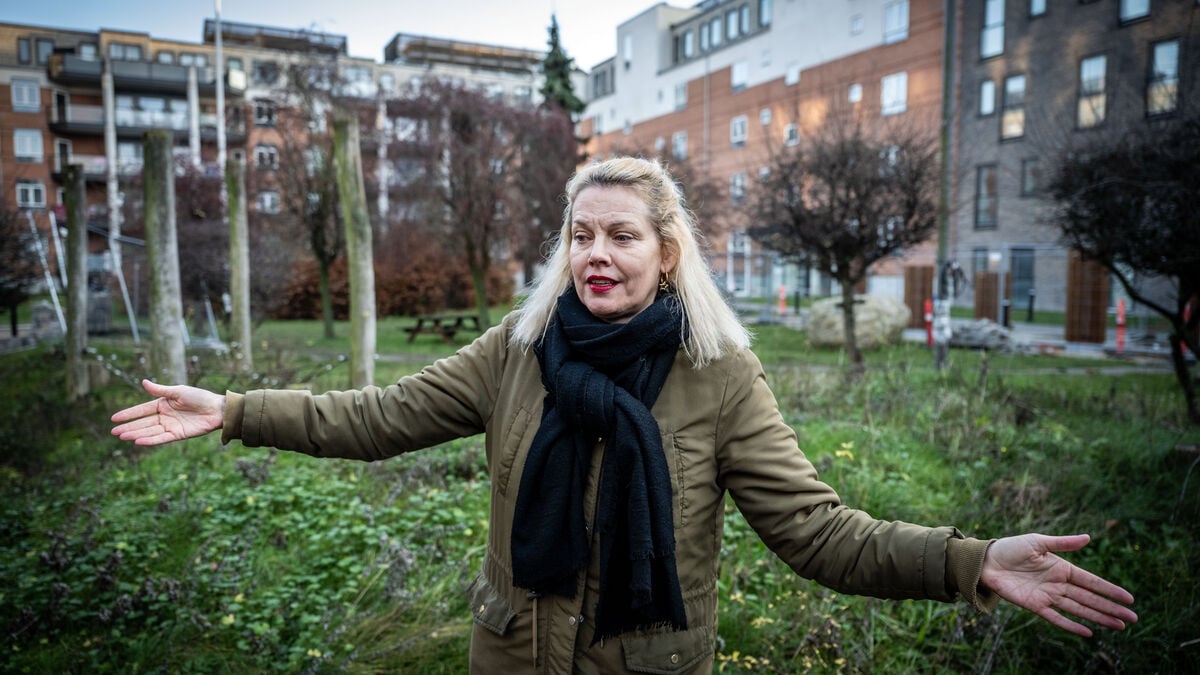
I have never lived in an area where people have been so helpful and open, says Majken Felle, looking up at her old apartment, which she describes as the "best place she has ever lived."
It's something we won't be able to get back, but I hope we're at least proven right that it was wrong and discriminatory.
Once an area has been on the “ghetto list” for four years, the landlord can either choose to convert, demolish or sell the homes.
In Mjølnerparken, the landlord chose to sell, which affects all tenants, including Majken, who is ethnically Danish and is seen as an “asset”.
"It's what's usually called collective punishment based on criteria that are racist," she says.
Affects the entire EU
Together with twelve other people, she has sued the Danish state for ethnic discrimination.
Kirsten Ketscher, professor of law at the University of Copenhagen, believes they have a good chance of winning the case.
My view is that Denmark will lose, which would mean that they will not be able to continue with these relocations, says Ketscher.
According to her, the goal is principled and thus guiding for the entire EU.
I believe that the decision, whatever it is, will have a major impact on other countries. Countries that have been inspired by Denmark will need to think twice before introducing something similar.
In 2018, a broad majority in the Danish Parliament voted for the "ghetto package" with a series of measures to combat gang crime and parallel societies.
One of the measures involves areas being placed on a list of parallel communities if residents do not meet a number of criteria, such as ethnic origin, income, educational level and criminal record.
If an area has more than 50 percent "non-Western" residents, it ends up on the "ghetto list", regardless of the residents' education level and criminal record.
If the area remains on the list after four years, a requirement is enforced that the proportion of public housing be reduced by 60 percent.
The requirement can be met either by demolishing the homes, converting the homes into youth housing and retirement homes, or selling the properties to private owners.
In 2021, the term “ghetto” was formally replaced with “parallel community”, but in everyday speech the word lives on.