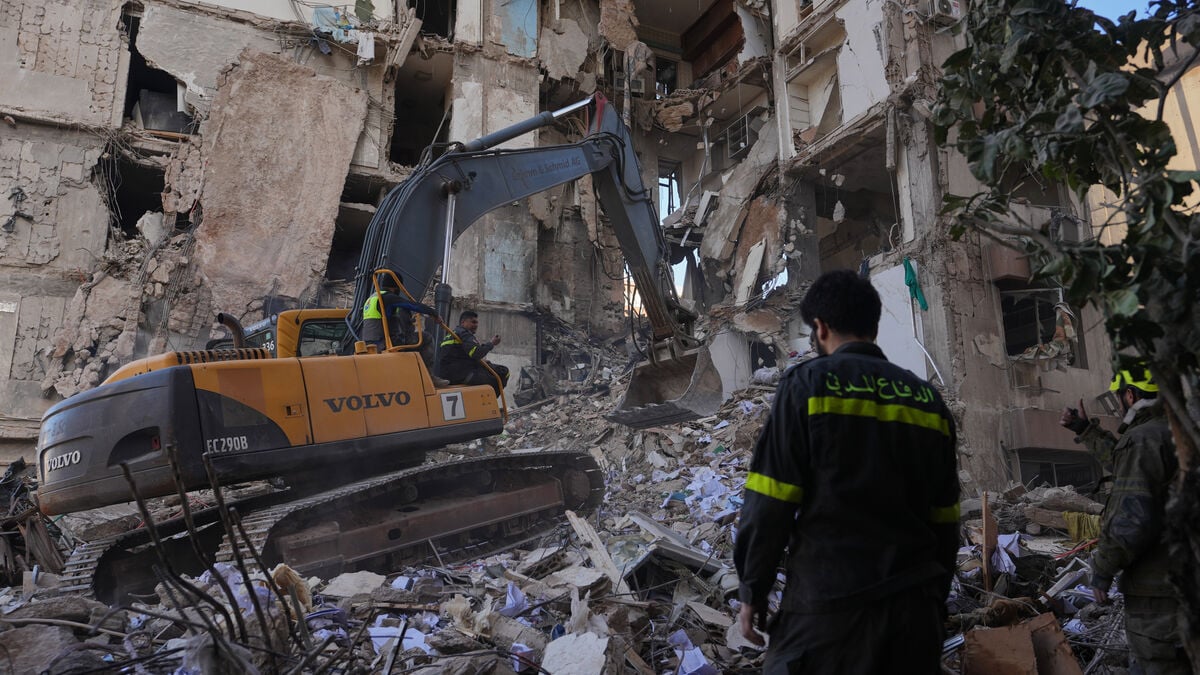
Everything is pitch black, there is a lot of rubble and debris here, people are standing and looking, and the windows in all the surrounding buildings are broken.
Christophe Boulierac, communications manager at the UN children's fund UNICEF in Lebanon, says by phone that he is standing in front of one of the bombed-out buildings in the capital, Beirut.
He has just visited Rafik Hariri Hospital, where he met, among others, a ten-month-old boy who sustained a serious neck injury in one of Wednesday's Israeli attacks on the city.
His mother spoke about what so many people are talking about now, that the attacks were carried out in neighborhoods that had not been attacked before. People are trying to understand where they can be safe.
"You see an emptiness and sadness on the faces of people on the street. It's the opposite of the Beirut I know," Boulierac continues.
"Many children"
The figures from the government on Thursday evening report more than 300 deaths and around 1,150 injured in Beirut and southern Lebanon on Wednesday.
The exact number of children affected is still unclear, Christophe Boulierac points out, but he adds:
There are obviously many children among them. It is clear that the already horrific death toll among children has now increased.
After Wednesday's attacks, Lebanese authorities state that a total of 1,888 people have been killed and just over 6,092 injured in Israeli attacks since the beginning of March.
Before Wednesday's attacks, nearly 130 children were reported to have been killed since March 2.
"Risk of collapse"
Boulierac recalls that approximately one million people in the country - including an estimated 390,000 children - have fled their homes since the latest fighting began on March 2.
These children are already extremely traumatized and vulnerable.
He says that UNICEF has started mobile clinics but needs the equivalent of nearly 450 million kronor initially for clean water, hygiene items, schooling, and protection and psychological help for children.
"Our job is to help the national healthcare system, which is already in a bad state. The pressure is enormous and it risks collapse."
What is needed most?
"What is needed most is peace, and for all parties to respect humanitarian law."