Denmark's Climate Minister Lars Aagaard, who led the 24-hour negotiations in Brussels, is certainly satisfied.
Now we can go to COP30 (in Brazil) with a very strong position and once again show global leadership, Aagaard says to colleagues at the meeting.
The goal of reducing emissions by 90 percent by 2040 was put forward by the European Commission this summer. However, fierce discussions have been ongoing about the details of how this will be achieved.
It is precisely in the details that the Commission's more ambitious plans are watered down.
“Both ways”
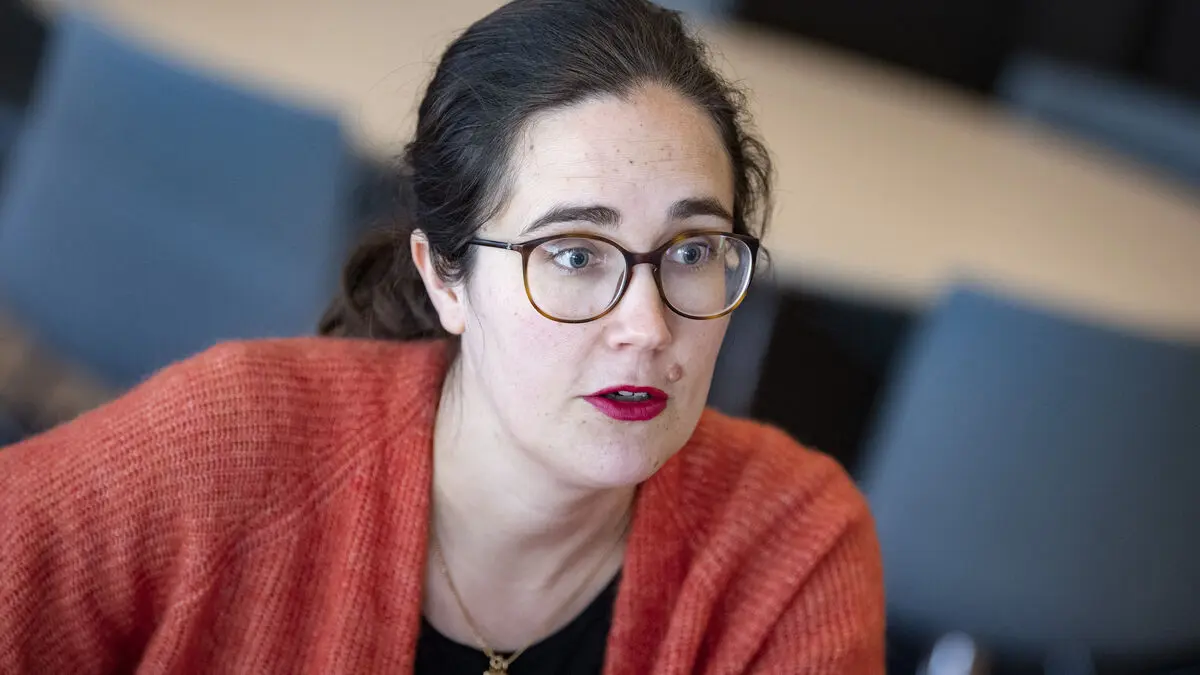
Climate and Environment Minister Romina Pourmokhtari (L) still chooses to emphasize the importance of it truly becoming a binding target of 90 percent, rather than a lower figure.
"It goes without saying that concessions have been made on both sides. There are many countries that at the beginning of the negotiations did not want to see a 90 percent target and that has been a very clear red line from Sweden's side," she tells TT, SR Ekot and SVT after the meeting.
The dilutions are more about how it will be done than what target level it is about. We have landed in a much better place than we anticipated when these negotiations began, emphasizes Pourmokhtari.
Operations abroad
The agreement includes, among other things, increased opportunities to include efforts made in countries outside the EU, using so-called "international credits".
In addition, the new emissions trading system ETS2, which affects transport and buildings, is being postponed for another year.
Several countries are concerned that this will lead to higher energy and housing prices and significantly worsen public attitudes towards climate action.
Double criticism
However, the criticism is sharp and twofold.
Several countries, mainly in Eastern and Southern Europe, want the EU to slow down its climate ambitions even further. Hungary, Poland and Slovakia remain against the agreement that has now been reached. Belgium, Bulgaria and Austria also have objections.
The World Wildlife Fund, WWF, for its part, believes that the 90 percent figure is not accurate when the concessions are included.
"The real figure will be lower than 85 percent. The EU should lead by example, rather than loopholes," writes Michael Sicaud-Clyet from WWF in a statement.
Facts: The EU's new climate goals
After an extraordinary meeting of environment ministers, EU countries have agreed on their view of the European Commission's proposal that the EU should have reduced its emissions by 90 percent by 2040, compared to the 1990 level.
The European Parliament also now needs to establish its position before final compromise negotiations can begin.
In parallel, EU countries have adopted the EU's so-called National Climate Plan (NDC), which will be presented at the COP30 climate summit in Brazil. In practice, this means that by 2035 the EU will strive to reduce its emissions by between 66.25 and 72.5 percent, compared to 1990.
The EU has previously set the goal of being climate neutral by 2050.