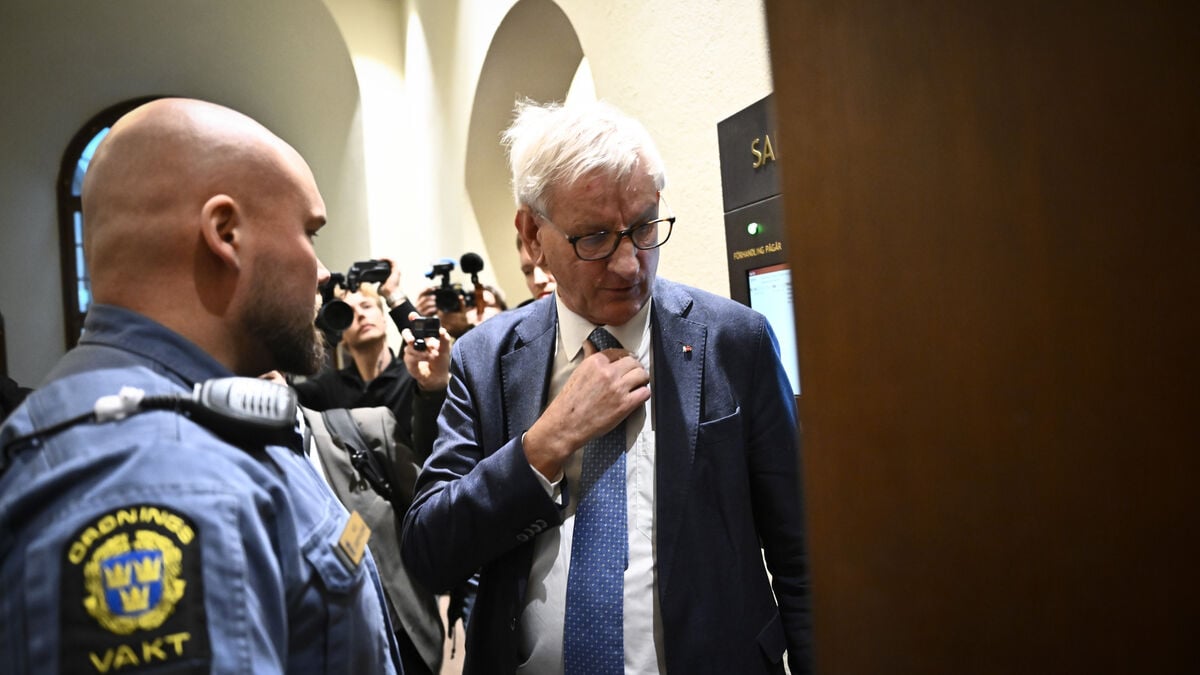
Bildt, who was a board member of Lundin Oil from 2000 to 2006, is one of around a hundred witnesses called to testify in the record-long trial over alleged complicity in serious crimes against humanity in southern Sudan from 1999 to 2003.
The two defendants, Ian Lundin and Alex Schneiter, former chairman and CEO respectively, have, according to the indictment, contributed to the Sudanese regime committing war crimes to secure the company's oil operations in the southern parts of the country.
During the fighting, many civilians were displaced, injured and killed. Both deny any wrongdoing.
Complicated conflict
Bildt said in court that he had no in-depth knowledge of the situation in Sudan when he joined the board and had never been to the country.
My understanding of the details of what was going on down there was limited. This was just part of the company's operations.
But over time he learned more and he emphasized that it was a deeply complicated conflict with rapidly shifting loyalties between combatants. Prosecutor Ewa Korpi asked Bildt a series of questions about reports of fighting taking place in Block 5a.
He said he had difficulty answering detailed questions, citing the passage of time, but said the fighting and bombing that took place were in areas other than where Lundin Oil operated.
Reports of abuse were taken very seriously and many resources were invested in investigating, he added. However, many reports of abuse were largely incorrect, Bildt said, noting that a propaganda war was also underway.
He was asked about emails he sent to, among others, Ian Lundin in the summer of 2001, warning that the regime had “resumed what is effectively indiscriminate bombing.” However, Bildt said these were in areas other than where the company operated.
It was unacceptable in every way, but it was very far away.
"Blessing"
During the break, Bildt answered questions from journalists, saying he did not regret his job at the company. While oil can contribute to worsening conflicts, it can also do the opposite, he said.
It helps develop countries. Today we have a situation in South Sudan where oil is also a blessing. It accounts for 90 percent of the state's income. I have not seen any serious report that says that oil was the cause of war.
When asked by TT whether he believed the company was a positive force in the area, he replied:
It came to be, absolutely. Roads were built, wells were drilled, doctors arrived. It was an incredibly undeveloped area at the time.
The trial in the so-called Lundin case has been ongoing since September 2023 and is the longest main hearing ever held in Sweden.
In the case, Ian Lundin and Alex Schneiter, former representatives of Lundin Oil, are charged with aiding and abetting serious crimes against humanity in southern Sudan from 1999 to 2003, when the Swedish company was active in the civil war-torn country.
According to the indictment, they were aware of and contributed to the killing and displacement of people by the military and pro-regime militia to create conditions for Lundin Oil's oil exploration in an area that had long been controlled by rebels.
Lundin and Schneiter have denied the allegations and say the indictment is based on a long list of factual errors. In addition to denying aiding and abetting, they also deny that the alleged war crimes were committed.
The trial is due to conclude in May this year.