Australia was the first country in the world to introduce a 16-year age limit on ten different social media platforms, including Instagram, TikTok and Snapchat, in December last year.
Since then, several countries have followed suit. The Philippines, Denmark and the UK are among those planning to introduce stricter age limits on social media. In total, work is underway in 35 countries around the world and the EU with similar rules to those in Australia, according to Unicef.
In Sweden, an inquiry into age limits for social media was appointed in October last year. The aim is to strengthen the protection of children's health and safety in digital environments. A first interim report will be released in June, but Prime Minister Ulf Kristersson (M) has already expressed his opinion:
"I think 15 years is natural," he told TT in early March.
The purpose of the Australian ban has been, from a political perspective, similar to the Swedish one - to protect children and young people from harmful content and other risks online. The ban had, at least initially, a major impact. Just over a month after it came into force, Prime Minister Anthony Albanese announced that 4.7 million social media accounts belonging to young people under the age of 16 had been blocked.
Still using
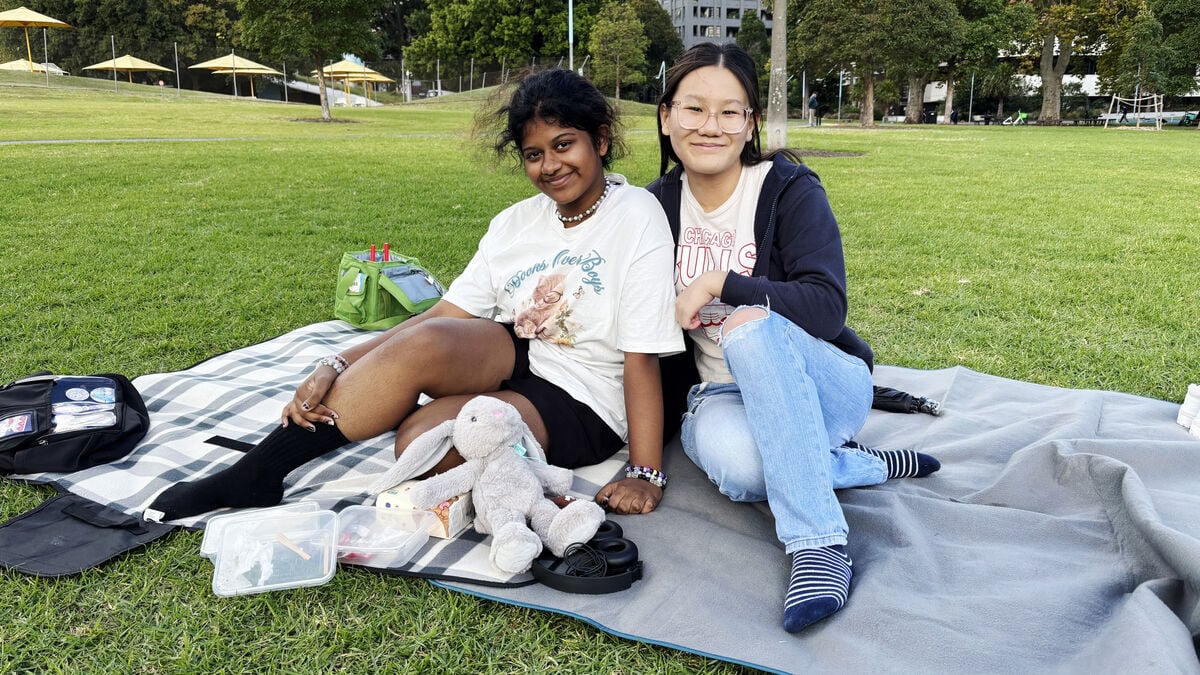
In a park in central Sydney, Alexis Ujong, 13, and Husandi Bendiyawattha Gamage, 14, have spread out a picnic blanket on the large lawn. Their phones are forgotten in their respective corners; instead a LEGO set is grabbing all the attention. But that's not because they've been kicked off social media - both have managed to get around the 16-year age limit.
"I scanned my face and they said I looked older," says Alexis Ujong.
"It's probably because they're using AI and not real people. I think that's a disadvantage of the ban, because AI isn't that smart yet," adds Husandi Bendiyawattha Gamage.
Many platforms use some kind of facial scanning to verify the age of their users.
"I got past it because I look old. That's why I can still use social media, and I have done so on every app," says Alexis Ujong.
Many returned
Testimonies from other Australians of the same age - including on social media - confirm the same thing.
"We know that many young people have circumvented the ban and the government has even said that it has been flawed legislation. It has also released statistics that around seven in ten young people have returned to social media," says Caroline Thain, chief advisor at the organization Headspace, which supports young people between the ages of 12 and 25 with mental health issues.
A survey conducted by the organization prior to the ban showed that around a third would try to get around the ban.
"A harmful effect, which was probably not foreseen, is that by bypassing it, young people have potentially exposed themselves to more harmful content, because they have lied about being over 16," says Caroline Thain.
"This is very worrying as it means that young people have been exposed to content aimed at significantly older people, which goes against the whole purpose of the ban."
Earlier this year, Australia launched an evaluation of the ban, led by the country's online safety regulator (E-safety commission). For two years, it will follow more than 4,000 children and their families to see the effects on, among other things, mental health and school performance. A first interim report with just under 900 respondents found that the proportion of social media users between the ages of 8 and 15 has dropped from just under 50 percent to just over 31 percent.
Platforms are being investigated
At the same time, the agency launched an investigation into five social media platforms, including YouTube and Instagram, which it suspects have failed to comply with the new law. If found, they could be punished with fines of up to 49.5 million Australian dollars, equivalent to around 325 million kronor.
To deal with the verification problem, the EU has developed an app to help member states check age limits on the internet. In Australia, there are hopes that the ban will be more effective in the long term.
"There are discussions that it might prevent younger children, who are not on social media yet, from accessing it. It could have good effects down the road, but it's hard to know," says Caroline Thain.
Back on the lawn in Sydney, a book made of LEGO has taken shape.
How would you react if you were banned from social media?
"I would be pretty sad not to be able to look at other people's art, which I usually do for fun. But I guess that would be okay. Maybe it would make me stop casually scrolling and instead come up with other things," says Alexis Ujong.
35 countries around the world are working to introduce stricter age restrictions on social media. In addition to Australia, both Indonesia and Malaysia have approved such bills.
Several European countries are also in the process of introducing new legislation, including France, Austria and Portugal.
In the Nordic countries, Norway, Denmark and Finland have all taken steps towards an age limit on social media. In Sweden, the issue is currently being investigated and the investigation is due to be completed in November.
In addition, the United States, Brazil and the Philippines are among the countries that want to introduce age limits.
The EU is also currently investigating whether central rules are needed within the Union. The investigation is due to be presented this summer.
Source: Unicef, TT