EU Council President António Costa has been on a three-week tour of member states. Twenty-five presidents or prime ministers have been visited with the aim of listening to and processing their views on the next long-term EU budget for the years 2028-34.
Only two now remain in the line of quarter-hour calls.
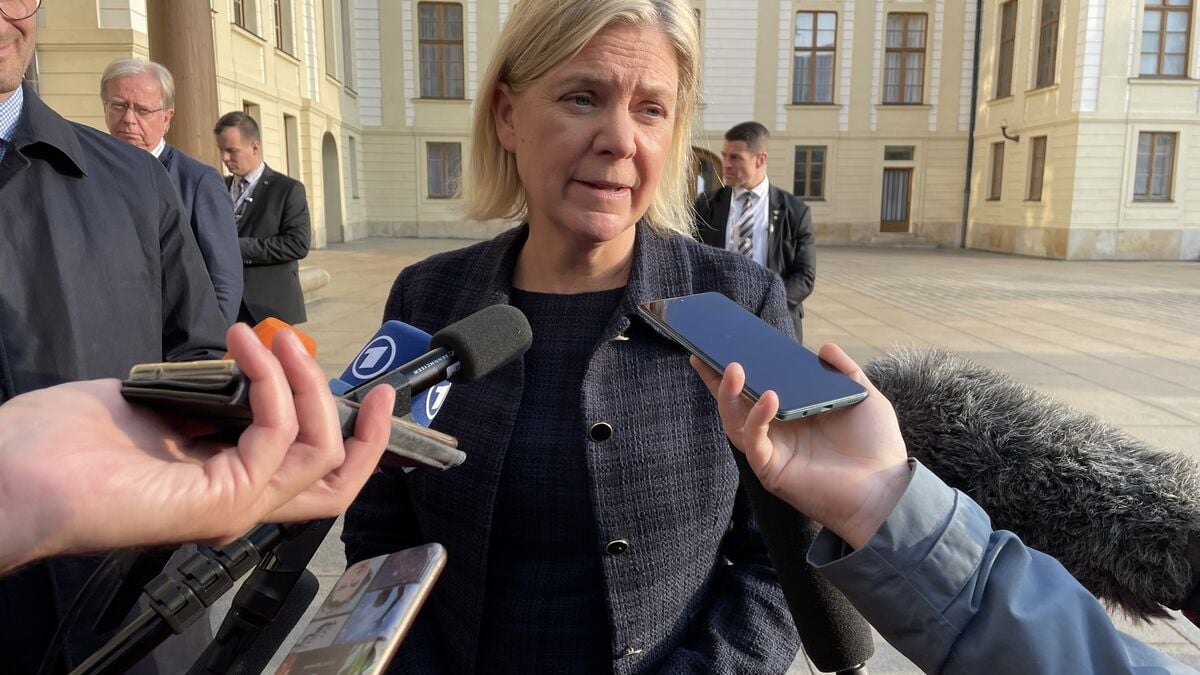
"This autumn is a crucial time for our union. I look forward to continuing discussions with the Prime Minister of the Netherlands on 9 October and with the Prime Minister of Sweden when a new government is in place," Costa said at the press conference after his latest trip, to Ireland on Thursday.
Looking for compromise
Sweden's late entry into the talks risks being a disadvantage. Sweden's extremely frugal budget line in the EU is admittedly fairly firm, regardless of which government is in power in Stockholm.
Meetings and discussions with others are also just as important for influencing and gaining support for one's line - which in turn involves tens of billions of kronor more or less to the EU.
Ireland, the current presidency, is currently working on a second compromise proposal on the budget to be submitted to the next EU summit in mid-October. The lobbying campaigns are fierce from all sides. On Friday, heavyweights Germany and Spain each published an opinion piece calling for a smaller or larger budget.
More or less?
Spain is pushing for as much as possible, citing that joint efforts are better.
“The next long-term budget should correspond to 2 percent of the EU's gross national income, a level that is proportionate to the challenge of supporting both the economy and cohesion,” wrote Finance Minister Carlos Cuerpo .
From the German side - with support from Denmark, the Netherlands, Austria and Finland - there are calls instead for substantial cuts, so that the countries have more left at home.
“We can’t just add new priorities to all the old ones and send the bill to the taxpayers,” wrote Chancellor Friedrich Merz and his supporters.
New taxes?
The current hunt for compromise is not least about finding and agreeing on new direct EU revenues - for example, increased tariffs from countries with lower climate ambitions or new taxes on tech giants and oil companies.
The need is strongly emphasized by both the Social Democratic Council President Costa and the Christian Democratic conservative Commission President Ursula von der Leyen.
However, the disagreement is as great as the time is short. The hope is that the budget dispute will be over by December at the latest, to avoid getting caught up in next year's many difficult election campaigns in countries such as France, Spain, Italy, Poland, Finland and Greece.
Here are the most important points in the EU countries' hunt for a new long-term budget this autumn:
October 15-16: Summit in Brussels when member states are expected to discuss a new compromise proposal, developed by Ireland.
November 13: Informal summit in Dublin, with new coordination from Council President António Costa.
November 26-27: Preliminary extraordinary summit in Brussels, with a first attempt to agree on a final outcome.
December 17-18: The last summit of the year in Brussels.