What happens next in the government formation process?
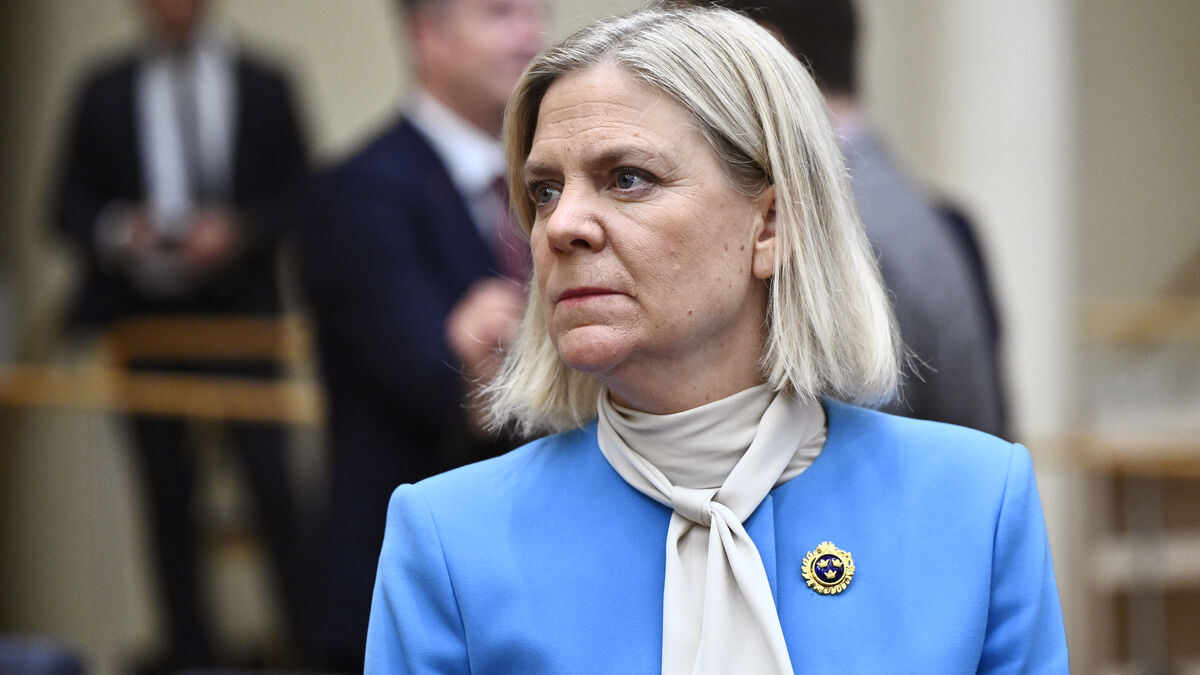
On Tuesday at 11 a.m., Magdalena Andersson will report to Speaker Andreas Norlén on how things are going. She was originally supposed to report on her exploratory mission on Monday, but asked for more time, which the Speaker granted.
She can then either ask for more time or submit a final report on her exploratory mission if she has managed to put together a complete government alternative. However, there is little indication that she has done so. The situation on the red-green side remains deadlocked, and Friday’s meeting on Lidingö did nothing to untangle the differences between C and V.
The Speaker may grant more time if he believes discussions or negotiations are ongoing and need to continue.
He has also made preparations for a possible vote this week on the Social Democrats’ leader as prime minister. The vote could take place as early as Wednesday, October 14.
Four attempts
Why hold a vote on a prime minister before a government alternative is ready?
It is not certain that this will happen, but it could if the Speaker believes it is necessary to speed up the negotiations. In that case, he can put forward a candidate for prime minister even if the candidate is likely to be voted down.
The Speaker has four attempts to get a prime minister elected. If the Riksdag (the Swedish parliament) rejects all four candidates, a snap election follows - a scenario that almost no party wants.
Forcing a vote on a prime minister is usually described as one of the Speaker’s sharpest weapons. It was also used during the protracted government formation process in 2018. At the time, both the then Social Democrat leader Stefan Löfven and Moderate Party leader Ulf Kristersson faced separate votes and were defeated. Löfven was not elected prime minister until the third vote.
This time, Andreas Norlén has made clear that he wants to see a faster process than the 134 days it took in 2018.
“Jumping majority”
What does it take to be elected prime minister?
A prime minister is elected as long as a majority in the Riksdag - that is, 175 or more members - does not vote against them.
In theory, it could be enough for only the Social Democrats to vote for Magdalena Andersson, for example, if the other red-green parties abstain (vote yellow). The Tidö parties’ 173 seats would not be enough to vote Andersson down, even if they all voted against her.
On the other hand, it can be problematic to elect a prime minister without a ready-made government alternative. It can be difficult to get both the budget and policies approved. In 2018, Stefan Löfven was forced to govern for his entire first year with a budget put forward by the Moderate and Christian Democratic parties.
One alternative is to govern with “jumping majorities” and reach agreements with different parties on different issues. Magdalena Andersson has not ruled out this option.







What do you think?