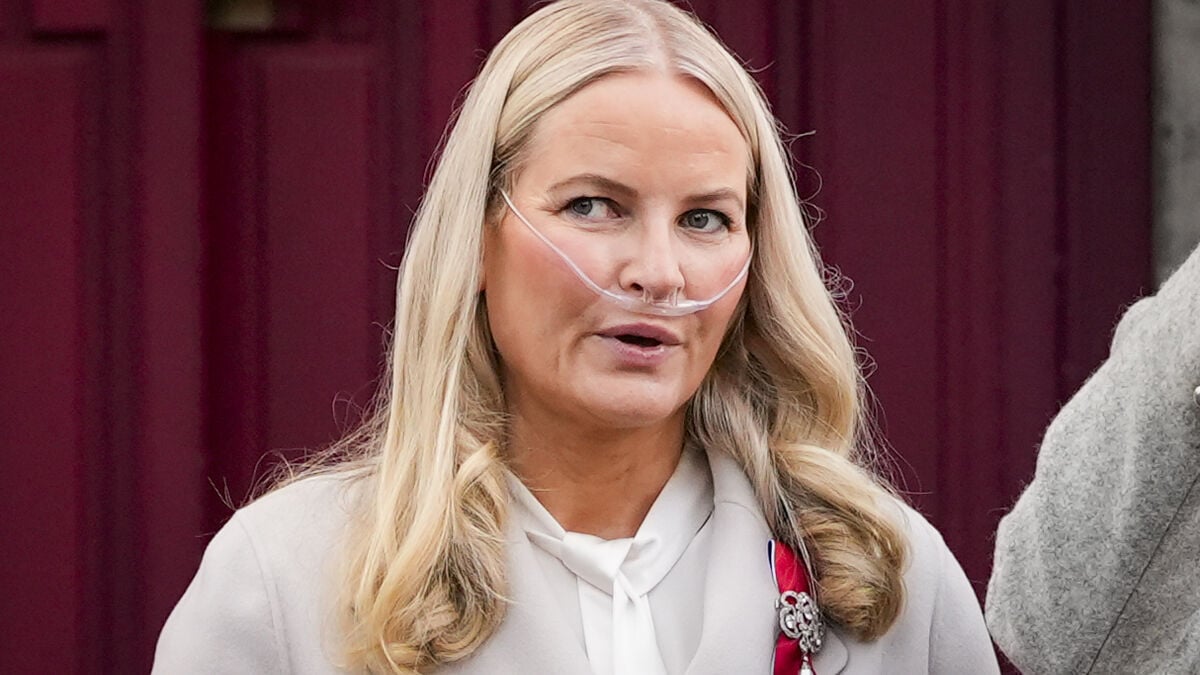
The number of registrations for the donation registry in Norway exploded this weekend after the announcement that Mette-Marit is on the waiting list for a lung transplant she needs to survive her pulmonary fibrosis.
In May, an average of 70 people a day registered with the Norwegian donation registry, but on Thursday 312 donation cards were filled out and on Friday a whopping 2,178.
A similar trend is also visible in Sweden, where 162 notifications were received in the donation register on Friday. This figure then rose to 225 notifications on Saturday and 308 on Sunday, which can be compared to an average of 94 notifications per day in May.
Investigator: Similar effects have occurred before
Camilla Olofsson is an investigator at the National Donation Center at the National Board of Health and Welfare. She says they have seen similar trends before when media attention is paid to an event, and she believes the case of Mette-Marit is just such an example.
For example, if there has been a feature on "Ask the Doctor" about donation and transplantation, you can see that it has had an effect.
Olofsson says that those who have registered now may not have previously considered the possibility that they themselves or someone close to them could become ill and be in need of an organ.
These are big questions, especially matters of life and death, so it raises a lot of emotions when you start talking about this.
That may be what influences people to become aware of the need and then go in and sign up, because they haven't thought about it before, she says.
After the reports have increased for a day or so, the number usually goes back down and stabilizes, Olofsson adds.
Nearly 800 are waiting for a new organ
According to the latest figures from the National Board of Health and Welfare, on April 1, 785 people were waiting for an organ transplant. Of these, 18 were waiting for lung transplants.
Around 1.9 million Swedes are on the donation register, around 20 percent of the population. At the same time, the willingness to donate in the country is estimated to be around 80 percent.
Olofsson emphasizes that the National Donation Center would like to see an increase in registrations so that more lives can be saved.
It's good when people react and sign up. We wish more people did.
In pulmonary fibrosis, scar tissue forms in the lungs, making it more difficult to breathe.
Pulmonary fibrosis can have different causes; common causes include:
The disease can have several causes, including prolonged inhalation of harmful substances such as asbestos or dust from stone or coal.
Rheumatic diseases, such as scleroderma and rheumatoid arthritis, can also settle in the lungs.
It varies how much trouble you have and how quickly the disease progresses.
There is no cure for pulmonary fibrosis. Treatment consists of rehabilitation programs and suppressive medications.
Sooner or later, almost all pulmonary fibrosis patients receive oxygen treatment using a small nasal cannula, first during exertion, later also at rest.
Lung transplantation may be considered for patients with rapidly progressing pulmonary fibrosis. The patient must be in otherwise good health.
Source: 1177, Swedish Heart and Lung Foundation