
Key facts
- Website
- svenskakyrkan.se
Facts checked November 2026.
Is this your place? Get featured
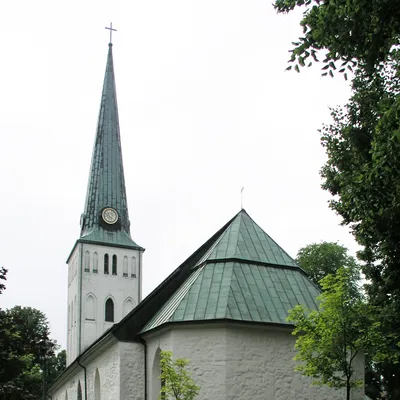
The present Mora Church dates from the late 15th century. A smaller stone church stood on the site from the late 13th century; it had three naves and star vaults, and looked much like the current building. The church is heritage-listed.
Inside are a wooden sculpture of St Olof from the 15th century and wall paintings thought to date from the 1520s. The choir, with its Baroque character, was added in an expansion in the 18th century. Other features include royal portraits, chandeliers, and Biblical paintings by an unknown artist and by Hållams Nils Nilsson, who painted them in 1755.
Lightning set the church on fire in 1671, destroying its tower, bells and church silver. The parish built a new roof within weeks, and a new tower and bells were installed in 1673. The tower was designed by royal architect Jean de la Vallée.
In the churchyard, Anders Zorn and his wife Emma are buried beneath a stone tomb designed by artist Christian Eriksson. Zorn’s mother is buried by the cemetery fence facing Zorngården. A renovation in 2004–05 moved the main entrance to face Zorngården and added a small play space for children who have difficulty sitting still during services.
Get there
Ratings and reviews
The readers' rating shows from 3 ratingsBeen to Mora Church? Rate it with the same Sweden Herald account you use for comments. Ratings come from readers only, never from the place, and nobody can pay to change them.
More things to do in Dalarna
See the list
Sources and data
Wikidata, CC0. Text and ranking by Sweden Herald. Facts are checked against the sources above; opening hours and prices can change, so check with the place before you go.
Something wrong? Tell us · Work with us · Updated 20 November 2026