Sweden and Denmark have historically had a long complicated relationship, when it comes to Greenland, Sweden have taken a easy stance of Nordic solidarity.
Strong relationship between Denmark and Sweden
Denmark is Sweden's primary partner In almost all relevant forums, Denmark stands as one of Sweden's closest partners. The Swedish government describes the relationship as "close and good" and both countries cooperate broadly on different levels, within the EU, NATO, the UN, and Nordic collaborations.
Sweden specifically on Greenland
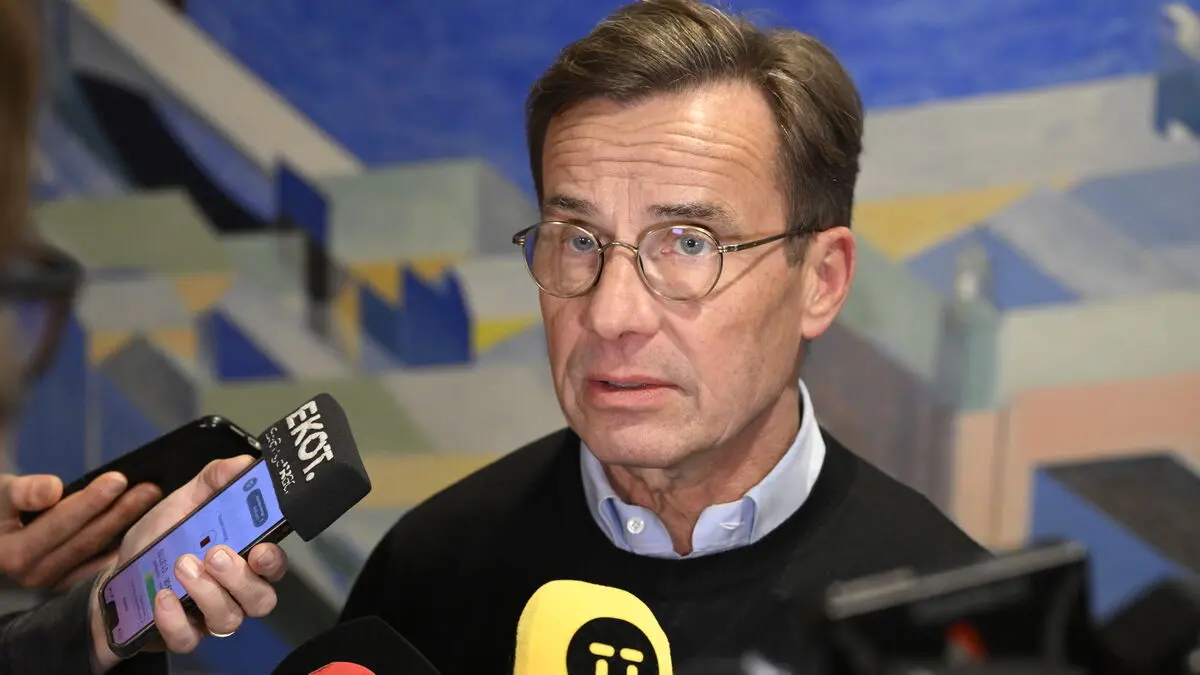
Borders should not be affected by political pressure, and Greenland's future should only be decided by Greenland and Denmark. This is the official line that the Swedish government adheres to. Foreign Minister Maria Malmer Stenergard (M) has said
"Sweden stands wholeheartedly behind our neighboring country in these matters and will always stand up for international law".
Sweden benefits from a functioning Nordic/Transatlantic cooperation. Therefore, Sweden's interest is to calm down the rhetoric and stick to regulations and established relationships. It is a low-risk political position to stand up for Denmark, and the countries are also closely connected geographically via the Oresund Bridge, which opened in 2000.
What is NORDEFCO and its role?
NORDEFCO stands for Nordic Defence Cooperation, which is a defense cooperation between Denmark, Iceland, Finland, Norway, and Sweden. The goal is to strengthen national defense, cooperate, and create synergies and find common solutions. Greenland is strategic in the Arctic, but a scenario where an ally (the US) pressures another (Denmark) creates uncertainty in the region. The Nordic countries are instead trying to increase coordination in defense and deterrence through NORDEFCO and the common "Vision 2030".
Greenland's self-governance
- Greenland is self-governing, but is part of the Kingdom of Denmark (Rigsfællesskabet).
- The self-governance has a clear framework (the Self-Government Act), including that Greenland can take steps towards independence according to the process established in 2009 (often described as independence can become relevant after a Greenlandic decision/referendum).
Sweden and Denmark from enemies to BFFs
- The Kalmar Union (1397-1523): a period of common union - but with friction that ends with Sweden breaking away.
- 17th-century wars and border drawing: The Treaty of Roskilde in 1658 is a symbol of the "classic" rivalry when Denmark loses large areas (Skåne, etc.).
- 1660 and more stable borders: The Treaty of Copenhagen (1660) together with Roskilde "sets" the modern borders in large part and ends a long period of war between major power ambitions in the Nordic region.
- Post-war period → institutional friendship: The Nordic Council was established in 1952 and has become a driving force for making the neighborhood more "system" than "saber".