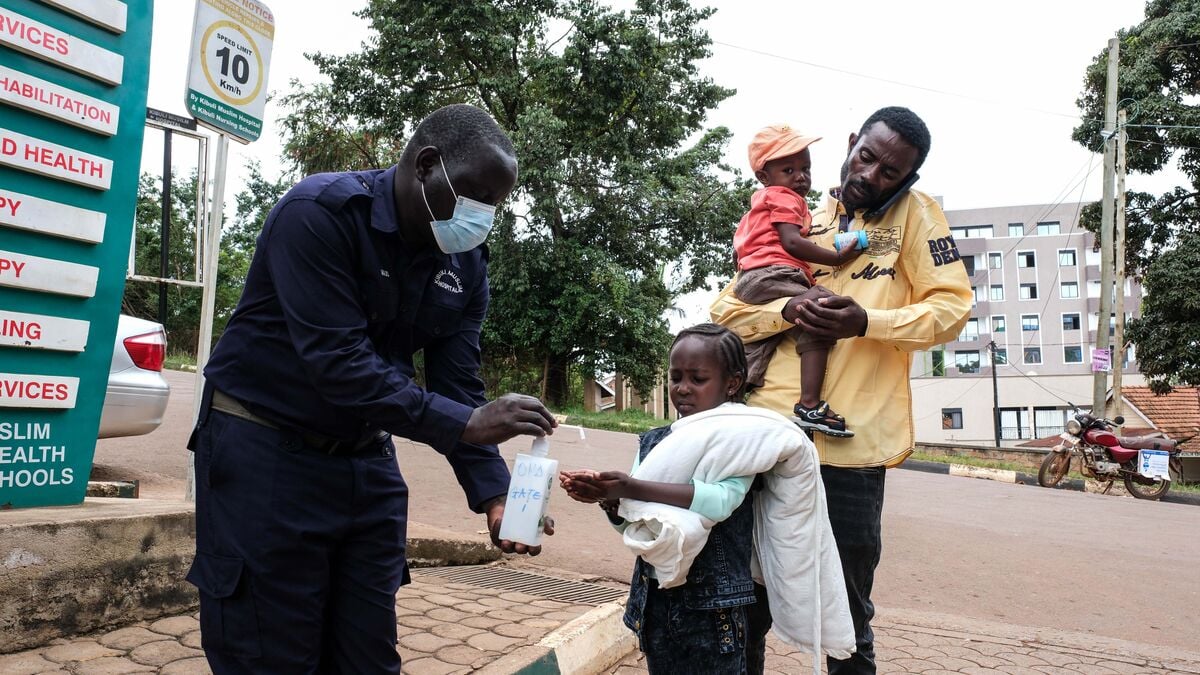
According to the WHO, the new Bundibugyo variant of the Ebola virus constitutes a “public health emergency of international concern” - which is the second-highest alert level under the International Health Regulations.
According to the WHO, international cooperation is now required to understand exactly how widespread the outbreak is. According to a statement, the true number of cases and extent of spread are not clear, but the outbreak does not yet meet the criteria required to be considered a pandemic.
“Extremely worrying”
The aid organization Doctors Without Borders is preparing a “large-scale operation” and calls the rapid spread of the outbreak “extremely worrying.”
There is no vaccine or specific treatment for the Bundibugyo variant. This variant has a very high mortality rate, up to 50 percent, Congo-Kinshasa's Health Minister Samuel-Roger Kamba said on Saturday, according to AFP.
Nearly 90 people have died in the outbreak and another 246 are suspected to be infected in Congo-Kinshasa. The variant - first identified in 2007 - has also led to one death in neighboring Uganda, according to the latest reports.
Where should sick people be isolated?
The outbreak in Congo-Kinshasa has been confirmed in the eastern province of Ituri. A confirmed case has also been reported in the capital Kinshasa, which is located about 1,000 kilometers from Ituri, indicating a possible further spread.
According to the WHO, there are additional suspected cases in North Kivu province - which borders Ituri and is one of Congo's most populous provinces. One case has been confirmed in the city of Goma, which is controlled by the M23 rebel movement, which is supported by neighboring Rwanda, health authorities said on Sunday.
A local civil society representative in Ituri says that “we have seen people die in recent weeks.”
"There is nowhere to isolate the sick. They die at home and their bodies are handled by their family members," he says.
Ebola virus is a rare but often fatal hemorrhagic fever that is spread through bodily fluids.
The current outbreak of the Bundibugyo variant is the third to be detected, following outbreaks in Uganda in 2007–2008 and in Congo-Kinshasa in 2012, according to Doctors Without Borders.