The man was arrested and remanded in custody in April after DNA-based genealogy was used in the investigation.
My assessment is that the evidence is strong, prosecutor Hanna Flordal tells TT.
The man denies the crime - but has admitted during questioning that he was at the crime scene.
He claims he came there by chance, after hearing screams while out for a long walk. He says two men had left the crime scene when he arrived, and that he then discovered the body of the murdered woman.
But he gives different versions of exactly what happened at the farm during questioning.
“Should have called the police”
DNA found on the murdered woman's trouser leg has been linked to the defendant. During questioning, he claims he dragged the woman into the barn after the alleged killers left the scene.
"I'll probably panic. And then I'll pull her into the barn and then I'll run away," says the man, who justifies his behaviour by saying that he did not want to be wrongly suspected.
"Of course I should have called the police, but I didn't," he continues.
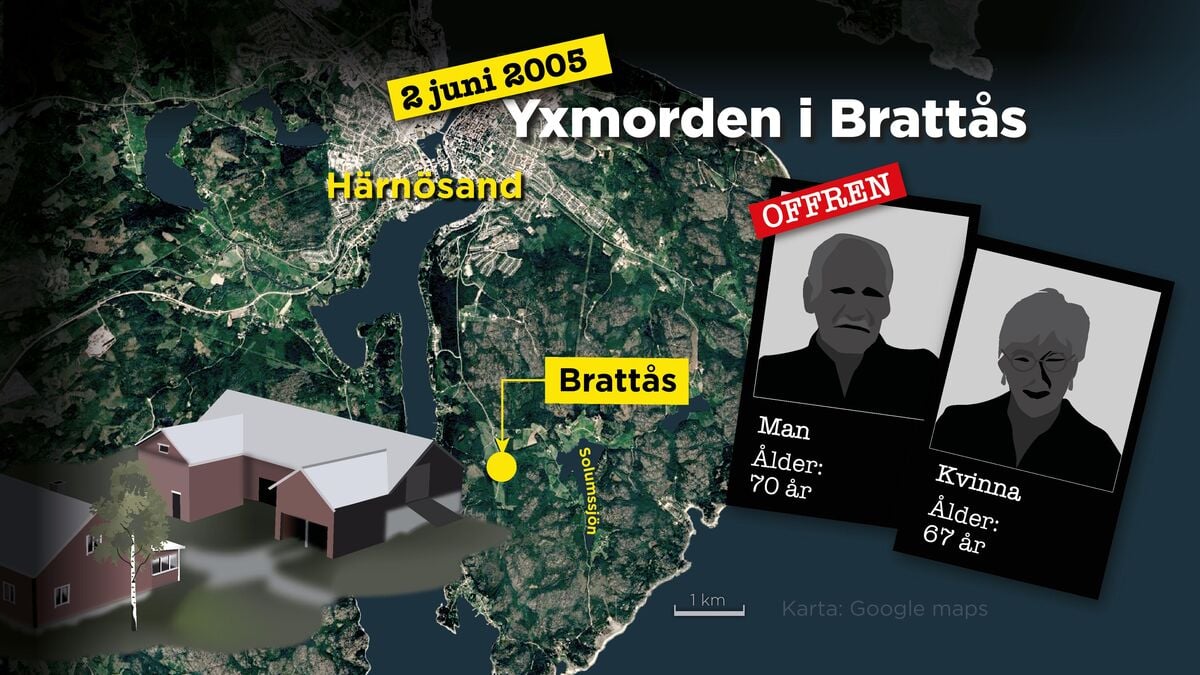
On June 2, 2005, Barbro Öberg found her father Tor Öberg and his common-law partner Gerd Wiklund murdered on a farm in Brattås outside Härnösand. The couple had been killed with severe violence to the head sometime between May 31 and June 2.
"The first question I would like to ask is why? Two peaceful pensioners, as it were," said Barbro Öberg in connection with the detention hearing.
Wallet was left behind
The motive has eluded investigators. Inside the home, the man's wallet, which contained around 10,000 kronor in cash, was untouched. However, the woman's bank card disappeared.
Early in the morning of June 1, three unsuccessful withdrawal attempts were made with the card, after which it was retained by the ATM.
Over the years, hundreds of people have been DNA tested unsuccessfully in an attempt to identify traces from the crime scene.
The turnaround came after a new law came into force last year that makes it possible to use DNA-based genealogy in murder investigations. Using searches in genealogy databases, the clues led to the now-indicted man. When he was arrested, a DNA test was taken that gave a direct match to the crime scene trace.
The man has no previous convictions and was living in Härnösand at the time of the murder. According to the Swedish Tax Agency, he is unmarried and has no children.
The trial, which is expected to last four days, has not yet been given a start date.