
What's at stake?
Thousands of local, state and federal elections will be held on November 3. Among them are races for 36 governorships and a large number of mayoral offices. But the national focus is on the congressional elections, where all 435 seats in the House of Representatives will be up for election, as well as 33 of the 100 Senate seats. In addition, two special elections will be held for the Senate. The House of Representatives and the Senate make up Congress.
What is the situation now - and what is the outlook?
President Donald Trump's party, the Republicans, currently hold power in both chambers. However, their advantage is not that great: in the Senate, Republicans hold 53 of the 100 seats, and in the House of Representatives, they hold 218, compared with 214 for the Democrats, out of a total of 435 seats (two are vacant and one member is an independent).
Democrats are likely to take control of the House of Representatives and perhaps even the Senate, according to combined polls and analyses from Real Clear Politics, the Cook Political Report and the Silver Bulletin, among others. It all depends on how things go in seven or eight swing states.
It is common for the incumbent president's party to lose ground in midterm elections. The results are usually seen as an indication of public sentiment toward the White House's policies and as a gauge of the political climate ahead of the next presidential election.
What can Democrats do if they take control of either chamber?
In addition to appointing the speaker and blocking legislation that President Trump wants to pass, a Democratic-led House of Representatives can launch reviews and investigations of the Trump administration. It is also the House of Representatives that, by a simple majority, can decide whether to impeach Trump - something that has already happened twice.
If Democrats take over the Senate, they can block the president's appointments of judges, ministers and other high-ranking officials - which, under the Constitution, must be reviewed and approved by the Senate. The Senate is also the court that hears impeachment cases. Convictions require at least a two-thirds majority, but throughout history, no president has been removed from office through impeachment.
Does a congressional majority really matter when the president is Donald Trump?
Yes, no president wants to be slowed down by congressional investigations. In addition, certain legislation, including the state budget, must be approved by Congress.
However, Donald Trump, like his predecessor, Democrat Joe Biden, rules to a large extent through so-called presidential decrees (“executive orders”). At a time of polarization, when it has become difficult to get bills through both chambers, it is faster to bypass Congress with decrees. In this way, Trump has, among other things, imposed punitive tariffs and entry bans on people from certain countries and given the immigration police ICE expanded powers.
The disadvantage of decrees is that they are less durable: they have not been reviewed by Congress, and a subsequent president can easily overturn one by issuing a new one.
What tendencies have emerged during the election campaign on the Democratic side?
It is primarily the progressive “left wave” that has made headlines. Several candidates who have won primary elections - including Angie Nixon in Florida, Claire Valdez in New York and Melat Kiros in Colorado - are members of the left-wing organization Democratic Socialists of America (DSA). The prominent Senate candidate Abdul El-Sayed in Michigan is not a DSA member but is seen as a symbol of the progressive movement, with his demands for universal healthcare. There are already some DSA members in Congress, including Senator Bernie Sanders and Representative Alexandria Ocasio-Cortez.
However, the left has not been successful everywhere, and the question is how attractive DSA candidates will be in general elections, since most Americans are considered to belong to the ideological center. Add to that the fact that President Donald Trump loudly warns of the dangers of what he calls “communism” and likens it to “a cancer”.
A second trend is strong support for centrist, often religious Democrats such as Senate candidates James Talarico in Texas and Adam Hamilton in Kansas - states that have voted Republican for decades.
And on the Republican side?
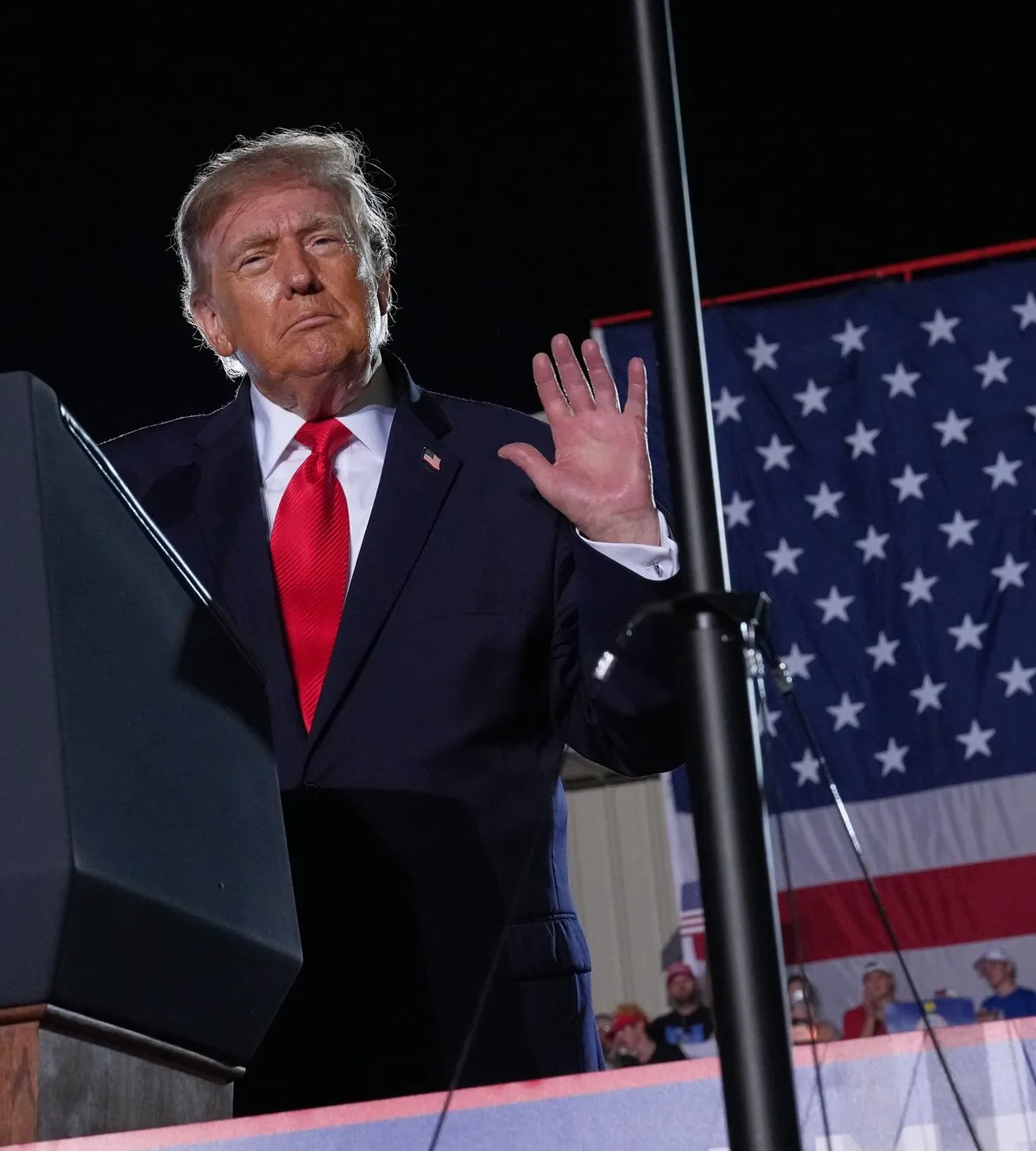
Most of it is about Donald Trump - even though there is no presidential election. The president has been campaigning intensively across the country in recent weeks, urging voters to think of him as the one on the ballot. In September, he initiated the first-ever Republican convention ahead of a midterm election, dubbed “Trumpapalooza.”
Trump claims that the United States is safer and more successful since he moved into the White House. But his economic policies, punitive tariffs and war with Iran are unpopular, and the president's public support is declining. Some congressional candidates have deliberately distanced themselves from Trump during the election campaign.
[[\tt-figure-5]]
What are the most important election issues?
Cost-of-living issues are by far the most important for voters, according to several opinion polls. Food prices are high, and the war with Iran has led to a drastic increase in fuel prices. Immigration, healthcare and foreign policy are also important issues. Cross-party anger over large-scale data centers has also risen.
Many Democratic voters are also upset about raids by the immigration police ICE.




What do you think?