
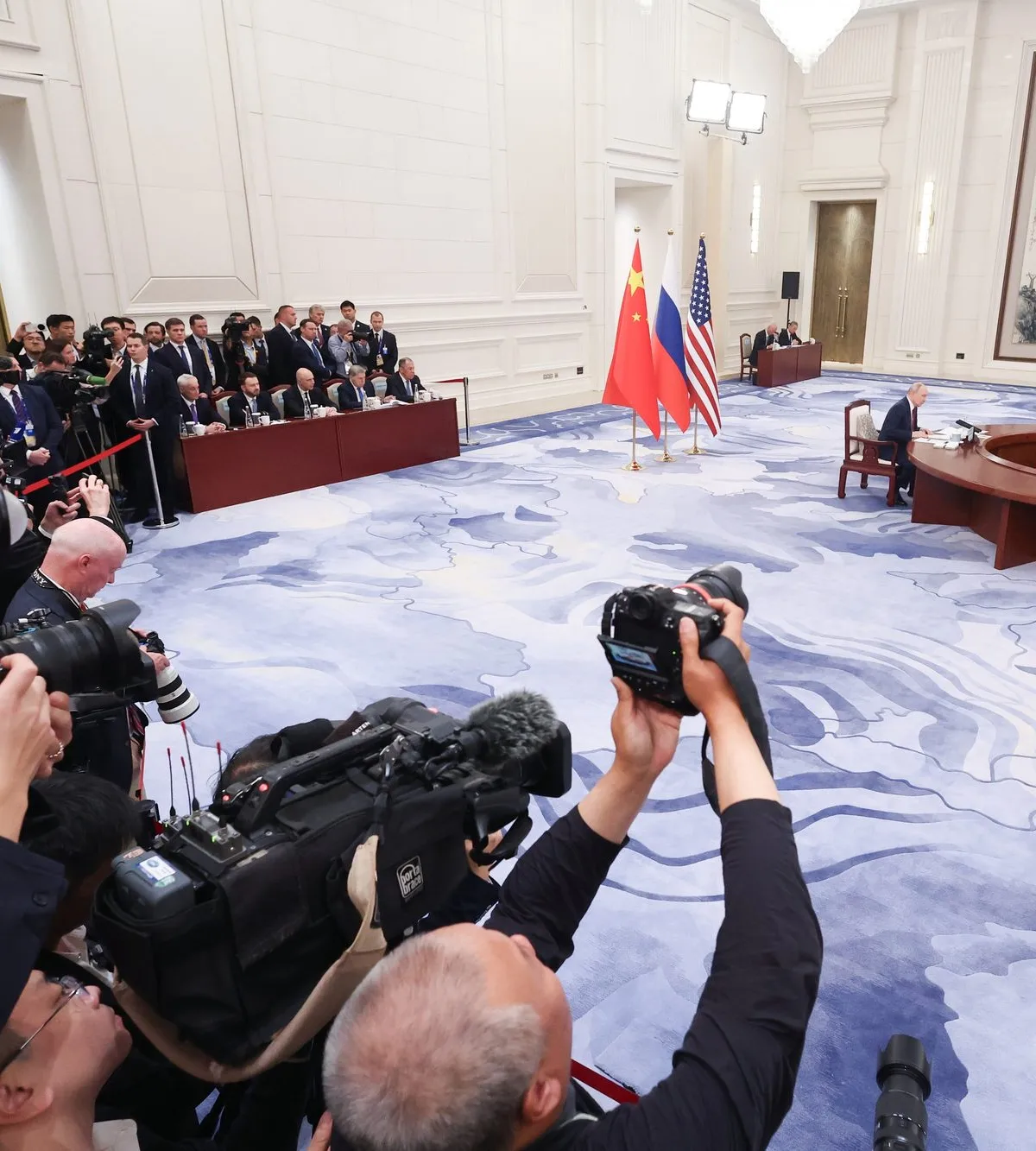
You can see that this meeting is an expression of the return of great-power politics, and that these great powers believe they have the right, or can claim the right, to make decisions that also affect others, he says, and continues:
And then the Europeans' concern is, so to speak, how international cooperation will work.
Thursday's meeting between Donald Trump, Xi Jinping and Vladimir Putin was the first time the three leaders had ever met.
Göran von Sydow, director of the Swedish Institute for European Policy Studies (Sieps), emphasizes that Europe usually stresses that decisions should be made through international institutions.
And not through this type of special format.
A complex balancing act
One issue discussed at the three-way meeting was the war in Ukraine. Europe has recently gone from having virtually no high-level contact with Moscow to appointing representatives who will speak for the continent in negotiations with Putin.
Göran von Sydow does not expect Thursday's meeting to have any direct impact on this issue, but he believes the leaders' meeting highlights the difficult balancing act Europeans face.
It has been relatively easy to take a position on the war in Ukraine, but more difficult when it comes to the close relationship with the US and how to deal with it. It has also been quite difficult to work out how to deal with China.
One factor that makes the situation particularly complex, he points out, is that the parties face radically different conditions and decision-making speeds. China and Russia are both authoritarian countries, while the US under Donald Trump has concentrated more power in the presidency.
Europe could be weakened
This can be contrasted with the EU, which has 27 member states as well as its own institutions.
And how can one then simultaneously become a stronger voice in the world?
The strength, von Sydow says, lies in the ability of democracies to come together and make unanimous decisions. But elections are due next year in several European countries, which could change the dynamic.
If these (elections) lead to a situation where it becomes more difficult to reach agreement and make joint decisions, then they will also weaken Europe's ability to assert itself in this world order.


What do you think?