Among those featured in the previews are researchers who contributed to the development of the best-selling diabetes and weight-loss drugs. In addition to revolutionizing obesity care, the drugs have been shown to have several other positive effects, including in the treatment of addiction.
Basically, the drugs are based on the hormone GLP-1, which regulates appetite and blood glucose levels.
Images of tissues
There are several possible candidates, but among the leading contenders are Daniel Drucker, Jens Juul Holst and Svetlana Mojsov. Jeffrey Friedman, who identified the hormone leptin and showed how the body regulates weight and metabolism at the molecular level, is also tipped.
Of course, there are also potential laureates in completely different fields. The analytics firm Clarivate proposes James Fujimoto, David Huang and Eric Swanson, who developed OCT technology. It is an advanced imaging technique that uses light waves to create detailed, cross-sectional images of tissues.
Cancer and the immune system
Or perhaps the prize will go to the researchers behind CAR T-cell therapy, who have made major breakthroughs in treating several types of cancer. Another possibility is that the Nobel Prize in Physiology or Medicine will be awarded to Timothy A. Springer for discoveries about how immune system cells attach to targets in the body.
This year, the prize money is 12 million kronor (about $1.1 million) per prize. If the prize is shared between several laureates, the prize money will also be divided between them.
In 2025, what is colloquially known as the Medicine Prize went to Mary E. Brunkow, Fred Ramsdell and Shimon Sakaguchi, who were awarded the prize for discoveries about peripheral immune tolerance - how our immune system refrains from attacking our own bodies.
Facts: Alfred Nobel and the Nobel Prize
Alfred Nobel (born in Stockholm in 1833, died in San Remo, Italy, in 1896) is Sweden's most famous inventor and industrialist. His most important invention was dynamite, which he patented in 1867.
Alfred Nobel left behind a large fortune, and his will stated that most of it would form a fund, the returns from which would go toward awarding prizes to those "who during the past year have done the greatest good to humanity."
Nobel wanted prizes to be awarded in five categories: physics, chemistry, physiology or medicine, literature and peace.
The first award ceremony took place in 1901.
Much later, the Nobel Prize in Economics, or "Prize in Economic Sciences in Memory of Alfred Nobel," was established. The prize was established by Sveriges Riksbank (Sweden's central bank) and was first awarded in 1969.
A maximum of three people may share each prize.
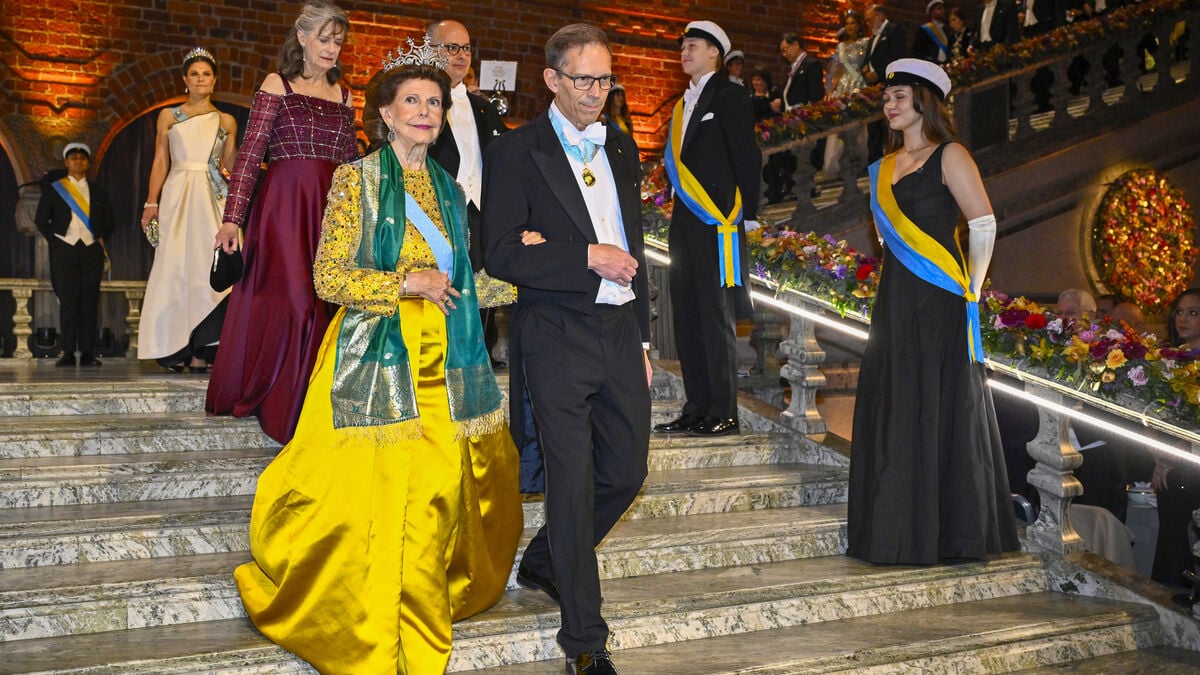
The award ceremony takes place on the anniversary of Alfred Nobel's death, December 10. The Nobel Prizes are awarded in Stockholm and Oslo (the Peace Prize).
Sources: NE and nobelprize.org