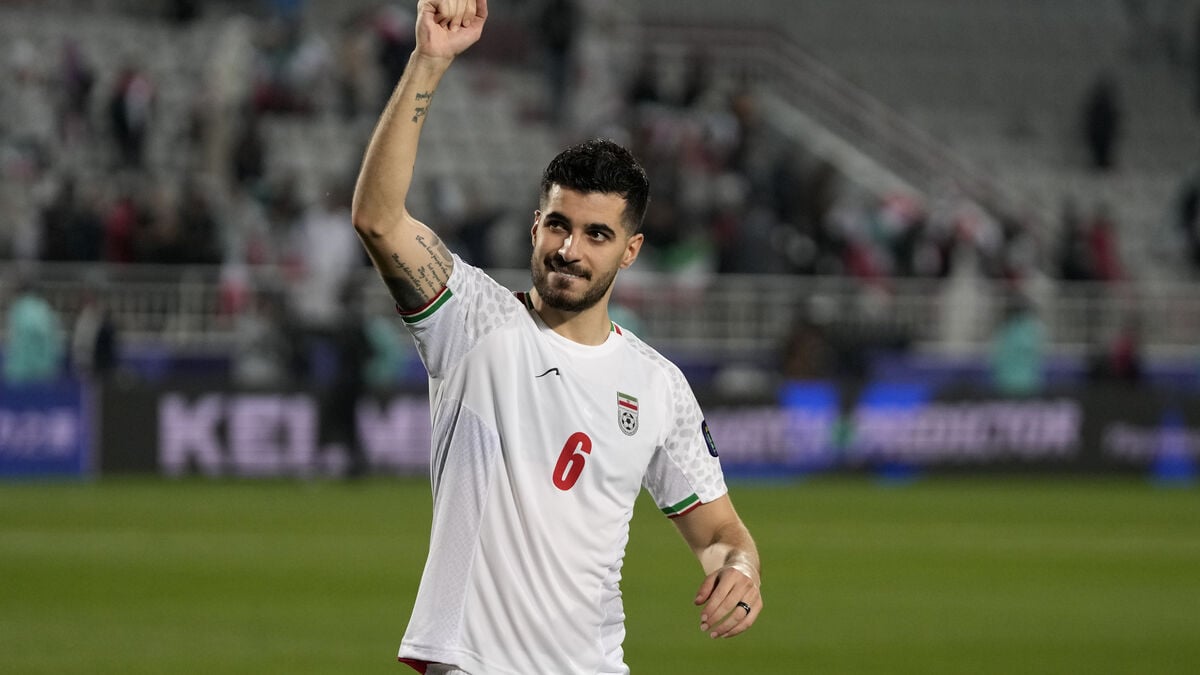
After a camp in Turkey, the Iranian national team travels this weekend to the Mexican city of Tijuana near the US border.
But Iran is not competing in the World Cup under normal circumstances. With the World Cup just over a week away, the United States and Iran are still at war - and the team's participation in the World Cup was long uncertain. In an interview with the AP, some of the players put into words what awaits.
"This is my third World Cup, so for me and some of the other players it might be easier to deal with things like this. But it will be difficult for us, because of course we follow the news and the political situation. It is clear that it can affect both players and the people," says Saeid Ezatolahi.
Going on the attack
It was unclear for a long time whether the Iranian team would even be allowed into the United States, where the team will play all three of its group stage matches. However, on Thursday, the Iranian Football Federation announced that entry permits had been arranged for the playing squad and large parts of the management staff. At the same time, it attacked U.S. authorities, claiming that some managers have been denied visas. Iran calls it "discriminatory treatment".
"Why are you not saying anything about the fact that a large part of the management and administrative staff working in the national team have not received visas?" wrote the Iranian embassy in Turkey on the X platform.
The team's first two matches, against New Zealand and Belgium, will be played in Los Angeles, where there is a large Iranian diaspora. The third match, against Egypt, will be played in Seattle.
"We expect to have a lot of fans in the stadium and there will be a lot of pressure on us because the expectations are high. I just hope we can make them proud," midfielder Mohammad Ghorbani told the AP.
Give joy
Despite everything that is going on, Ghorbani believes that the team's mission is to perform as well as possible on the football pitch and that is where their focus must lie. He believes that as footballers, they can bring joy to the hard-pressed Iranian people through a well-run World Cup.
"We show that we are a team under one flag that can bring joy to an entire country and can show the power of Iranian players and the Iranian people to the rest of the world," he said.
February 28: The United States and Israel launched a war against Iran, which cost the country's supreme leader, Ayatollah Ali Khamenei, his life. Iran responded with attacks on Israel, US forces, and Gulf states and has since blocked the Strait of Hormuz. Despite a nominal ceasefire, attacks in the region continue.
March 11: Iranian Sports Minister Ahmad Donyamali came out and ruled out Iranian participation in the World Cup due to the war.
March 15: The Iranian Football Federation opened up about participating in the World Cup, but on the condition that the group stage matches would be moved from the United States to Mexico. FIFA later rejected that.
April 23: Trump administration special envoy Paolo Zampolli suggested to both Donald Trump and FIFA President Gianni Infantino that Italy, who were eliminated in a playoff against Bosnia-Herzegovina, should replace Iran in this summer's World Cup. The proposal was rejected by both FIFA and Italy.
May 9: Iran's football federation confirmed that it will participate in the World Cup. President Mehdi Taj said in an interview with the AP that the federation has sought guarantees from host countries about the Iranian team's visas, security and treatment during the tournament.
May 24: Iran announced that they were moving their World Cup base from Arizona in the US to Tijuana in Mexico. The reason was visa issues in the US and the move was approved by FIFA.
June 5: The Iranian national team has received visas to travel to the United States for the World Cup.