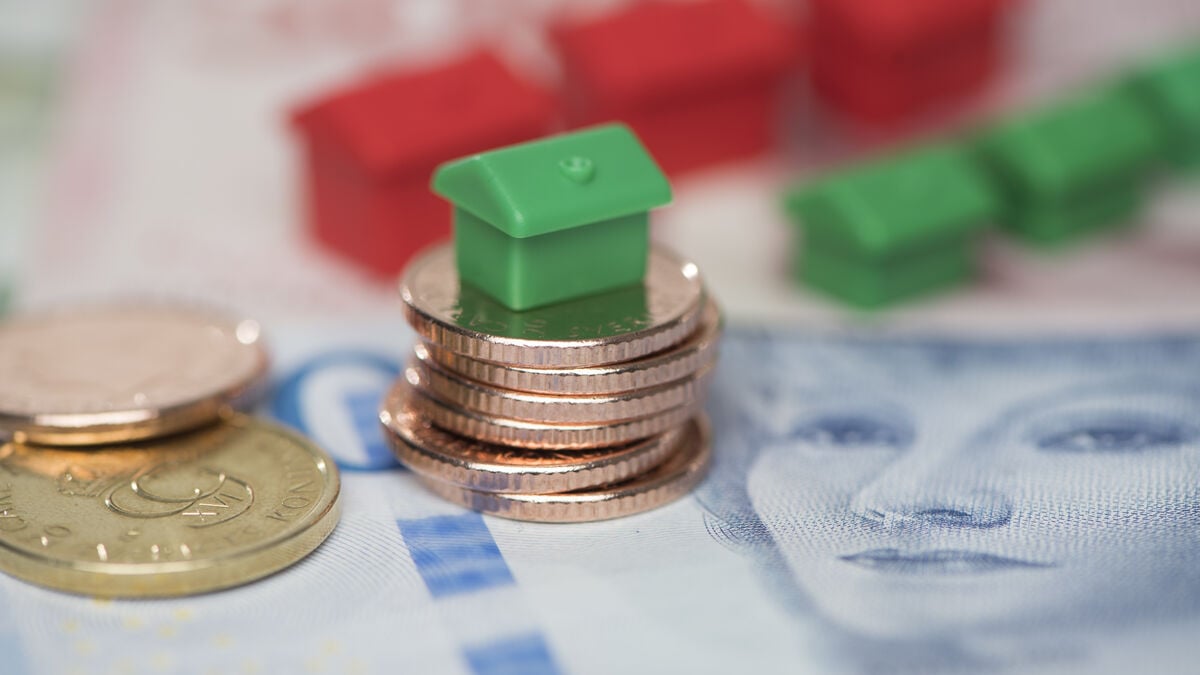
The interest rates banks pay to finance themselves started the year low. But they have risen by around 0.5 percentage points for standard maturities since the outbreak of the war.
"Then there will be an increase in the corresponding mortgage rates. That's what you can expect and that's reasonable," says John Hassler, professor of macroeconomics at Stockholm University.
Price increases and reduced demand
Fellow economist Lars Calmfors, professor emeritus at Stockholm University, makes the same interpretation.
The increased interest rates on mortgages with longer maturities come after the market's inflation warning light began to flash. The market is currently pricing in 3-4 interest rate hikes by the Swedish Central Bank by the end of 2027.
"There are higher oil prices, price increases for gas and for fertilizer and then eventually for food. In that case, it will have a fairly broad impact on the Swedish economy, but with some lag," he says.
At the same time, demand is affected, which has a negative impact on the economy.
"It's pulling in the opposite direction," says Calmfors.
If the Swedish Central Bank were to face stagflation - with both persistently high inflation and low growth - it is assumed that the Swedish Central Bank would prioritize the inflation target. This would lead to interest rate increases, even if this would further worsen the economy.
Calmfors also warns against fiscal crisis measures. He sees this week's reduction in fuel tax and electricity price support as "ominous."
"We already have a very expansionary fiscal policy that will now become even more expansionary. This increases the likelihood that the Swedish Central Bank will raise the policy rate."
The length and spread of the war will determine how it goes.
"Making a forecast for that is completely impossible. Trump comes up with new signals every day, or several times a day, and the market reacts to that. It's a bit bizarre, actually," says Calmfors.
"Then you should lock it in"
Calmfors does not want to answer whether households should choose a variable or fixed mortgage rate given the uncertainty.
"But if you are very afraid that there will be interest rate increases, then you should commit," he says.
Hassler is more hands-on in his advice.
"If I can't handle an interest rate increase of 2-3 percentage points, then I'll definitely commit. You should think of a fixed interest rate as an insurance premium."