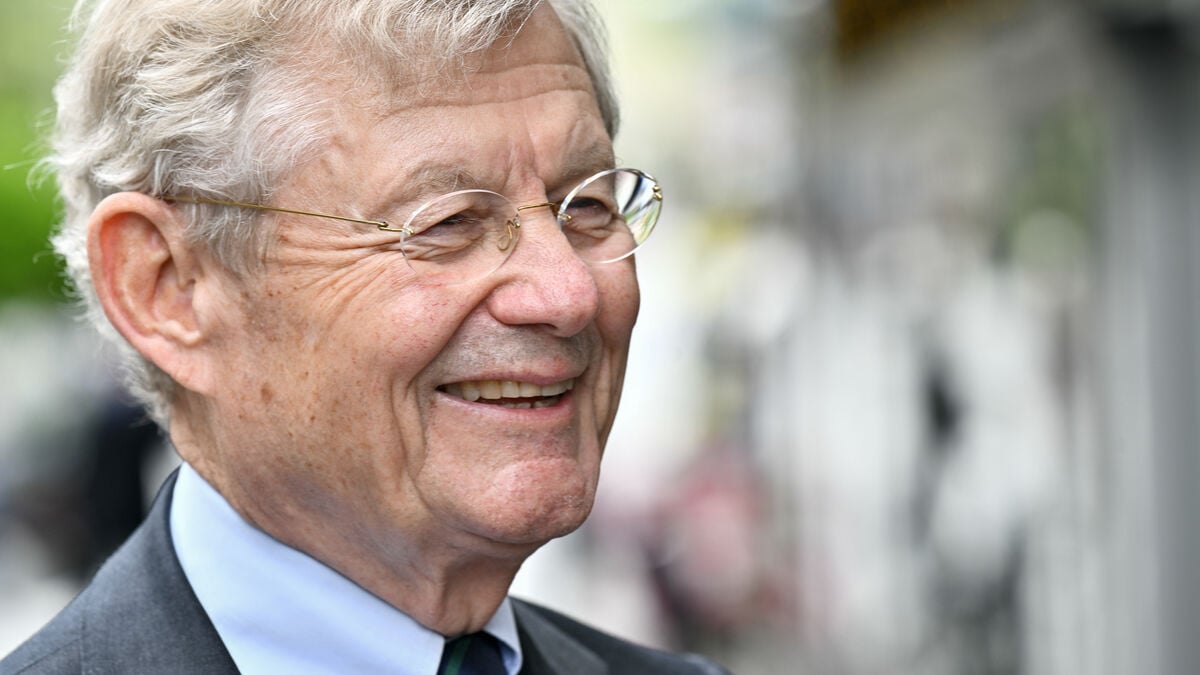
Wallenberg continues:
I think we have to clearly step out of that shadow and decide for ourselves what we want to do. We cannot make ourselves dependent on the United States the way we have been in terms of policy.
He is supported by the chairman of the investment company Kinnevik, Cristina Stenbeck, and the CEO of private equity firm EQT, Per Franzén.
"Absolutely. We have had a couple of years to organize ourselves as Europeans," says Stenbeck.
Franzén believes that more actors have begun to take an interest in Europe.
"In the discussions we have with our clients and our investors, we absolutely see an increased interest in allocating more capital outside the US - towards Asia, but also Europe," says the EQT CEO.
Cooperation with China and the US
Jacob Wallenberg points out that China and the US are currently growing "significantly more" than Europe, which he describes as a challenge.
At the same time, he believes that Europe must maintain its relationship with the economic superpowers.
They are our two most important trading partners. We should have a relationship with them, but we have to think a little more about ourselves.
Wallenberg mentions China as an important future partner, and points out that it takes the Germans three times as long to build a car as it does the Chinese.
The board of Investor (Wallenberg Circle's investment company) is going to China in November to look at car factories and much more to learn what is really happening there - because things are moving fast now.
European capital in mattresses
According to business leaders, a key to increased European growth is strengthening the capital market.
"All countries in Europe have a responsibility to make their respective capital markets more competitive," says Per Franzén.
Wallenberg agrees. He wants more Europeans to do like the Swedes - invest in stocks.
"Sweden, Denmark and the Netherlands hold 60-70 percent of all share ownership in Europe; all other private capital is in the mattress or in savings accounts. In the US, it is radically different."
The capital is sitting in the savings account because people are afraid to invest, he says.
"It's a cultural and educational issue. How do you get a German to think it's okay to invest in stocks - it's not a given, but if we can do it, we'll get more capital."