The majority of US soldiers returned home last year, but a few hundred have remained in Kurdish-controlled areas in northern Iraq.
They have now left the air base in Erbil and taken their equipment with them, the US military headquarters, the Pentagon, announced. According to the Pentagon, it is now up to Iraqi forces, “including the Peshmerga and other security forces in Iraqi Kurdistan,” to keep Iraq safe and prevent the resurgence of ISIS.
The Kurdish autonomous government's bases have been repeatedly attacked by Iran or its proxies since the US and Israel began the war against Iran earlier this year.
Multiple turns
The US invaded Iraq in 2003, aiming to overthrow then-dictator Saddam Hussein on the basis of false reports that he had developed weapons of mass destruction. US forces were withdrawn in 2011, but three years later new ones were sent there again, this time to lead an international coalition against an advancing ISIS.
After ISIS was largely defeated, or decimated, the US and Iraq agreed that the Americans would return home by September 2026.
In parallel with the US withdrawal, the Iraqi government has wanted to disarm the powerful militia groups in the country, many of which have close ties to Iran. Prime Minister Ali al-Zaidi has extended the deadline for such disarmament and in a recent interview with The New York Times he said he wanted to have it done by next summer at the latest.
“Defeated”
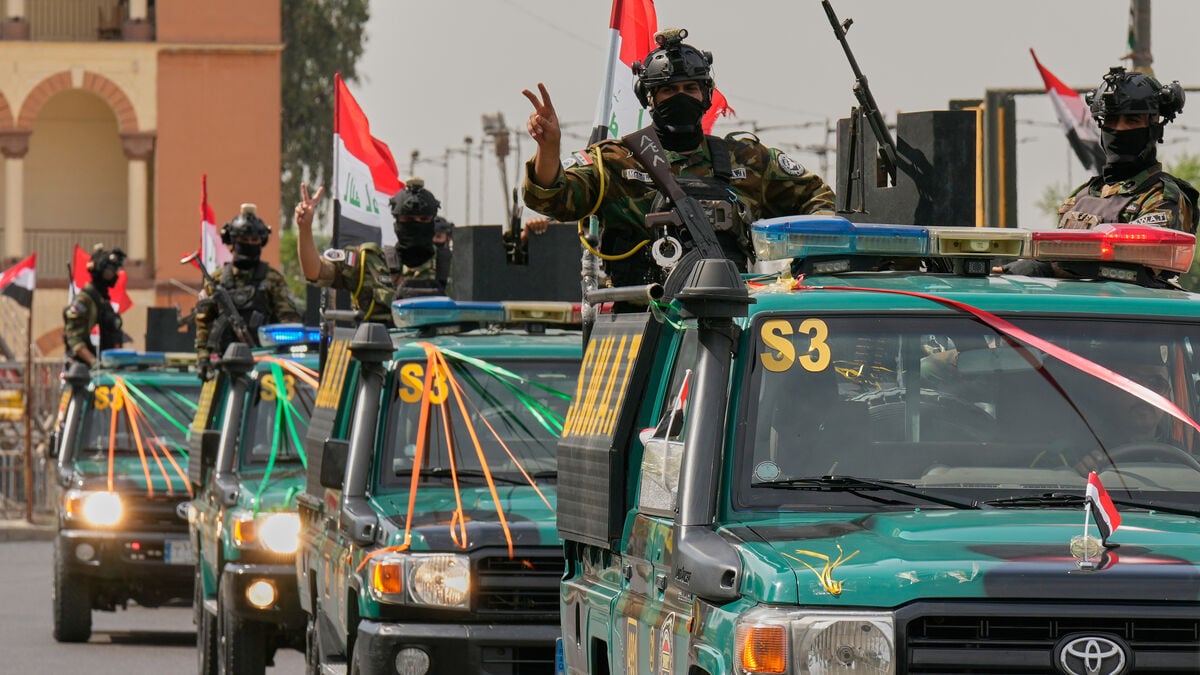
The Kataib Hezbollah militia group, part of the Iranian "resistance axis" in the Middle East and closely allied with the Revolutionary Guard in Iran, is now celebrating the "defeated occupation forces" going home.
The Kurdish autonomous region in northern Iraq is all the more troubled. When the US recently left Kurdish bases in neighboring Syria, they were pressured from all sides and over time they have been forced to integrate themselves under the country’s new Islamist-led government.
During the major war in Iran, the Kurdish areas in Iraq have been bombed with more than a thousand drones or missiles, according to the authorities there.
"The fact that the United States is leaving Iraqi Kurdistan under the complex circumstances prevailing in the region, without providing any defense system, is worrying," it said in a statement.