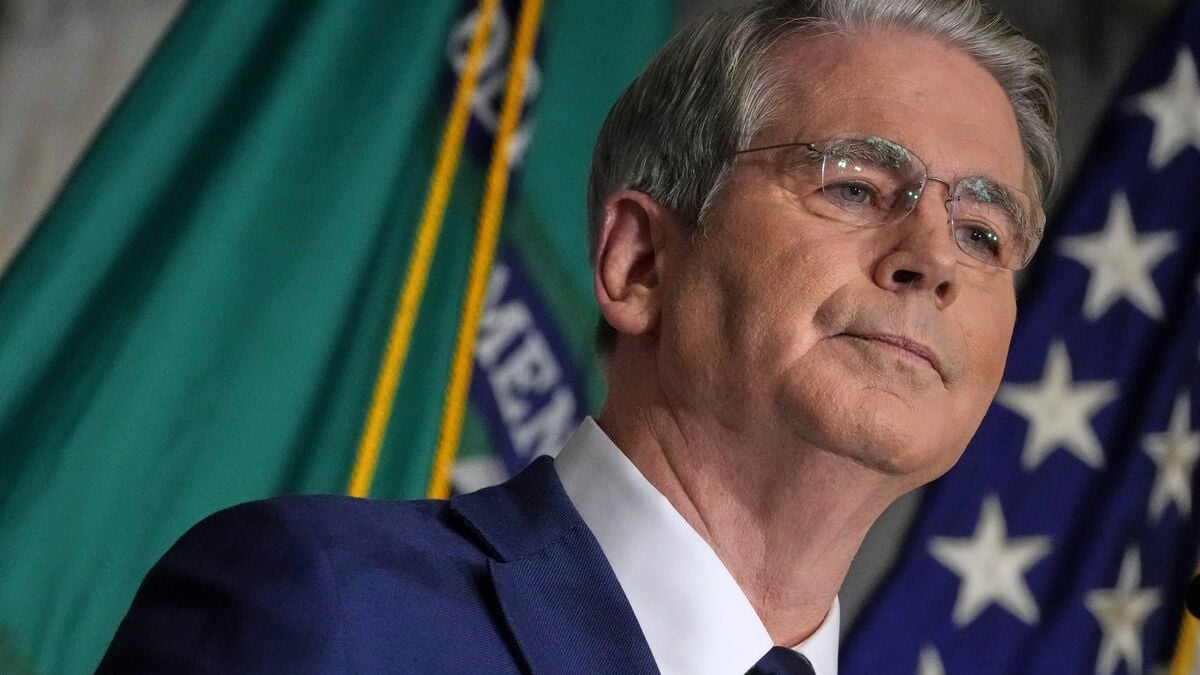
"Our goal is to cut off every economic lifeline that sustains this tyrannical regime, until Tehran stands completely alone," Treasury Secretary Scott Bessent said at a press conference on Monday evening, Swedish time.
Part of the strategy will be to exclude countries or companies that the United States believes are "laundering money" for the Iranian regime from the global dollar system, Bessent said.
All actors who facilitate money laundering on behalf of Iran will be removed from the US dollar system. The clock has just started ticking, says the Treasury Secretary.
He does not go into which countries the measures will target, saying that different countries will be given different deadlines.
Those who do not comply with American sanctions will be isolated in the same way as Iran, Bessent threatens.
He also announced new sanctions against a range of actors who allegedly facilitate Iran's development of nuclear energy and missile technology. In addition, new sanctions will target what Washington describes as particularly important sectors for the Iranian economy: digital assets, technology, gold, and the aviation and shipping industries.
War rhetoric
Ahead of the press conference, Bessent described the new sanctions package as an “economic D-Day.”
He claims that this is being done after the US has fulfilled alleged war goals such as “burying” Iran’s nuclear energy program and “dismantling” its military capabilities.
“Iran is completely collapsing!!!”, President Trump writes, in all caps, in a post on Truth Social.
Six months after the US launched its war against Iran, the conflict remains at a stalemate. Peace talks have stalled and traffic in the closed Strait of Hormuz remains severely restricted.
Following increased criticism at home about the costs of the war, the United States has shifted focus from military to economic means.
“Doesn’t work”
Tehran describes the plan as proof of America's defeat in the war.
"Your narrative does not hold up," writes Iran's Deputy Foreign Minister Kazem Gharibabadi on X, where he asks why there is a need for such a comprehensive economic offensive if the US's goals have already been met.
President Donald Trump has given various reasons why he, together with Israel, started the war in February that quickly spread across the Middle East and sent oil and gas prices soaring.
He has often referred to Iran's nuclear energy program, despite claiming that it had already been "wiped out" in previous attacks by 2025.