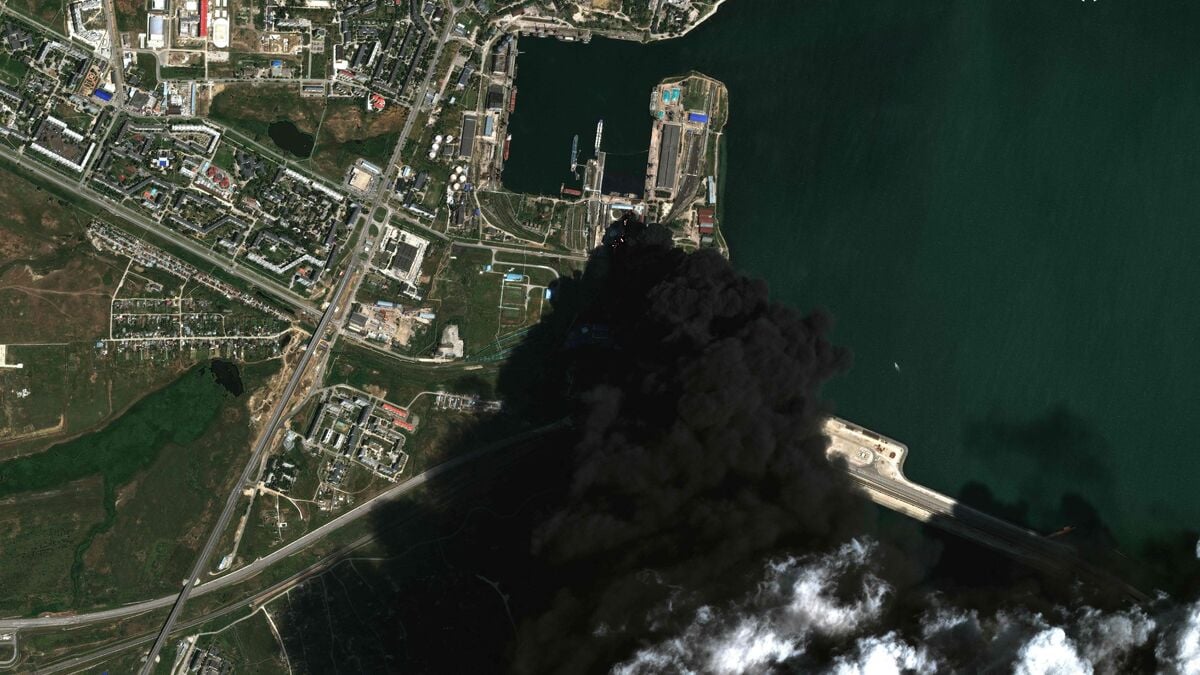
In recent weeks, Ukraine has, according to the USF drone force, hit around 100 tankers transporting fossil fuels for Russia. USF commander Brovdi has described it as striking the Sea of Azov every 112 minutes.
And according to the latest information, the USF is now expanding this offensive to the Black Sea.
The Sea of Azov is a tributary of the Black Sea, which in turn leads out to the world's oceans. But the only way for Russian ships to get out is through the Kerch Strait, between Russia and Russian-occupied Crimea.
“Let them leave”
The attacks therefore serve a dual purpose for Ukraine. On the one hand, they hinder Russia's ability to export oil and gas, which hits both the economy and public opinion hard. On the other hand, they spread fear in and around Crimea, which has been Russian President Vladimir Putin's crown jewel among areas conquered during the war.
We are making it unbearable for them on the peninsula. We are cutting off the entrances now - but not the exits. We have not touched the Crimean Bridge, as you noticed - let them leave, let everyone go to hell over that bridge, says Majdar Brovdi in an interview with Irish journalist Caolan Robertson.
Let them go to Siberia. There they can start over, if they are young enough.
Attack on Odessa
Brovdi praises the drone forces, saying that this is a type of warfare that has not been possible before.
This is the first time in history that we are doing this without a ground operation. We are creating a situation where it will be impossible for them to stay, but without losing a single Ukrainian soldier.
Crimea is usually one of Russia's most popular summer destinations, but this year the tourism sector there is reported to be largely crippled by the war.
Russia is trying to retaliate in kind. In recent days, it has carried out several deadly attacks on Ukraine's deep-sea ports in the Odesa area, some 200 kilometers west of Crimea.
The ports are important for the global grain trade. The Ukrainian Farmers' Union (UAC) has already stated that Russian attacks have already reduced export capacity from six to four million tons per month, Reuters reports.