The US and Ukraine announced earlier on Monday that a new draft peace solution had been developed, an "updated and refined" one.
Late Monday afternoon, Serhiy Kyslytsya, Ukraine's deputy foreign minister, specified in an interview with the Financial Times that it was a 19-point draft. Kyslytsya describes the negotiations as "intensive" and "productive." He does not mention what was agreed upon, but it is clear that the issue of the territories occupied by Russia in Ukraine is not included in the document.
"We have developed a solid, basic consensus and a few more things we can compromise on. The remaining issues require decisions from the leaders," says Kyslytsya.
It has previously been clear that the sides have affirmed that a settlement with Russia "must fully uphold Ukraine's sovereignty."
Gave a deadline
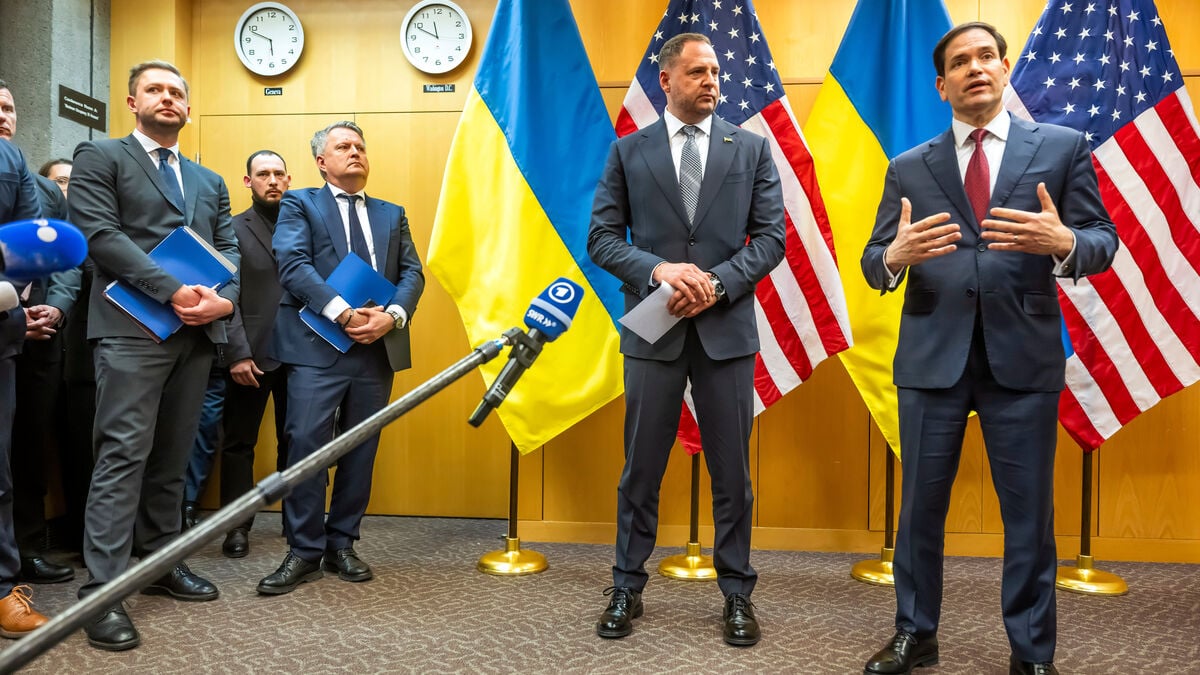
An American and Ukrainian delegation met in Geneva, Switzerland, on Sunday, a few days after it emerged that the United States had negotiated a kind of peace proposal in private talks with Russia.
According to US Secretary of State Marco Rubio, who led the US delegation in Switzerland, great progress was made there. The remaining issues are by no means insurmountable, he says.
Ukraine emphasizes that several of its priority issues are included. President Volodymyr Zelenskyj says in a speech via link in the Swedish parliament that important steps have been taken, but that more needs to be taken.
"Putin wants legal recognition for what he has stolen, to crush the principle of territorial integrity and sovereignty. That is the main problem," Zelenskyy said there, according to international media.
“Decisive victory”
German Foreign Minister Johann Wadephul and Finnish President Alexander Stubb both describe the talks in Geneva as a step forward for Ukraine and Europe.
President Donald Trump initially said he wanted to hear from Ukraine by Thursday of this week, but he later said that was not necessarily his final offer.
The 28-point plan that the US and Russia have negotiated on their own is largely in line with Russian wishes. In particular, Ukraine would effectively give up occupied territories and then some, as well as agree to limit its military capabilities and renounce future military alliances.
When Donald Trump became US president again, he said he could broker peace in Ukraine “in 24 hours.” Negotiations during the year have been marked by sharp turns.
In February, Ukrainian President Volodymyr Zelensky was accused by Trump of being ungrateful during a humiliating visit to the White House. US military aid was frozen and new economic terms were negotiated.
The United States began bilateral talks with Russia. The foreign ministers met in Saudi Arabia and Trump's envoy visited Vladimir Putin several times.
Proposals for an unconditional ceasefire and a compromise peace solution led nowhere. In parallel, Ukraine's allies have been considering what security guarantees Ukraine would receive in a future agreement.
In August, Donald Trump hosted Putin for a summit in Alaska, but as far as is known, Putin is sticking to his maximalist demands on Ukraine. The war has continued to rage.
In September, Trump toughened his tone against Russia and warned that with continued support, Ukraine could regain all occupied territory.
In October, Zelenskyy visited Trump again in Washington, but did not receive the Tomahawk missiles that Ukraine had requested. However, some new sanctions against Russian energy were announced.