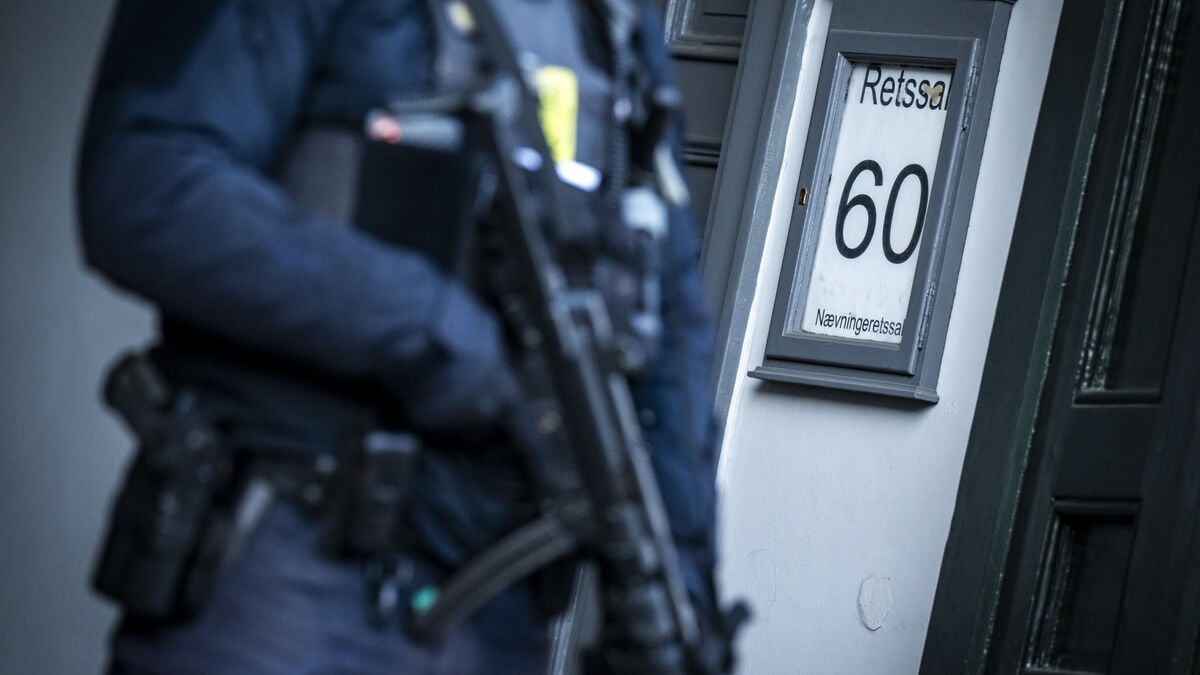
Prosecutor Søren Harbo calls the terror case historic - a completed attack with Swedish perpetrators, who he believes have acted as an extended arm "to a terrorist organization in the Middle East."
They are moving the conflict from the Middle East to Copenhagen, we haven't seen that before either.
It was in October 2024 that two hand grenades were thrown in the direction of the Israeli embassy. They hit a house near the embassy and exploded on a terrace belonging to a family with children.
At the time of the crime, the two convicted were 16 and 19 years old respectively. Both Swedes, who entered the courtroom on Tuesday morning, sat with their heads bowed when the verdict was read out.
In addition to terrorist crimes, they are also convicted of attempted murder, because the hand grenades were thrown at a home where children and adults were present.
In addition to the prison sentences, the Swedes will be deported from Denmark. Their defense lawyers said they will appeal the verdict.
The court disagreed on the assessment of the terrorist crime and on the length of the sentence for the 18-year-old.
“Disagree”
Jakob Buch-Jepsen defends the 18-year-old. He notes that the man is charged with a similar attack on the Israeli embassy in Stockholm and that Sweden's terror legislation is similar to Denmark's, and that Swedish prosecutors charged him not with a terrorist offense but with a serious weapons offense.
It's a very serious case, my client knew that. He has admitted what he did, but to judge it as terror and attempted murder against the neighbor's house, we disagree.
The effect is decisive
The court notes that the Swedes carried out the attack for payment, but that it does not matter whether they were personally or emotionally involved - it is the effect of the act that determines whether it is a terrorist crime.
The District Court rules that the 21-year-old's intention was to send a message to the Israeli embassy. The 18-year-old has said that he did not know that the act was directed at the Israeli embassy, but the court does not believe that. In his case, the court considers that he had fired shots at the Israeli embassy in Stockholm about nine hours earlier.
The prosecutor does not want to specify which state or organization he believes ordered the act.
We have not discussed this during the trial and therefore I will not comment on it.
He says that the police investigation into the incident is still ongoing, but he would not comment on whether it involves clarifying who ordered it.