The airstrikes took place in the northwestern parts of the African country on Friday night.
"I have warned these terrorists that if they did not stop slaughtering Christians, they would pay dearly. They have done so tonight," Trump writes on Truth Social.
Confirms cooperation
Nigeria's Foreign Minister Yusuf Maitama Tuggar tells the BBC that it was a "joint operation" targeting "terrorists" and that it "has nothing to do with any particular religion."
Without naming IS specifically, Tuggar said the operation had been planned "for a long time" based on Nigerian intelligence.
The minister did not rule out the possibility of more attacks.
An anonymous Pentagon official confirms that the attacks were a collaboration between the US Department of War and the Nigerian government, without mentioning whether Nigeria's military was involved.
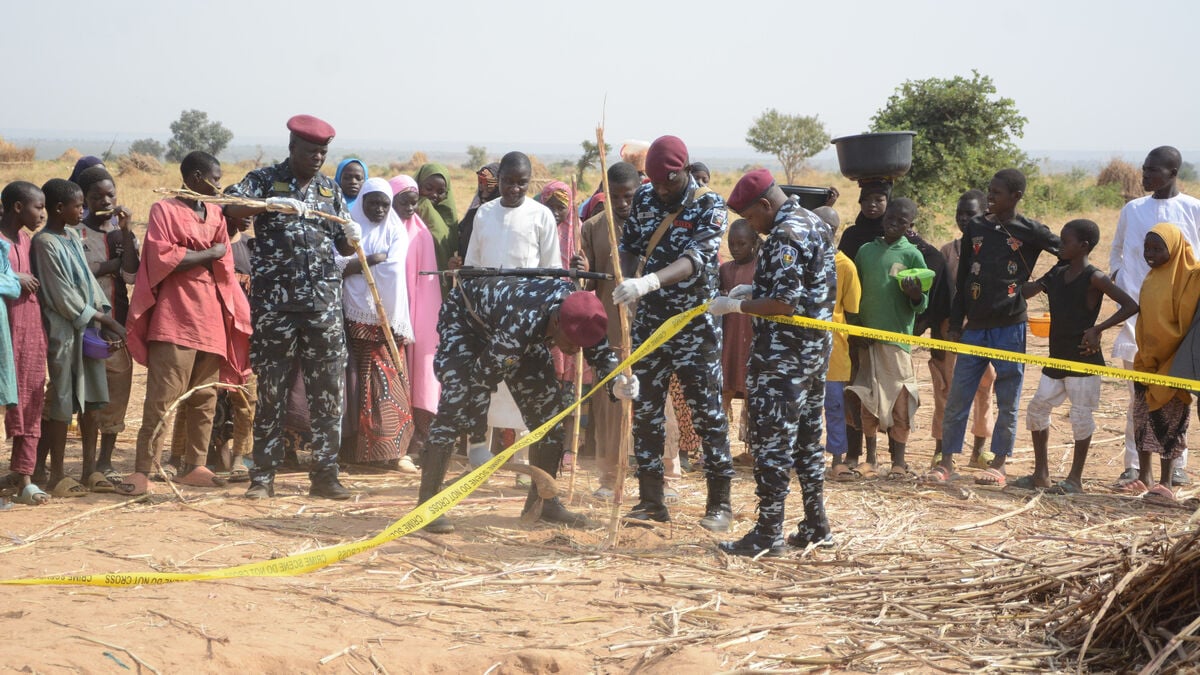
The Pentagon says “several IS terrorists” were killed in an attack in the northwestern state of Sokoto. However, according to residents of the village of Jabo spoken to by Al Jazeera, a projectile fell in an empty field on the outskirts of the village, and no one was killed or injured.
"The bomb fell and exploded into several pieces. There were two large pieces. One of these was carried away by two people," he says, showing pictures of villagers clearing the field.
Another villager says that the village has not been attacked by Islamists in two years.
It is unclear how many targets the US attacked.
Has criticized Nigeria
Trump has previously criticized Nigeria, claiming that Christians in the country are subjected to threats and attacks that amount to "genocide."
The Nigerian government denies the allegations and independent human rights organizations have disputed the claims. However, Christian right-wing groups in the United States and Europe have supported the accusations.
The Nigerian army is fighting multiple conflicts simultaneously in different regions of the country, which is Africa's most populous. At least two of the armed militias in Nigeria have roots in the terrorist group ISIS.
In the country's poor border areas, the influence of the central government is often weak, which has allowed armed militias to gain a foothold and thrive. Attacks by Islamist terrorists, which affect both Christians and Muslims, are recurrent.