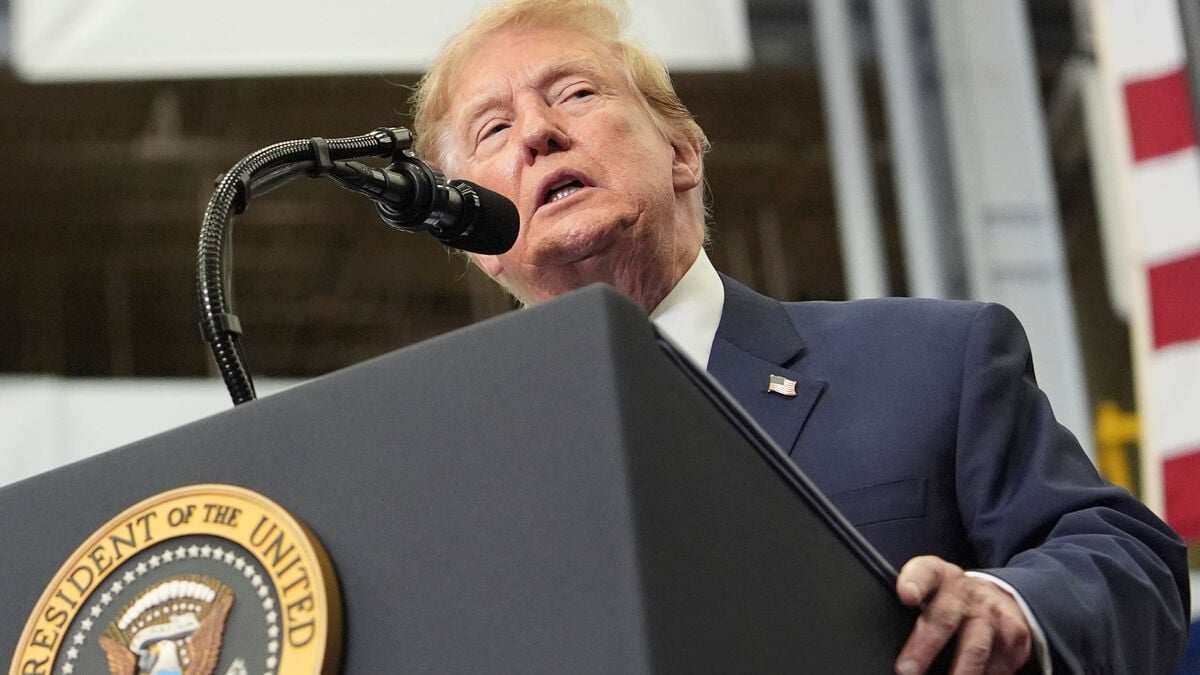
US President Donald Trump - who often uses superlatives - describes the agreement as “the largest oil deal in the history of the world” and says it will double US oil reserves. Details of what the agreement entails are still scarce, but the US government has made no secret of its interest in Venezuela’s vast crude oil reserves during Trump’s time in the White House.
The agreement is valid for a hundred years, several media outlets report.
Venezuela has been under intense pressure from the United States after the country ousted and imprisoned longtime president Nicolás Maduro in January, allowing his then vice president, Delcy Rodríguez, to remain in power as interim leader.
Confirmed by Venezuela
Shortly after Trump's announcement, Rodríguez confirmed that the parties had reached an agreement on oil. In a statement, she said that the agreement covers 17 oil fields.
Trump writes on Truth Social that Secretary of State Marco Rubio and Secretary of Defense Pete Hegseth made the deal with Rodríguez “through collaboration with the private sector.” He also states that it involves “more than 65 billion barrels of Venezuela’s proven oil reserves.”
“This transaction will significantly strengthen the already growing cooperation between Venezuela and the United States,” Trump writes.
Billion-dollar investments
Marco Rubio claims on X that the agreement will lead to lower fuel prices in the United States.
"For the Venezuelan people, this agreement will bring nearly $100 billion in private investment, create thousands of good-paying jobs, and drive the reconstruction of Venezuela's economy," Rubio wrote.
Today, Venezuela's oil production is significantly lower than it was ten years ago. Analysts wonder how many foreign oil companies are willing to make the risky giant investments. Trump won't be in office forever, and there may be new leadership in Venezuela that doesn't buy this approach.
A credible and long-term sustainable political development is needed to convince the oil giants to invest tens of billions of dollars, Clay Seigle at the Center for Strategic and International Studies told Bloomberg.