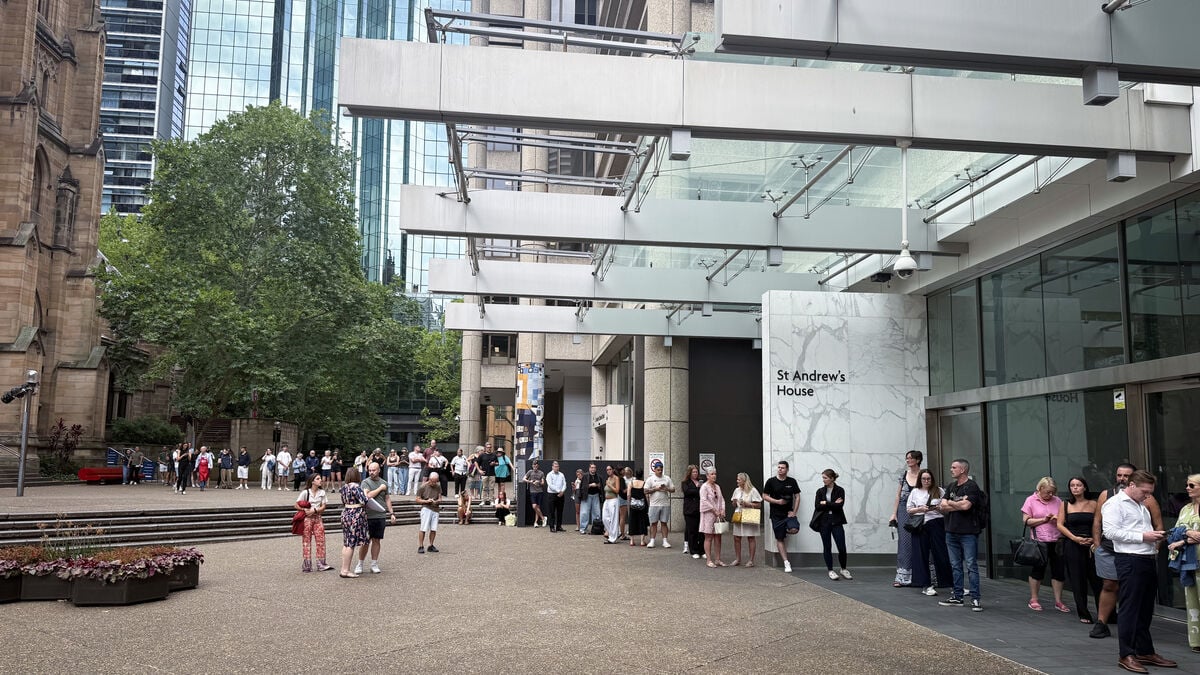
It's 32 degrees in central Sydney, but inside the glass doors of the Red Cross blood center on Town Hall Square there's an even more tangible, metaphorical warmth.
A week has passed since the terrorist attack on Bondi Beach on Sunday, when two men killed 15 people and injured around 40. The New South Wales state government urged everyone who could to donate blood to meet the demand. The response was enormous. Long queues were already forming outside Sydney blood centres on Monday, and interest has continued all week.
Olivia sits in one of the reclining chairs at the blood center. She is 26 years old and is at the blood center for the first time.
"I've been thinking about coming here for a long time, but I don't like syringes and needles. After Bondi it became a given," she says.
A few chairs away sits Anthony, 42. He squeezes the foam rubber figure he has been given to hold. It doesn't hurt much to give blood, but he'd rather not look at the needle.
We all know someone who has been affected by this; it feels like the least I could do to help.
103,000 bookings
Both Olivia and Anthony made their decisions to donate blood after the tragedy on the famous beach. They are not alone. In the first 24 hours, 50,000 people booked appointments to donate blood at one of the Red Cross blood centers in Australia, five times the normal number. After five days, bookings had risen to almost 103,000.
For me, it's nice to do something to contribute; I've felt so helpless, says Olivia.
Having something to do practically is a good way to move on from a trauma, says Anna Brooks, head of research at the Lifeline support line.
It's a way to feel like you have control over what's going on around you, she says.
“Will take a long time”
Lifeline has seen a 10% increase in people contacting the organisation's helpline via phone, text and chat, with the majority of people in New South Wales.
This will take a long time for people to process; we expect people to continue calling in, says Brooks.
Neither Olivia nor Anthony has been to Bondi Beach since the shooting but both know people who were on or near the beach when it happened.
It's a place where many people gather, says Olivia.
This affects us all, says Anthony.