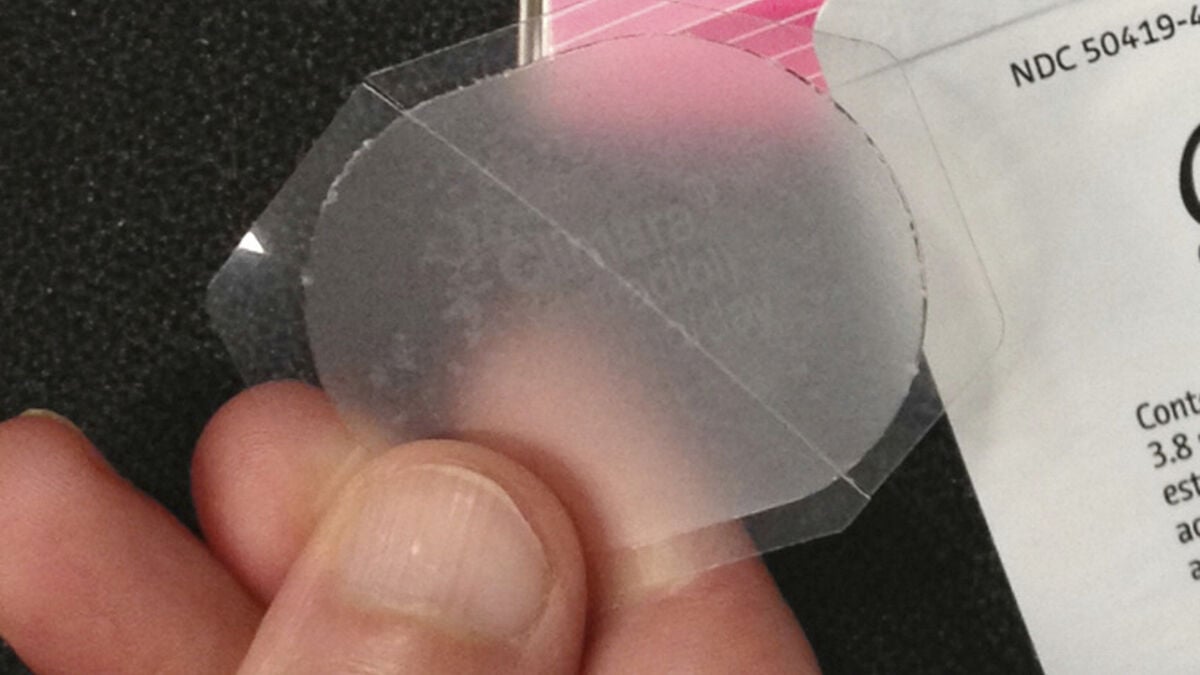
Thousands of foreign, licensed estrogen patches have been stuck in stock in Sweden, despite the shortage in pharmacies having been acute for several years. The reason is complicated marketing regulations, as Läkemedelsvärlden was first to report.
One example is the pharmaceutical company AtrimusRx, which has several thousand hormone patches in Sweden that could be prescribed with a special permit, so-called licensed prescription. However, the company is not allowed to inform doctors and pharmacies that the products exist. According to the rules, the information the company provides may not be aimed at increasing the use or prescription of the drug.
“A dilemma”
This is a dilemma, and we are reviewing how we can clarify the rules right now, says Tina Crafoord, director of the Medical Products Agency.
We are told by the companies that there are stocks of estrogen patches, but we do not know how large they are. There is no clear compilation of them.
Crafoord believes that a law that prohibits the marketing of unapproved drugs in Sweden is fundamentally a good thing. However, it puts obstacles in the way for everyone involved.
"We are having discussions with the industry about what is allowed or not and are informing prescribers about how to see what is in stock. Increasing the availability of patches is a top priority," says Tina Crafoord.
Traces of continued shortage
Tina Crafoord cannot answer when the work on clarifying the rules will be completed.
"We will report to the government at the end of October, but that said, not everything will be fully clear by then. But we are working hard," she says.
The shortage of estrogen patches will likely continue for a while.
"We have recovered from the worst slump in terms of patches. When it comes to estrogen as gel and tablets, the supply is good. Sprays have also become easier to obtain," says Tina Crafoord.
Licensed prescribing means that a doctor prescribes a medicine that is not approved in Sweden.
A doctor who assesses that the patient's needs cannot be met by the already approved medicines (for example, in the event of a shortage) applies through a pharmacy to be allowed to prescribe a corresponding medicine that is approved in another country.
The Medical Products Agency then examines the application and can deny or grant the permit.
If the authority approves the application, the patient can pick up the medicine as usual at the pharmacy.
Licensed medicines often lack Swedish labelling and package leaflets.
Each year, the Medical Products Agency approves around 50,000 licences, but the figure can vary greatly.
Source: Swedish Medicines Agency