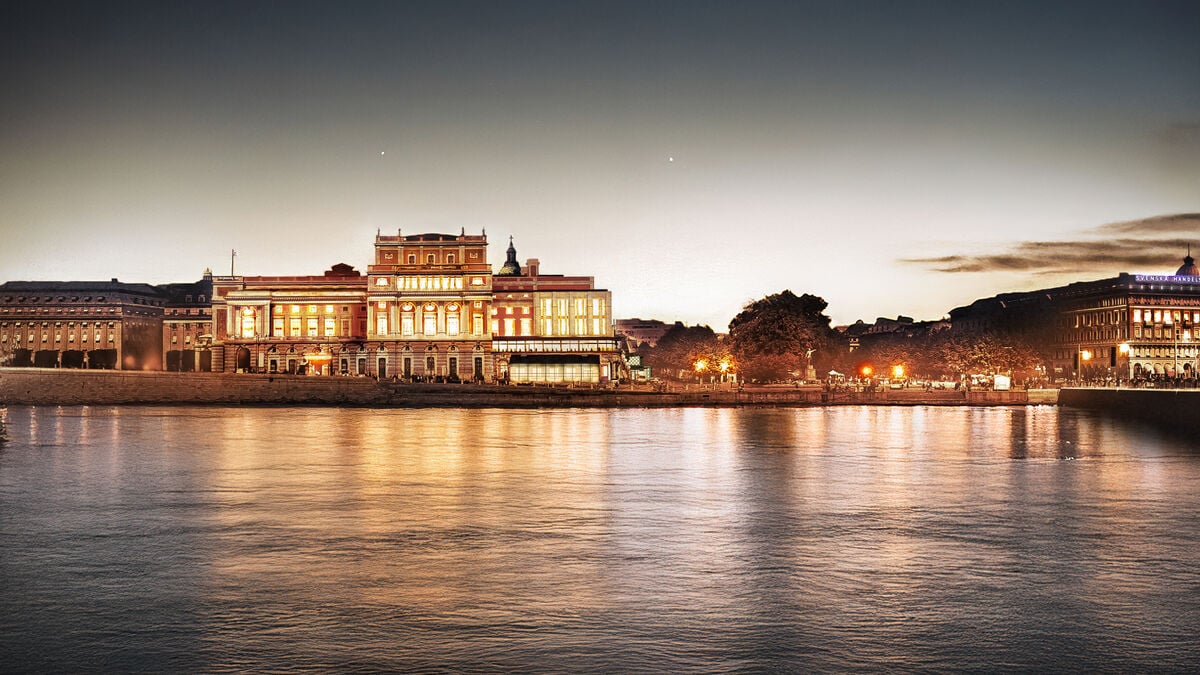
The opera building, a national monument since 1935, is being expanded on the short side towards Kungsträdgården. The detailed plan is now on display, giving the public the opportunity to comment for the first time.
"We are in awe of this project," said Max Elger, Director General of the Swedish Property Board, at a press conference presenting the new-old opera house, whose renovation and extension is expected to cost 3.5 billion kronor.
After that, the building is expected to last another 100 years, according to architect Pär Ahlbom.
Public terrace
The new stage of the extension is primarily designed for children and young people, with its own foyer and entrance from Jakobs torg, and for an audience of 250 people. The 2,400 square meters will also provide new rehearsal facilities for the orchestra, a large staff room facing Strömmen and a public terrace facing Kungsträdgården.
One of the modern dance studios still has the old facade as an interior wall and large windows that give passersby the opportunity to see inside.
"It will probably be one of the most beautiful dance studios in the world," said Fredrik Lindgren.
Ten kilometers of sewer
But the rest of the opera house will also be renovated. All technical systems are out of order, Max Elger points out. Ten kilometers of sewage pipes and twenty kilometers of water pipes will be replaced in the building, which has 12 floors and around 1,400 rooms.
There is no detailed schedule yet, according to Max Elger. The last performance in the old house will be on December 1 of this year. In March or April, the audience will be welcomed to the new stage, Gasometer, in Norra Djurgårdsstaden.
"In between, we will be in slightly different places," said Fredrik Lindgren, mentioning "The Nutcracker" at Cirkus and "The Leatherface" at the Filadelfia Church in Stockholm.
Facts: The Royal Opera House is being renovated
The upcoming renovation is estimated to cost 3.5 billion kronor and has been described as the State Property Board's most extensive project to date. The major investment is being funded by 300 million kronor in private donations, and the renovation is expected to last for five years.
The last performance in the opera house will be given in early December this year. The restaurant Operakällaren will close after New Year's and will be mothballed during the renovation.
The opera and ballet are moving to Gasometer in Norra Djurgårdsstaden, a relatively new district in northern Stockholm.
The Young Opera will have a stage in the premises of the Museum of Performing Arts in central Stockholm.
Rehearsal facilities for the Royal Orchestra will be in the Musikaliska kvarteret at Nybroplan, where administration and archives will also move.