The price of gas has doubled since the Iran war effectively closed the Strait of Hormuz, through which about 20 percent of the world's gas supplies pass.
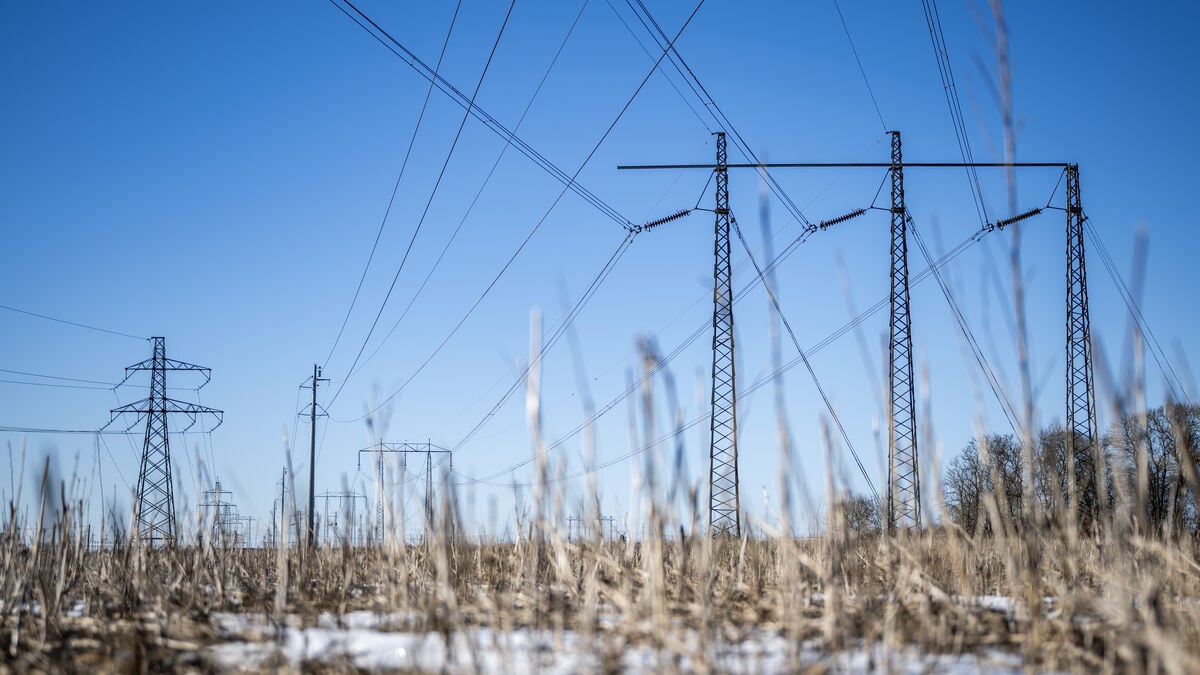
The market now expects approximately 10 percent higher electricity prices in the second quarter than it did at the end of February, before the Iran war, says Christian Holtz at the electrical consulting firm Merlin & Metis.
More expensive contracts
This is evident, among other things, in that fixed-price agreements have become more expensive in recent weeks, which in electricity area 3 now costs around one krona per kilowatt hour (kWh).
A skyrocketing gas price primarily makes electricity production more expensive on the continent. But because the electricity markets are interconnected, electricity costs are also rising in Sweden, mainly in the southern half of the country. And, calculated in kronor, a price increase of 10 percent has a greater impact in electricity areas 3 and 4 (Svealand and Götaland).
And when the situation for hydropower in the Nordic region is particularly weak, after a dry winter, Sweden becomes particularly sensitive to the now rising electricity prices in Germany, among other places.
We will have some hydropower for the rest of the year, which means we will be more exposed to price developments on the continent, says Holtz.
What has the most impact?
But from day to day, the weather is still the deciding factor. Windy weather is now expected later this week, when prices will probably drop from the current level of around one krona per kWh in southern Sweden. The electricity shock in northern Sweden in January and February has, however, subsided. There, the price has fluctuated around 30 öre so far into March.
So what is the biggest threat, skyrocketing gas prices or a shortage of water for the power dams (weak hydrology)?
"It depends a bit on how long this closure of the Strait of Hormuz will last. If it were short-lived, I would say that the hydrology would be worse," says Christian Holtz.
Facts: Electricity price so far in March
Average electricity price on the Nord Pool electricity exchange up to and including March 9 (February in brackets) in the different electricity areas:
Electricity area 4, 1.07 SEK/kWh (1.13 SEK)
Electricity area 3, 73 öre (1.10 SEK)
Electricity area 2, 32 öre (98 öre)
Electricity area 1, 31 öre (99 öre)
On top of the exchange price, there is the electricity retailer's markup, electricity tax, VAT and electricity network fee of well over one krona per kWh.
Source: Nord Pool