Most indicators have trended upward since the Swedish Central Bank left the key interest rate unchanged at 1.75 percent at the end of January.
But recent developments in the Middle East risk changing that, although according to Thedéen it is too early to say what the longer-term effects on the economy will be.
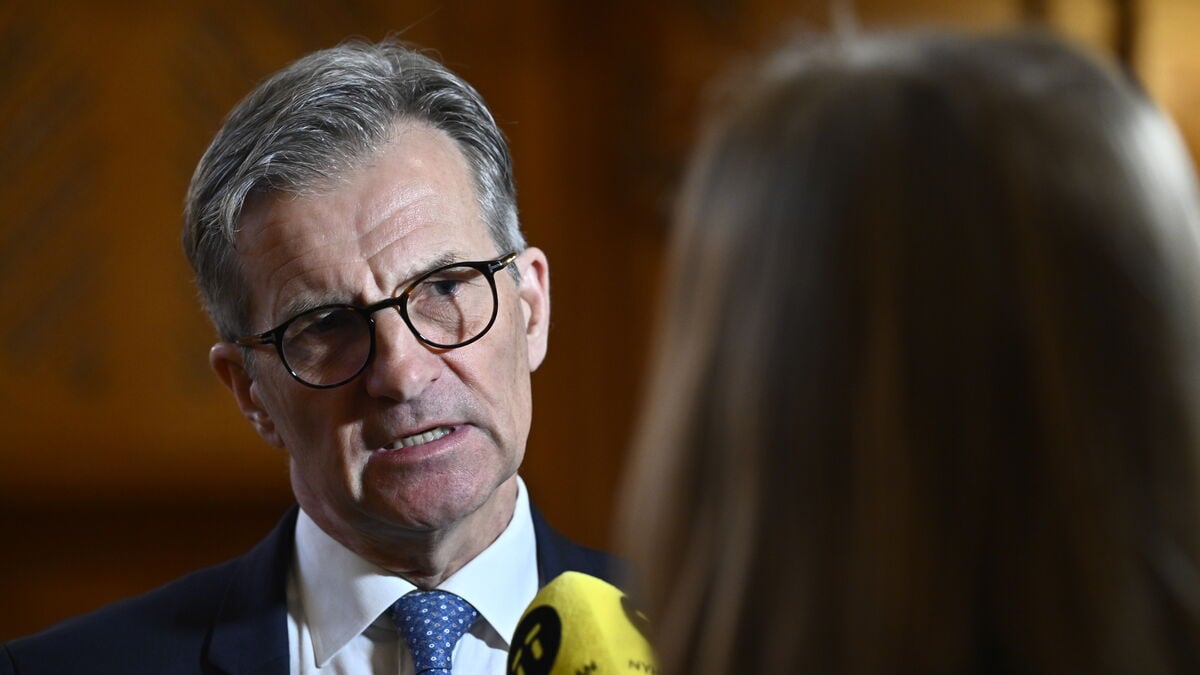
"We see rising oil prices, we see rising gas prices. We already had higher electricity prices to begin with. They looked like they were going to come down, but in the futures market it looks like there won't be such a sharp decline," Erik Thedéen tells TT about the immediate market reactions to the Iran war.
"It is clear that this has an effect on everyone who has to fill up their car and heat their house. It will have a dampening effect on the Swedish economy and it could have some effect on inflation," he adds.
The interview is being conducted in connection with a hearing in the Riksdag's Finance Committee.
Fairly small effects
According to Thedéen, the effects of the war are so far quite small. The big question is whether developments in the Middle East will impact economic activity more broadly, he believes.
"Then we are talking about investment and consumption. And we know very little about that. It's largely a question of duration. Does it pass quickly, or does it persist for a long time?"
A higher oil price has "an almost mathematical connection" to higher prices for gasoline and diesel, according to Thedéen.
"Then it feeds into the consumer price index (CPI). But other components can move in the opposite direction. So you can't conclude from this that we would get dramatically higher inflation."
"The direct impact, given the price increases we have seen so far, is, by standard measures, quite limited."
“Great human suffering”
The developments show that we live in a world with "great geopolitical tensions," says Thedéen.
He adds that before the next interest rate meeting, there will also be new information about developments that must be analyzed to make an assessment of the economy and inflation prospects.
"We may know more when we make the next monetary policy decision in two weeks, but I will most likely still say that the uncertainty is great."
Poor growth and high inflation are called stagflation by economists. It is one of the most difficult economic situations for a central bank to influence with interest rates and other measures.
Corrected: In a previous version, the next monetary policy meeting was described with an incorrect term.