Nazanin's freezer is already empty when the war breaks out. For weeks, she has avoided fresh produce to prepare for prolonged power outages.
Even though the rial, the Iranian currency, has plummeted to rock bottom during the US military buildup, she has stockpiled tuna, beans and water.
"People experience the regime as extremely oppressive and do not believe that it is possible to be free without help from abroad," Nazanin, whose real name is something else, writes to TT on Friday.
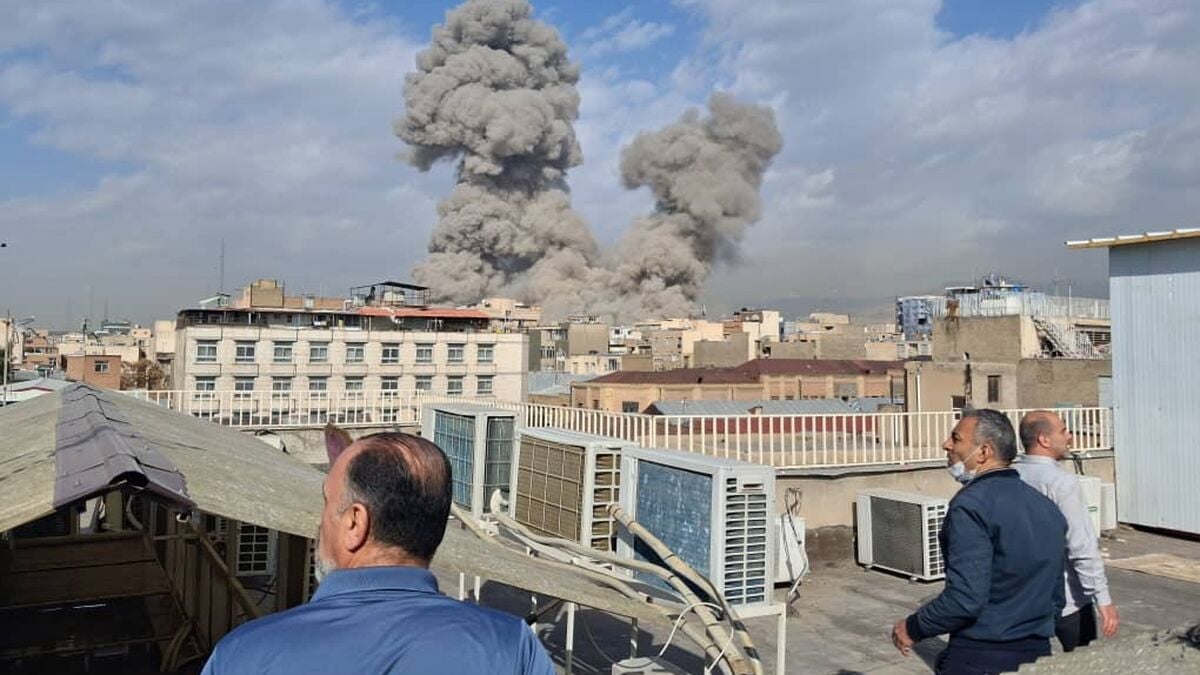
The next day, her grandchildren stay home from school. Shortly after eight o'clock on Saturday morning, the bombs start falling.
Celebrating while bombs fall
The internet connection and the ability to communicate with the outside world are disrupted.
It is not until darkness falls that day that the Iranians understand what has happened.
"Suddenly I heard the whole residential area cheering," a 63-year-old man in Tehran told Time, which despite the internet blockade managed to talk to several Iranians.
When news comes that dictator Ali Khamenei has been killed, spontaneous street parties break out in several places in Iran.
"Imagine your country being attacked, but because of how disconnected the people feel from the regime, that's how you react," 39-year-old Azim in Karaj, west of Tehran, told The New York Times after celebrating all night.
Most Iranians whom outside journalists have managed to speak to express similar joy - while the American and Israeli attacks continue to rain down.
"It's like a dream. The worry that the regime might not fall despite his death keeps me from being completely happy," Hassan, a 41-year-old lawyer from Tehran, told Time.
"But I remind myself that nothing could be worse than him being alive," he continues.
“Look what happened in Iraq”
Those who disagree are unlikely to bypass the regime's internet blockade to contact Western media.
Despite widespread discontent with the regime, there are still those who support it. Because the leadership is integrated into large parts of Iran's economy, there is also a large group of people whose livelihoods are based on showing loyalty to the leadership.
The day after opposition Iranians celebrated the dictator's death across the country, the other camp gathered at Islamic Revolution Square in Tehran to show their grief.
In southern Iran, a schoolteacher expresses her despair.
"I can't be happy because I don't know what will happen to our country. We saw what happened in Iraq - chaos and bloodshed. I prefer the Islamic Republic to that," she told Reuters.