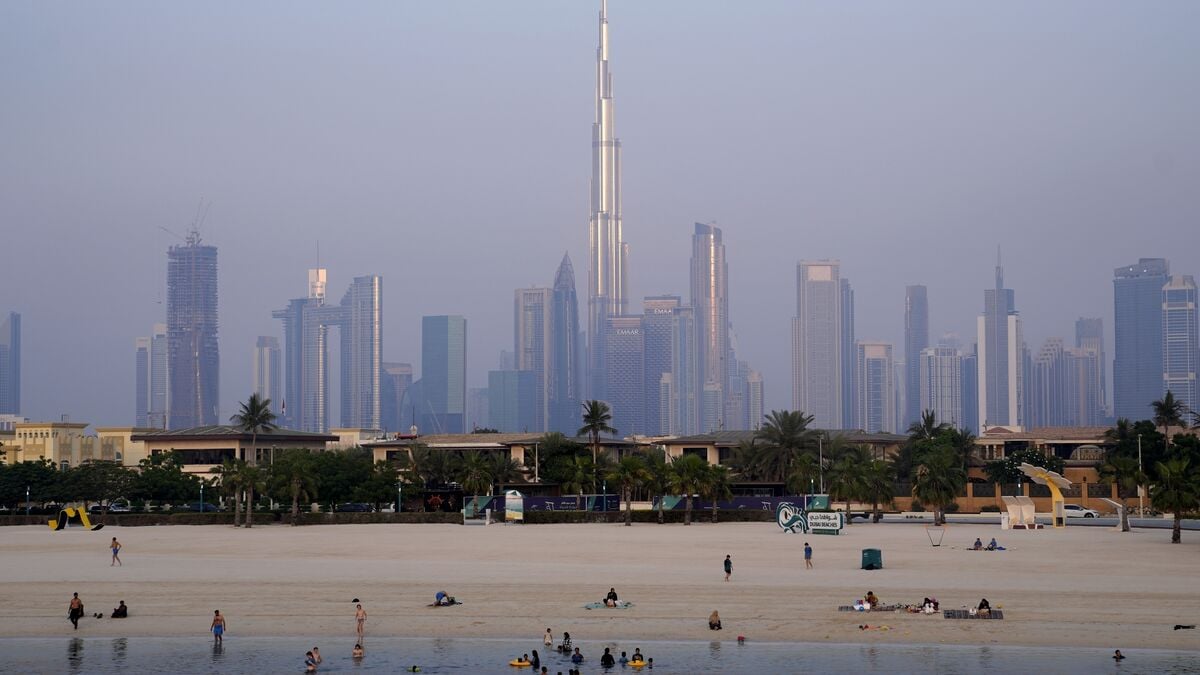
Dubai and Abu Dhabi have shown the way. The previously quite inaccessible kingdom of Saudi Arabia has caught up in recent years and opened up both its stock market and real estate market to foreign investors.
Great presence
Swedish giants such as ABB, Ericsson, AB Volvo, Scania and Tetra Pak have been around for a long time - some since the 1950s. In recent years, Mölnlycke Healthcare, Systemair and Essity have joined, among others.
"There is a very large presence of Swedish companies. It's not just offices. They have production lines too," says Nebe Almayahi, Business Sweden's trade secretary in Riyadh, Saudi Arabia, to TT.
She has worked in the Middle East for eleven years, including in Baghdad. For just over a year now, she has been stationed with her family in Riyadh.
Causes concern
The Iran war concerns her.
"It's a very worrying escalation that I don't think many people saw coming. It's clear that it's causing concern," she says.
Since last weekend, she has been working from home:
I have a five-year-old daughter and I don't want to leave her at preschool. I want to be close to her, so I've chosen to work from home.
She and her family are part of the “Swedish colony” of tens of thousands of Swedish citizens living in the Middle East. Many work for the hundreds of Swedish companies that operate in the states around the Persian Gulf.
The idea fails
In the short term, the Iranian attacks will cause major disruptions to neighboring countries. Production will be shut down. Travel and transportation will be halted. Residents must be ready to quickly seek shelter when the sirens start wailing.
This hurts the countries a lot. They want to attract investment to their countries. They are completely dependent on it.
They have been able to offer a safe environment from which to operate in the rest of the region. Companies can cover the entire Middle East and parts of North Africa from Dubai and from Riyadh.
On top of that comes tourism, financial services and an increasingly broad range of other sectors that are establishing themselves beyond the large oil industry.
The whole idea fails in some sense if they cannot offer a safe environment for international players. That is very crucial, not least considering that they want to move away from oil dependence.
Corrected: In a previous version there was an incorrect title for Nebe Almayahi
The Ministry of Foreign Affairs estimates that there are a total of around 20,000 Swedes living in the Middle East, but this also includes countries such as Iran, Iraq and Israel, according to the Ministry's press service.
Many work at the hundreds of Swedish companies that have operations in Bahrain, the United Arab Emirates, Kuwait, Oman, Qatar and Saudi Arabia.