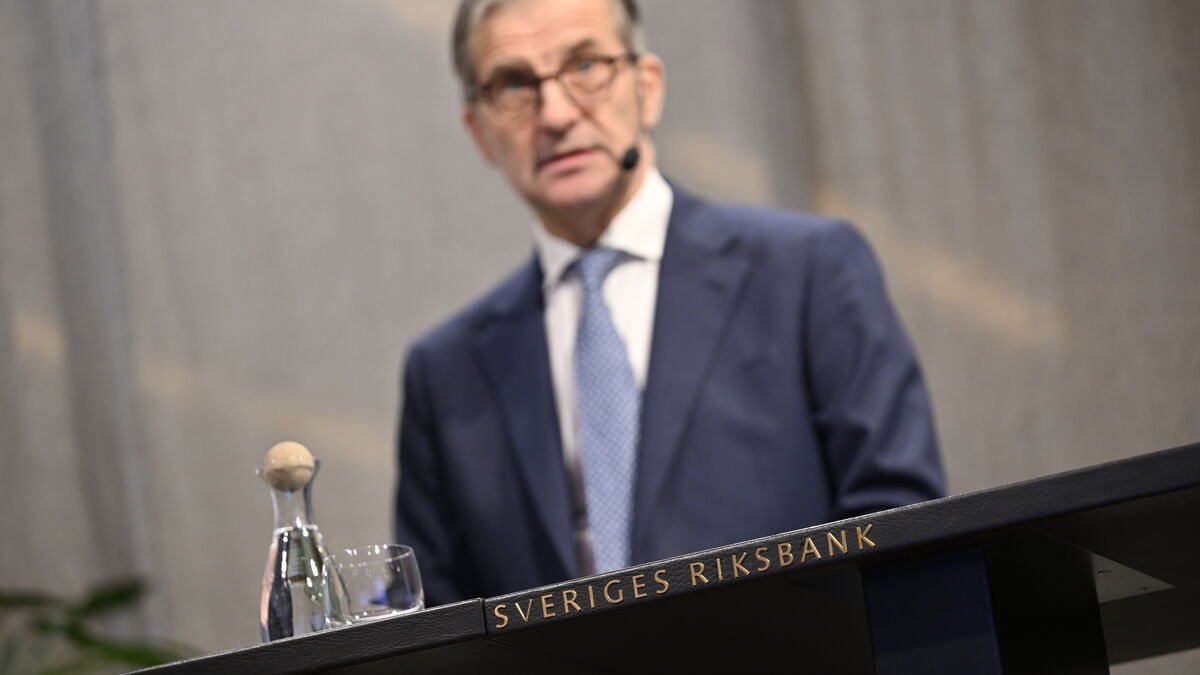
Before Thursday's announcement, virtually no one expected an adjustment in the key interest rate from the current level of 1.75 percent. The Swedish Central Bank also reiterated the interest rate outlook from December last year.
However, there is increased uncertainty about the inflation and economic outlook, and one factor is being pointed out: the U.S. and President Trump's policies.
Stability in economic policy direction is important. When the world's largest economy does not show that stability, it can creep into boardrooms when decisions are made about investments or into households when they are considering consumption, says Erik Thedéen.
Clear warning
The Swedish Central Bank's warning comes after a turbulent period with developments in Venezuela and Iran, and not least Trump's demands and threats regarding Greenland.
When this happens in the world's largest economy, we in Sweden cannot ignore it. If it were a small economy, we might think it doesn't matter to us, but in this case it does matter.
Thedéen describes it as a new situation where foreign policy can also be linked to economic demands, as in the Greenland case.
"In the long term, it could have quite a big impact on the world economy. So far it hasn't, but it could," he says of the Trump administration's policies.
Lost in value
Another factor has been the strengthening of the krona as the U.S. dollar has declined significantly in value.
Nordea's Chief Economist Annika Winsth points out that the strengthened krona against the weakened dollar could be a future challenge for the Swedish Central Bank:
"It's a significant strengthening against the dollar, about 20 percent last year. Our assessment is that this will continue," she says.
If it continues to weaken, it will continue to push down inflation.
Erik Thedéen:
It has been good for our fight against inflation; the krona has come down to more, so to speak, historically normal levels. The fact is that we do not have a target for the krona exchange rate; we have a target for inflation.
Are Swedish households winners from a weaker dollar?
Most households are probably winners, because foreign travel and imported goods become cheaper, but the issue of winners and losers in exchange rates is rather complicated, he says, referring to Swedish export companies as losers.
It is important to have an exchange rate that keeps the Swedish economy in a good position.