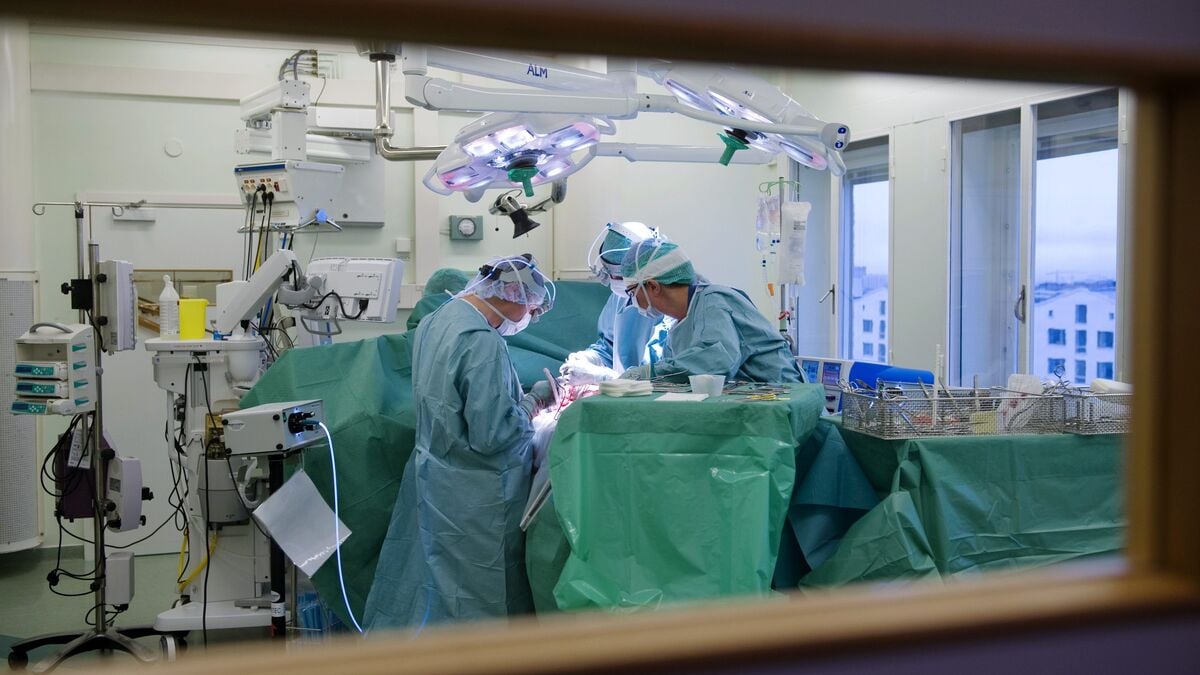
The care guarantee entitles patients to surgery or treatment within 90 days. The most common measure of effectiveness is the proportion of patients who receive help within these three months.
The Swedish Medical Association has instead investigated, in a report, how long patients actually wait and which patients wait the longest. The procedures examined were back surgery, knee replacement and hip replacement.
The result was clear: seriously ill patients waited longer for surgery than patients who were otherwise healthy or had a mild illness. This is most clearly seen in the back surgery group, where otherwise healthy patients last year had a median waiting time of 42 days, while the seriously ill waited 115 days.
Passing on
The differences are explained by the fact that otherwise healthy patients can be channeled to private healthcare providers, where waiting times are shorter.
Patients with multiple illnesses, on the other hand, must be operated on in hospitals that have intensive care and aftercare. There is also a lack of hospital beds due to staff shortages.
"For those of us who work in healthcare, the results are not a big surprise. When you make short-term, targeted investments, it can lead to mistakes," says Hanna Kataoka, chairwoman of the Swedish Medical Association.
She refers to the regions receiving earmarked money to perform more surgeries of a certain type, such as knee replacements.
"It will be a nicer statistic for a certain limited queue. But that doesn't mean that accessibility in healthcare will be better overall," says Kataoka.
More for your money
The regional differences were also very large. In Gävleborg, patients last year only had to wait 43 days for a back operation; in Västerbotten and Uppsala they waited 180 and 182 days respectively. Some patients in Västerbotten had to wait three years.
"Targeted government grants for individual diagnoses may be right in one region but wrong in another. It would have been more bang for the buck if the regions themselves had been allowed to target the funds based on need," says Kataoka.
What the Swedish Medical Association sees as most important is increasing accessibility for the most seriously ill.
"It's about staffing the healthcare system, having enough doctors, nurses and other healthcare personnel. It's about broad, long-term investments in both recruiting and retaining staff," says Hanna Kataoka.
Back surgery:
Median waiting time for otherwise healthy patients: 42 days
For the most seriously ill: 115 days
Knee prosthesis:
Median waiting time for otherwise healthy patients: 97 days
For the most seriously ill: 136 days.
Hip prosthesis:
Median waiting time for otherwise healthy patients: 81 days
For the most seriously ill: 91 days
All figures apply to 2025.
Source: Swedish Medical Association